New era for R&D









Spending on research and development surging as China aims to become a global leader in technology by 2035
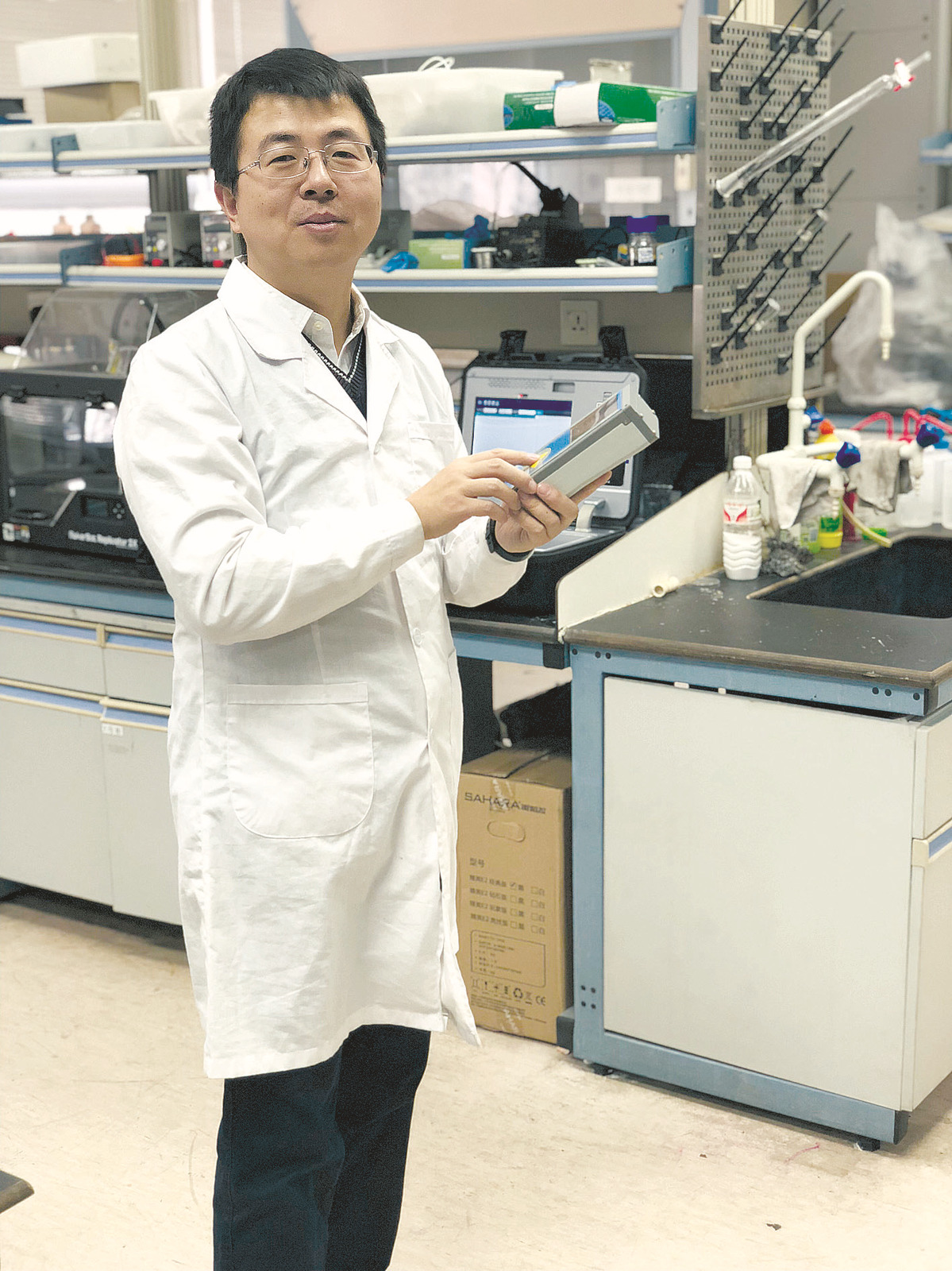
Feng Liang is a scientist at the vanguard of China's research and development efforts.
The 39-year-old, who was partly educated in the United States, and a team of 10 at the Dalian Institute of Chemical Physics are working on sensor technology that will enable people to use a mobile phone app to test whether vegetables or fruits are contaminated with pesticides - a major concern among Chinese consumers.
"We are aiming to bring the product to market over the next year. It will enable someone to take a photo with their cellphone, input the name of the fruit and vegetable, and the app will give an analysis of what kind of pesticide residue it contains," he says.
"From the tests we have done, even fruit and vegetables washed twice contain residue. And to really make sure, you have to wash it four times. Much of Chinese produce is affected, even that which is organic."
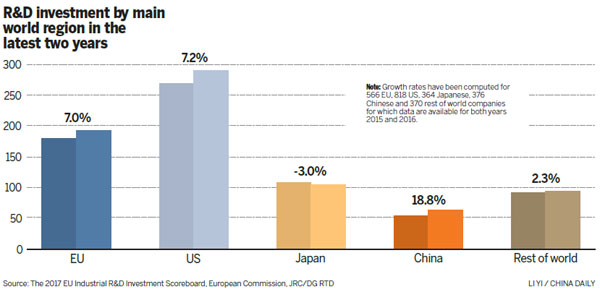
Feng's work is part of a national upsurge in research and development spending. According to a report published in December by the European Commission, "The 2017 EU Industrial R&D Investment Scoreboard", research and development expenditure of China's leading companies increased by 18.8 percent in 2016. This compares with an increase across the European Union of 7 percent, an increase of 7.2 percent in the United States and a decline of 3 percent in Japan.
The increase reflects China's ambition - set out by General Secretary Xi Jinping at the 19th National Congress of the Communist Party of China in October - to become a global leader in technology by 2035.
It also fits in with the country's Made in China 2025 strategy to upgrade the country's industry and make major strides in such areas as artificial intelligence and robotics.
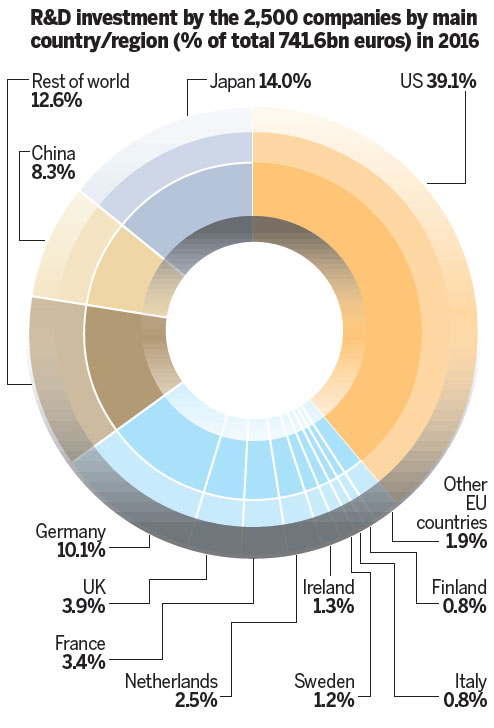
According to the report, China had 376 companies among the leading 2,500 investors in research and development around the world in 2016. This was more than Japan, with 365, but fewer than the 567 of the 27 EU nations combined and 822 in the US.
These Chinese companies made up 8.3 percent of research and development across the world, the Scoreboard report said.
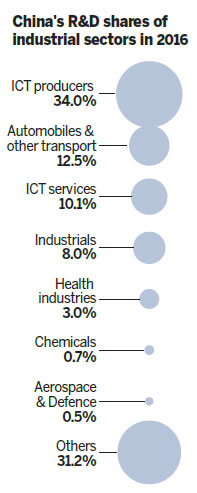
Not surprisingly, more than a third of China's research and development investment was in information and communications technology, or ICT, with Chinese telecommuncations giant Huawei - which now has a major global presence - increasing its expenditure by 29 percent. Automobiles and other transportation made up 12.5 percent; services related to ICT services, 10.1 percent; the industrial goods sector, 8 percent; and health industries, 3 percent.
Feng, who conducted his postdoctoral research at the University of Illinois, and whose sensor research is based on chemical technology, says there has been a sea change in the culture at Chinese research institutions.
"When I was in the United States in the last decade, the university was very supportive of startups and commercializing technology. When I came back here, that was not the case. Most people were working on just publishing research papers," he says.
"From about two years ago, China started to support commercializing technology also. There was suddenly a lot of government money available for startups."
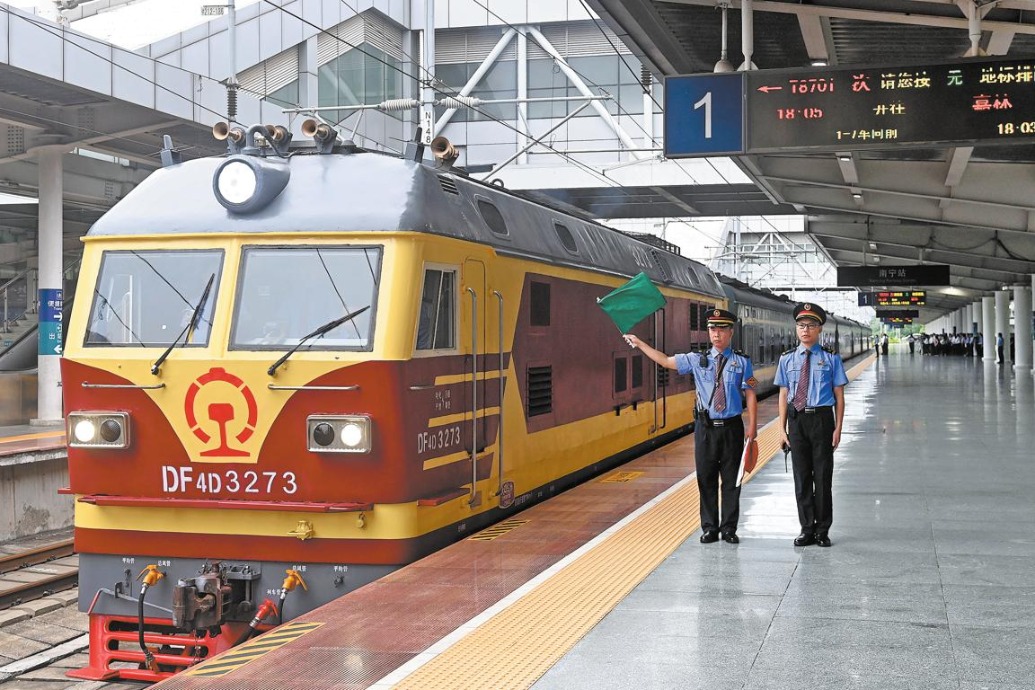
China is clearly beginning to bridge the gap with the West in terms of its technology, and in some areas is becoming a leader. The country's 25,000 kilometers of high-speed rail in China represents two-thirds of the total stock around the world. China also has companies in the field of e-commerce, like Alibaba and Tencent, that are emerging as global players
Edward Tse, founder and CEO of management consultants Gao Feng Advisory, says there is a real energy about the technology sector in China now.
"It doesn't matter whether it is 2025, 2035 or 2050, I think you are going to see a very different China in terms of technological leadership over time," he says.
Tse, regarded as one of China's top business experts and also author of China's Disruptors: How Alibaba, Xiaomi, Tencent, and Other Companies are Changing the Rules of Business, says the top-down model of the government setting targets has been proved to work over time.
"This model has been proven to be effective over the past two decades. It is not only top-down with central government saying you need to do this, or only about the entrepreneurial companies doing it from the grassroots level, but also at a middle level of local governments allocating funding and driving innovation."
Peter Williamson, professor of international management at the Judge Business School at Cambridge University, says having a target to become a global technology leader by 2035 can inspire companies.
"It can't drive sustainable innovation alone, but it signals that the old way of growth and making money based on low costs will need to change so innovation becomes a key driver."
One region in which innovation is considered to be much needed is Northeast China, home to many traditional industries in such areas as chemicals, steel and heavy engineering.
The government sees the region as needing to upgrade existing industries through technology and also to foster new industrial sectors to ease job losses and revitalize the local economy.
One city that is driving change is Dalian, the port city that faces the Bohai Sea.
Tan Zuojun, Party chief of the CPC Dalian committee, made clear his commitment to increased research and development investment at a science and innovation meeting in the city in September last year.
"It has become an irresistible trend to rely on scientific and technological innovation to foster new economic growth points and to seize the commanding heights of future development," he says.
"The whole city should take innovation-driven development as a priority strategy."
One of the port city's main innovation drivers is the Dalian High-Tech Industrial Zone, which was among the first wave of China's high-tech industrial parks when it opened in 1991. It is home to 5,000 registered companies, including 11 Fortune 500 companies, among them IBM, HP and Dell.
Jin Guowei, who became vice-mayor of Dalian in January and who is also the head of the administrative committee of the high-tech zone, has given a firm commitment on funding support for research and development.
"The intensity of annual support should be continuously increased, and the growth rate of support should not be lower than the growth rate of the district so as to finance and support innovation and development," he says.
One of the local government officials responsible for putting China's national innovation plans into action is Yu Xiaodan, the 47-year-old deputy director of the Dalian Municipal Science and Technology Bureau.
She has worked for the bureau for 21 years and is suitably qualified for her current role, to which she was appointed last year, having an MBA from Dongbei University of Finance and Economics and a PhD in science and technology management from Dalian University of Technology.
"There is much more support (for research and development) than there was in the past," she says. "The new plan for the revitalization of Northeast China is a recognition that our economic structure is outmoded and too reliant on traditional industries. We need to make the region more energetic and we need to start with innovation with scientific innovation at the core."
Yu, speaking from a meeting room in her offices, says a number of special measures are in place to drive innovation locally.
Enterprises can get up to 30 percent of the cost of their research and development - up to 10 million yuan ($1.6 million; 1.3 million euros; £1.1 million) - from a scientific technology fund.
Universities and scientific institutions can also get as much as 1 million yuan for three consecutive years for special projects involving fundamental research.
"We want to create the opportunity for universities and enterprises to cooperate more and to be able to commercialize scientific research. As a city, we want to focus on areas that are relevant to the local area and also those that have big potential for future technological development, such as artificial intelligence and advanced equipment manufacturing."
With China producing 4.7 million graduates in so-called STEM subjects (science, technology, engineering and mathematics) in 2016, according to the World Economic Forum - more than eight times the 568,000 of the US - it has a huge talent pool to conduct research and development.
The sheer numbers have made China specialize more in accelerated or rapid innovation, which leads to incremental improvements in products that have immediate commercial application.
However, China has traditionally been less good at fundamental research, which leads to major technological breakthroughs that can transform society.
Williamson at Judge Business School, who has conducted major research in this area, says there has been a change.
"The picture is changing gradually from the past emphasis on doing incremental research faster and cheaper than elsewhere. It is wrong to think that a country can just take a leap from incremental innovation to blue-sky research and breakthrough innovation. It is a gradual process because it requires a change in mindsets and the building of new and different capabilities," he says.
Wang Qing, professor of marketing and innovation at Warwick Business School of the University of Warwick in Coventry in the UK, says the big change is the recognition at a high level that China must up its game in fundamental research.
"What is different now is that the important people in the country have started to realize this is a problem if China is to overtake the United States as a technological leader," she says.
"The US is very much leading in fundamental research, and if you want to be a truly powerful country, you need to have this technological and scientific capability."
Wang, who is also a guest professor at Zhejiang University, says there have been a number of important initiatives in this area.
She cites the establishment of the Westlake Institute for Advanced Study, China's first private university, in Hangzhou, Zhejiang province, in March last year. The founding dean is Shi Yigong, a former Princeton University molecular biologist who renounced US citizenship to return to China.
"It is a private institute but very much strongly supported by the government. Shi is very open about not letting scientists do business and do applied research. He says scientists should be left alone to do blue-sky research, and this is his vision for Westlake."
Thomas Luedi, managing partner at management consultants AT Kearney's Asian energy and process industries practice, based in Shanghai, believes a lot is changing on the ground in terms of China's research and development capability.
"There has been this view that the quality of China's teaching at PhD level has lagged behind that in the West. Some of this, in my view, is out of date," he says.
"It is often put forward by those who came to work in China in the last decade and have since returned to their own countries in the West. I believe they are unaware of the progress that has been made over the past decade."
In Dalian, a number of major multinationals now have R&D centers in the city.
One is US computer software giant Rockwell, with 270 employees at the Rockwell Automation Dalian Software Development Center.
Sixty percent of the employees have master's degrees in automation, computer science, electrical engineering or other technical fields.
Kevin Song, the 39-year-old general manager, says research and development activity in China today has real energy.
"Young, energetic and hardworking characterizes the team culture at Dalian," he says.
"We endeavor to continuously improve our technical capabilities, product development and innovation."
Williamson at Judge Business School believes this energy could lead to China making breakthroughs in such areas as artificial intelligence and robotics.
"China's people quickly embrace new technologies, even if the technologies are not fully perfected and mature," he says.
"China's thriving mobile internet ecosystem provides a great sandbox to test innovations in all sorts of new technologies."
Contact the writers through andrewmoody@chinadaily.com.cn


- Memorial ceremony remembers victims of Nanjing Massacre
- Louvre's largest showcase in China goes on display at Museum of Art Pudong in Shanghai
- Indonesian foundation to fund students, school administrators to exchange and study in Tianjin
- Archives detailing crimes of Japanese unit released
- 'Reservoirs of primordial water' may be buried deep within Earth
- China remembers victims of Nanjing Massacre, 88 years on