Market and rule of law propel reform









The essence of reform is to transform government-spurred economic growth to market-driven growth so that resources can be allocated according to market law

Editor's note: A report compiled by a Wuhan University research group dwells on the mode of China's 40 years of reform and opening-up. Below are excerpts from the report, first published in China Economic Times on Dec 26, 2018.
The history of China's reform and opening-up is a history of eradicating the old and fostering the new, as well as a history of brave explorations and innovations. Over the past 40 years, China has not only witnessed fundamental changes at home, but also influenced global development, contributing Chinese wisdom to resolve global issues.
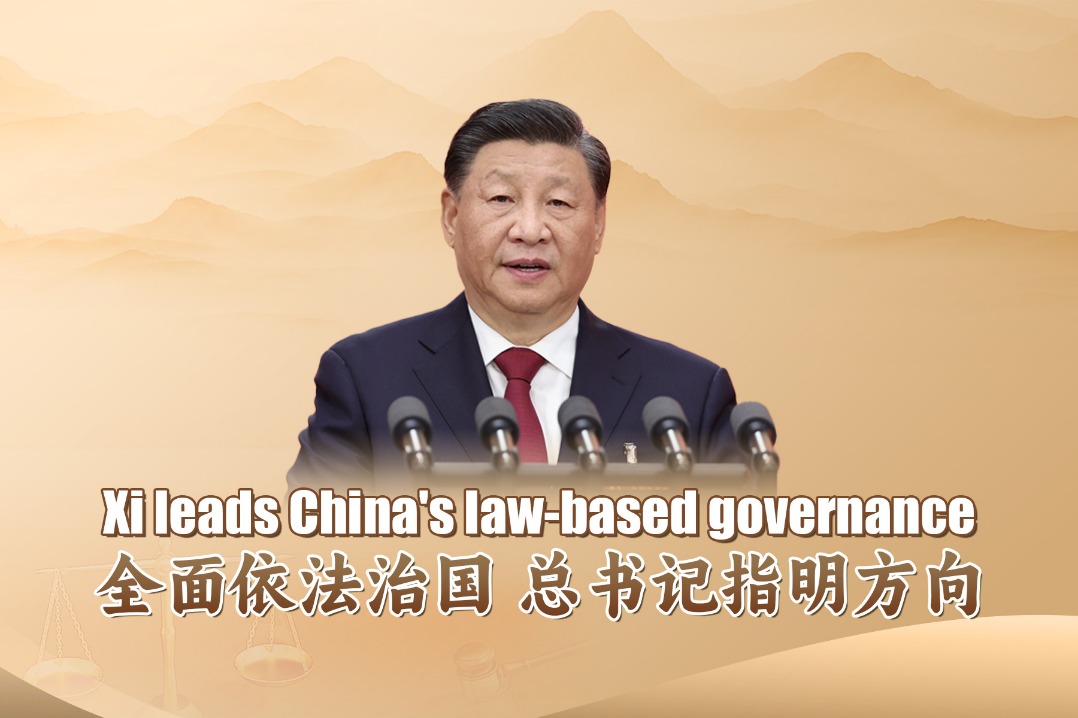
As President Xi Jinping said in his speech to commemorate the 40th anniversary of reform and opening-up in Beijing on Dec 18, the valuable experience of the past 40 years can be summarized as "nine musts"-must insist on the Communist Party of China's leadership in all spheres of work; the people-oriented principle; the guiding role of Marxism; socialism with Chinese characteristics; institutional strengths; development as first priority; joint construction of a community with a shared future for mankind; full and rigorous Party governance; and dialectical materialism and historical materialism and their methodologies.
Economic miracle yields many fruits
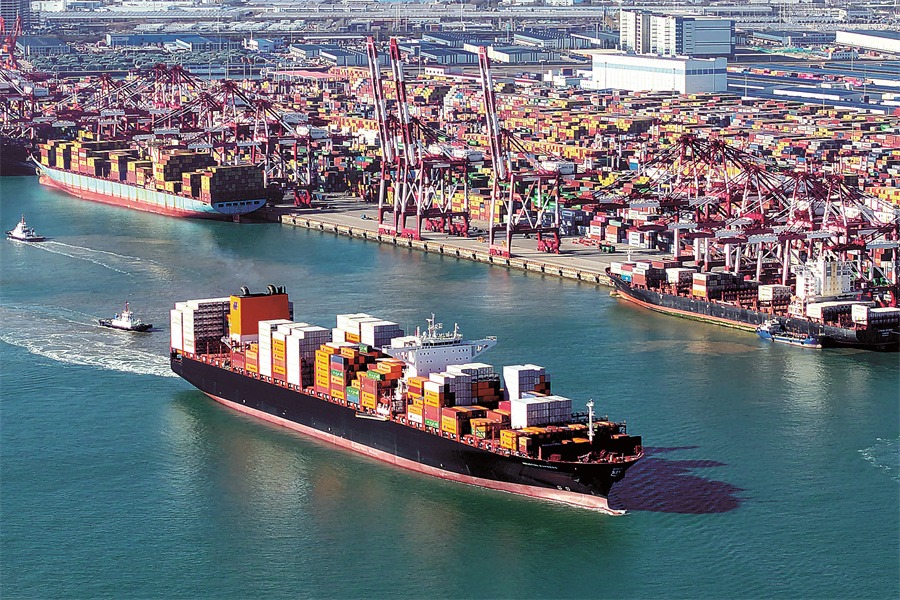
Between 1978 and 2017, China's GDP grew at an annual rate of 9.5 percent, much higher than the 2.9 percent of the world average during the same period. China's contribution to global economic growth has been above 30 percent for many years. China today is the world's second-largest economy, largest manufacturer, largest goods trader, second-largest commodity consumer and the second-largest destination for foreign investment.
China has created its own development path and explored an economic reform path with Chinese characteristics. The characteristic feature of 40 years of reform and opening-up can be summed up in the following eight aspects:
First, reform has been carried out simultaneously on both the incremental and stock fronts. Incremental reform has made breakthrough progress, and the demonstrative effects and pressure of competition from incremental reform are used to promote stock reform, or the reform of the old institutions.
The success of China's economic reform can be seen in the development of a private system out of the original public system in a way that the two systems coexist today-the departments that can maintain the stability of the private system and the new growth points that can generate vitality for the public system thrive together.
Incremental reform, based on the premise of not touching stock interests, refers to the use of increment to straighten out interest relations and using the rising increments to optimize and improve the quality of economic growth as a whole, which can save some adjustment costs and make the reform yield fruits faster so as to marshal people's support.
Private firms largest 'increment' of reform
Over the past 40 years, the private economy's development from scratch is the largest "increment" in China's reform. In 1978, there didn't exist a single private enterprise. Now there are more than 65 million privately or individually owned businesses and over 27 million private enterprises. Accounting for more than 90 percent of the businesses and enterprises nationwide, the two now contribute to more than 50 percent of tax revenue, over 60 percent of GDP, more than 70 percent of technology innovation, and over 80 percent of urban jobs.
The robust growth of the private economy has prompted the formation of market subjects and development of market mechanism, impelling the State to accelerate its institutional reform, including State-owned enterprise reform.
Capital market reform has taken the same path, inviting new players to make the market bigger, while avoiding repercussions and facilitating the improvement of relevant institutions. This also helps the reform to target the old players.
Second, reform has been conducted in two forms: from top to bottom and from bottom to top.
Some reforms happen spontaneously at the grassroots level. Their experience then becomes part of the institutional design that can be used on a wider scale.
Correspondingly, there are two kinds of institutional arrangements: the induced type for bottom-to-top reform, and the mandatory type for top-to-bottom reform.
Reform as a kind of institutional change
According to institutional economics, reform is in itself a kind of institutional change. In the induced type of reform, the subjects develop spontaneous responses to unbalanced institutional arrangements, which can evolve into breakthrough points in reforms. In the mandatory type, reform refers to the State using government orders and laws to introduce institutional innovations to solve the problems left by the induced type of reform.
The household contract responsibility system with remuneration linked to output, which was initiated by 18 farmers in Xiaogang village of Fengyang county, Anhui province, is a case in point, as the land reform was promoted nationwide later, which increased the output of grains by a large margin in a short time. The surplus laborers liberated by the increase of agricultural productivity later became the first generation of migrant workers, fanning out into non-agricultural industries.
Third, reform is a dynamic integration of top-level designs and grassroots innovations, using the strengths of top-level designs in coordinating resources to bring the best out of the pioneering spirit of grassroots innovations.
Effective plans promote stability, development
No reform can succeed without the integration of the two. The top-level designs provide overall and systemic planning, thoughts and paths, while the grassroots practitioners are encouraged to realize their dreams by blazing new trails in the pioneering spirit, creating the conditions for trial and error, and gathering experience to reach a correct solution.
The top-level designs are expected to present the big picture and show more foresight so as to allow reform practitioners to better coordinate different interests and needs. The plans and strategies of various kinds made by the authorities over the past 40 years have served as ballast maintaining the stability and promoting the development of the country and society.
That China lifted nearly 70 million people out of poverty between 2012 and 2017-the period when its contribution to global poverty reduction work was more than 70 percent-is attributable to the determination of the central leadership to alleviate poverty, which has been done according to the timetable and requirements fixed by toplevel designs.
The urbanization of medium and small-sized cities and construction of characteristic towns, carried out nationwide as a national strategy and included in the 13th Five-Year Plan (2016-20), were both explored and piloted by the local governments first.
Government-market relations key to reform
Fourth, the core logic of reform is to properly handle the relations between the government and the market, insisting on the integration of "efficient market" and "effective government", so as to highlight the synergistic effect of the government's "visible hand" and the market's "invisible hand".
The essence of reform is to transform government-propelled economic growth to market-driven growth so that resources can be allocated according to market law. An effective government is essential to deal with the market's failure. But the government cannot assume the market's role to optimize the allocation of resources, because the process is so complex that it often leads to government failure.
The relationship between the government and market has been changing since reform and opening-up were launched, with the market's role getting its due respect-its role in allocation of resources has been called "fundamental" and then "decisive". Actually, the government has refrained from intervening in market activities, delegating its power to market players and paying more attention to the institutional construction of the market and improvement of the overall business and consumption environment.
The two wheels driving reform and opening-up
Fifth, reform and opening-up have journeyed on two wheels: the market and the rule of law, with the former being the foundation and the latter the guarantee. A market economy is a rule-of-law economy, with the two sides being supplementary in nature, bringing out the best in each other. The development and improvement of market economy in China have been accompanied by the development and improvement of the rule of law.
Propelled by market economy reform, China's target has transformed from strengthening the socialist legal system to building a socialist country based on the rule of law, and then comprehensively advancing the rule of law. This marks a historic step forward and provides an important legal guarantee for the construction of socialist market economy. To some extent, the rise of the private economy is a result of the two-wheel-driven development and growth.
With the enhancement of the market system, private enterprises get an increasing number of opportunities to compete with SOEs and venture into more areas, which stimulates their vitality and creativity.
China has also made unswerving efforts to improve economic laws, rules and policies related to the private economy-particularly to strengthen intellectual property rights protection and assuage entrepreneurs' concerns, and thus motivating them to explore new frontiers. For instance, the capital market registration reform is guaranteed by law, and ensures that the legal rights and interests of investors and enterprises are well protected.
Progressive reform mode lowers risks
Sixth, reform is a process of "crossing the river by feeling the stones". A progressive reform mode, which pilots a reform measure in a few places before implementing it in a wider area, helps to ease resistance against reform, and lowers the risks.
Reform has never been accomplished in one sweeping action. Some places and some departments can pilot reforms step by step so as to gather experience and achieve breakthroughs before implementing them in a wider region in the future, which is fundamentally different from the radical mode of "shock therapy".
China's phased and progressive reform and pilot-tested reform mode is based on its national and social conditions, and aimed at decentralizing the costs of trial and error and preventing inadvertent individual faults from evolving into systemic and subversive decision-making mistakes. This mode also builds up a self-strengthening momentum for reform, creating an apt process for the construction and development of the market system.
China has always been prudent and exercised foresight while dealing with knotty reform issues, assigning different kinds of work to different departments after taking into account the entire economic and social conditions, and preparing rational implementation plans to coordinate the steps of different parties, because this will help draw upon the experience gained to promote work in all areas.
For instance, China established four special economic zones in the early 1980s. The central government followed it up by opening up 14 coastal cities and later extending the opening-up drive to all eastern regions. The opening-up drive has now been extended to inland areas with the expansion in the division of labor network.
Central government's authority maintained
Seventh, in the process of reform and opening-up, China has ensured that the authority of the central government is maintained, while giving full play to local governments' executable development plans by building a relatively rational vertical system for rights and interests allocation, so that a government at a certain level can perform its functions within its jurisdiction.
The relationship between the central and local governments is based on the proper distribution of power, which in turn is based on interest relations, and can directly influence the development and stability of the economy and society. China attaches great importance to straightening out and balancing power-responsibility relations between the central and local governments in order to adapt the central-local power structure to economic institutions.
On the one hand, reform is a long-term and complicated systemic project, which entails the central authority to act as helmsman to avoid making mistakes that could cause irreparable damage, and thus ensure China's institutional concentrated strength is used to fulfill big missions.
On the other hand, the central authority should consider extending to local governments considerable autonomy so that they can develop and implement reform modes that suit their specific local conditions.
The tax distribution reform between the central and local governments in 1994 made clear the two sides' duties and tax revenue channels, so as to avoid local protectionism, strengthen the central authority's macro-control capability and protect local authorities' comparative financial independence.
Still, some local governments don't have sufficient means to fulfill their responsibilities at a time when more and more people are seeking better public services and higher benefits. That's why they rely on revenues from selling land, which ends up raising housing prices. The mismatch between tax revenue and duties for local governments should be addressed in future reforms.
Balancing domestic and foreign situations
And eighth, reform and opening-up have always unfolded on the foundation of balancing domestic and foreign situations. Measures taken to widen opening-up put pressure on China to deepen reform, which in turn promotes further opening-up.
As such, reform and opening-up promote each other. Opening-up has helped introduce advanced concepts, technologies and experience to China, and allowed it to use the late-comer advantage to the full and achieve leapfrog development. Opening-up has also prompted China to expedite reform, especially in some difficult areas, enabling it to modernize its market, administrative and economic systems, and adjust its policies to make them compatible with international standards and conventions.
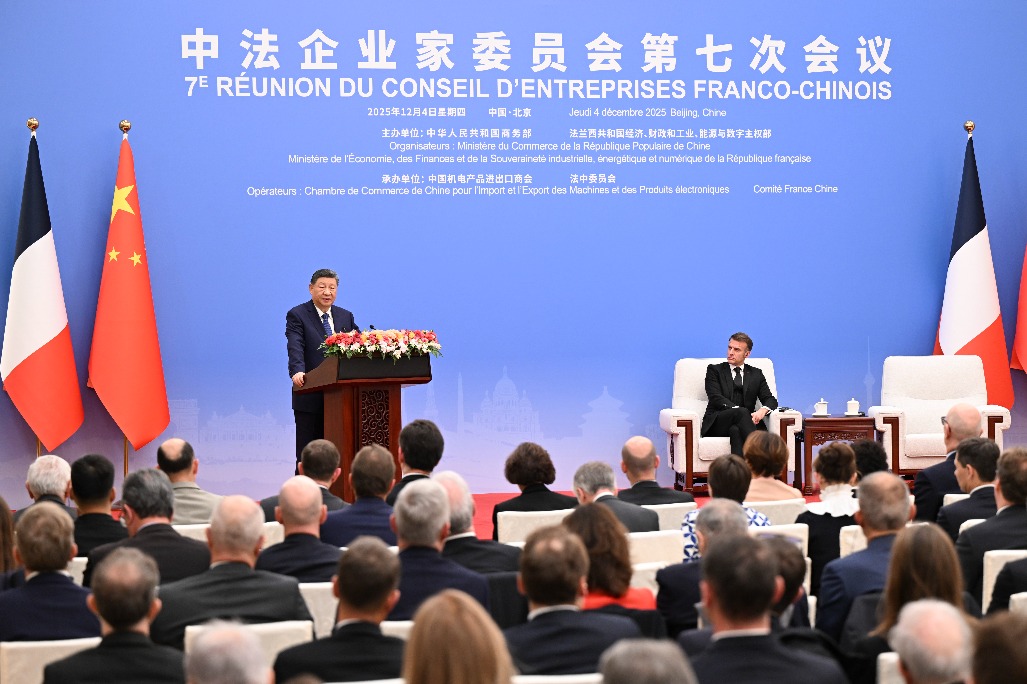
China's entry into the World Trade Organization in 2001 facilitated the Chinese economy's integration with the world's economy, which has benefited not only China but also the rest of the world, and helped it to overtake the United States as the world's largest trading country in 2013.
Thanks to its entry into the WTO, China was also motivated to reform its trade, economic and financial institutions to better promote free trade, facilitate investment, encourage competition and strengthen IPR protection. This in turn has encouraged Chinese enterprises to upgrade their technologies, and sharpen their competitive edge in global markets.