Building a Regional Cooperation System of Ocean Governance in the South China Sea










The South China Sea is one of the busiest waterways in the world, serving as a major artery in the global trade system and a common home for more than 2 billion people in the region. However, the South China Sea faces not only non-traditional security threats such as resource depletion, environmental pollution, piracy and armed robbery, but also traditional security challenges, including complex maritime disputes and growing geopolitical competition.
In particular, unilateral actions for consolidating vested interests, involvement of external forces, interference with the Code of Conduct for the South China Sea (COC) consultations and other negative factors not conducive to the stability of the South China Sea have highlighted the importance of regional cooperation.
First, since 2017, some countries have launched a wave of unilateral development of oil and gas resources in the waters with overlapped claims for economic interests and political declarations, with frequent standoffs on the sea.
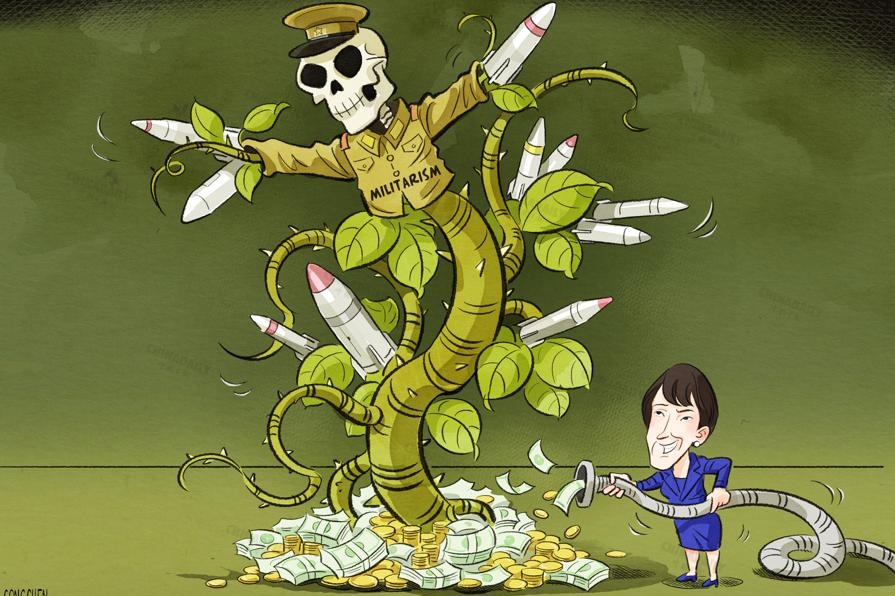
Second, how to deal with the geopolitical competition in the South China Sea caused by external forces is an issue that deserves consideration now by all countries in the region. For a long time before the end of the Cold War, the South China Sea was an important arena where the Eastern and Western maritime powers competed for sea power. Since the second decade of the 21st Century, the United States and some other extra-regional countries have expanded their military and diplomatic influence on the disputes in the South China Sea and regional security affairs, out of their desire for maritime power and dominance in the regional maritime order. In particular, the United States has abandoned its relative “neutral” position and seized the South China Sea issue to contain and pursue long-term strategic competition with China in the South China Sea. Growing pressure imposed on China by the United States and other extra-regional countries has made the security landscape in the South China Sea increasingly complex and challenging.
Third, the COC consultations are confronted with both external interference and internal resistance. The Declaration on the Conduct of Parties in the South China Sea (DOC) signed in 2002 made arrangements on practical maritime cooperation among littoral states. Based on the DOC, the COC will offer a solution to the building of a more effective and stable framework for practical maritime cooperation. As the COC consultations have made rapid progress since 2017, the United States and other extra-regional countries began to make gross interference with the consultations in various ways, and some claimant countries also made moves not instrumental to talks on the COC negotiating text, out of their own policies and strategic considerations.
For decades, scholars from countries in and outside the region have had thorough discussions on cooperation in the South China Sea, with many ideas proposed. In my opinion, China and ASEAN countries can build a regional cooperation system of ocean governance in the South China Sea guided by the concept of “a maritime community of a shared future”, based on the cooperation mechanism of coastal countries and focusing on non-traditional security fields.
First, fisheries and environmental protection should be the priorities in promoting practical maritime cooperation under the DOC framework. With shared interests and common challenges in these two fields, China and ASEAN countries can start with cooperation on fisheries and environmental protection, and then put into practice the cooperation on waterway safety, marine scientific research, and maritime search and rescue, one by one, as stipulated in Article 6 of the DOC.
Second, littoral states need to build a cooperation mechanism centered on maritime connectivity, tourism and resource surveys. Based on their port facilities, China and ASEAN countries can promote connectivity among their coastal areas for joint development of the maritime economy. At the same time, coastal countries can fully tap the rich tourism resources and huge market potentials of the South China Sea to build a regional tourism cooperation mechanism around the South China Sea. As important elements of this regional cooperation mechanism, they can launch cooperation projects to survey resources such as fisheries, coral reefs and biodiversity, and build platforms to share data resources.
Third, littoral states can push forward their cooperation on maritime search and rescue and humanitarian rescue focused on institutional building and facility deployment. The South China Sea is prone to marine perils and accidents, given its complex and volatile weather and frequent catastrophic weathers such as typhoons, strong convections, high winds at sea and sea fogs. According to rough estimates, the annual rate of accidents per 10,000 ships sailing in the South China Sea is close to 30, with an average death toll of about 0.58 per accident. In particular, the recent ship blocking incident in the Suez Canal highlights the importance of establishing a regional cooperation mechanism and capacity system sufficient to maintain the safety of the South China Sea shipping lanes, for regional and even global economic stability.
Chinese and ASEAN government departments need to put on their agendas as soon as possible the establishment of a stable regional cooperation framework for maritime search and rescue and humanitarian relief. They can begin with institutional building and facility deployment as a priority and construct civilian service facilities on the Nansha islands and reefs as an important part of their efforts.
Fourth, littoral states can draw on practices and experience of other regions to negotiate and sign a convention on environmental protection in the South China Sea. There are extensive practices in regional cooperation on marine environmental protection in the world. In particular, since the late 1960s, European countries began to adopt an approach of narrowing claims and expanding cooperation to explore cooperation on marine environmental protection in the North Sea, Mediterranean Sea and Baltic Sea, from which coastal countries to the South China Sea need to learn. At present, the Mediterranean Sea, North Sea (Northeast Atlantic) and Baltic Sea have built their own regional cooperation networks and mechanisms for marine environmental protection, such as the Convention for the Protection of the Mediterranean Sea against Pollution (the Barcelona Convention), the Agreement for Cooperation in Dealing with Pollution of the North Sea by Oil, and the Convention on the Protection of the Marine Environment of the Baltic Sea Area. In accordance with these conventions, European countries have established committees to coordinate cooperation among coastal states in marine environmental protection. For example, in 1995, the European Union established the Mediterranean Commission on Sustainable Development (MCSD) under Article 4 of the Barcelona Convention. Littoral states of the South China Sea can learn from existing international practices and sign the South China Sea Convention on Environmental Protection as a rules-based and institutional arrangement for regional marine environmental protection.
WU Shicun is President of China’s National Institute for South China Sea Studies and Chairman of China-Southeast Asia Research Center on the South China Sea