
The China Story
at your Fingertips
OPEN

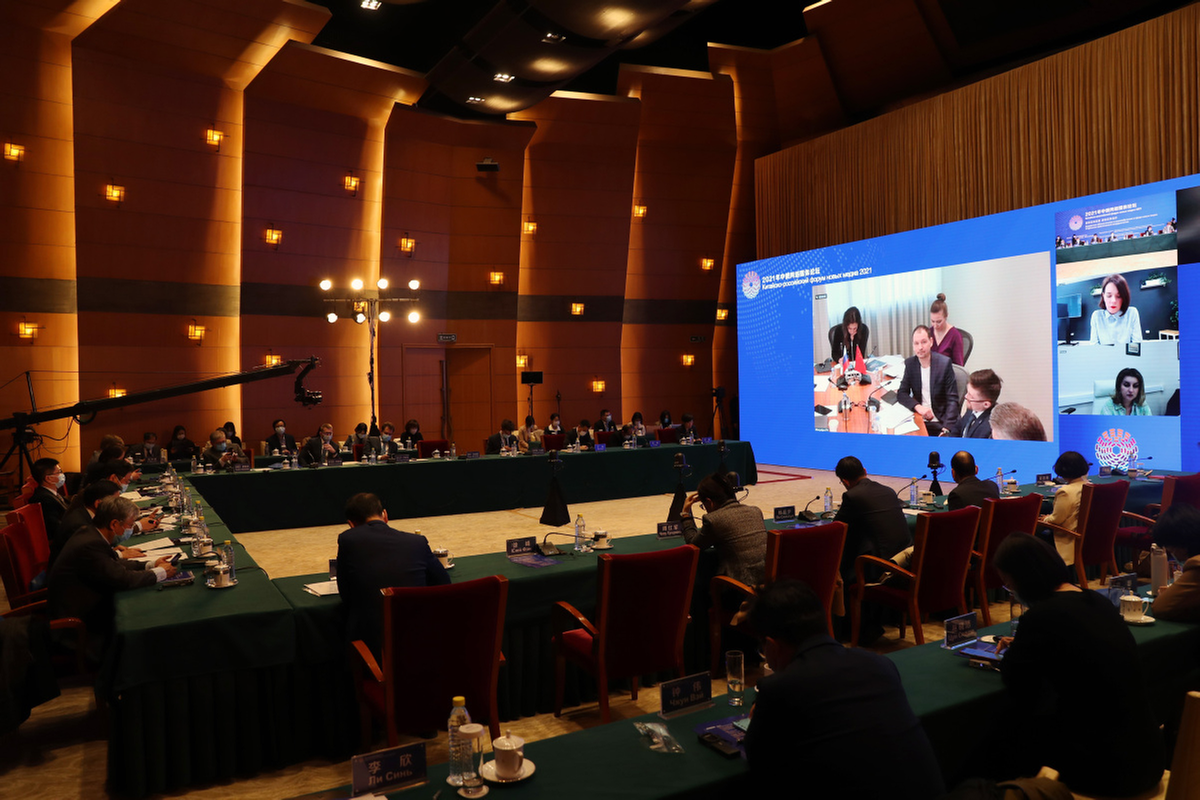
The COVID-19 pandemic changed the Russian audience's understanding and requirement for video products, said Denis Perepelitsyn, head of communications of SPB TV, at the 2021 China-Russia Internet Media Forum via video link on Nov 22.
According to statistics, Russian audiences expressed great interest in Chinese programs, he said, adding many Russians have started to watch Chinese documentaries about fighting COVID-19. China's light amusement programs are also popular in Russia.
The 2021 China-Russia Internet Media Forum, with the theme of "Promoting Exchanges and Mutual Learning, Deepening Practical Cooperation", was held online via video link as well as offline at venues in Beijing and Moscow.
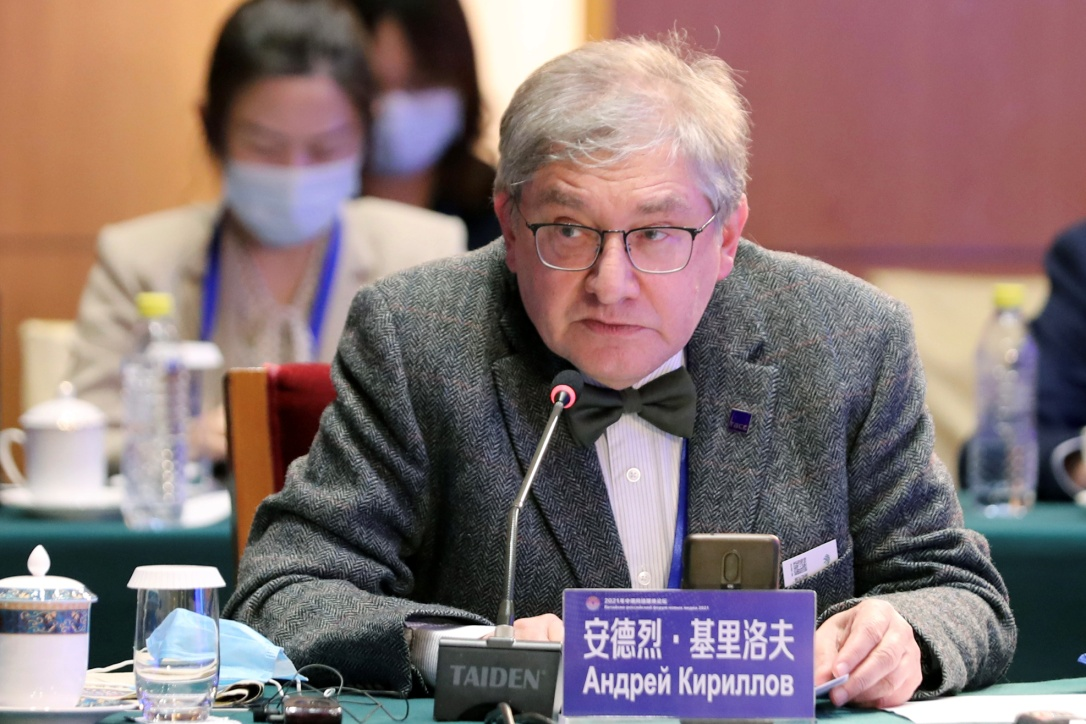
Over the past 15 to 20 years, China-Russia media cooperation created new chapters in history, said Andrey Kirillov, Beijing bureau chief of Russia's ITAR-TASS News Agency, at the 2021 China-Russia Internet Media Forum in Beijing, on Nov 22.
For the upcoming 2022 Beijing Winter Olympics, emerging technologies will help media report this event. We will put more efforts into preparations for this event during future Sino-Russian media cooperation, he said.
The 2021 China-Russia Internet Media Forum, with the theme of "Promoting Exchanges and Mutual Learning, Deepening Practical Cooperation", was held online via video link as well as offline at venues in Beijing and Moscow.
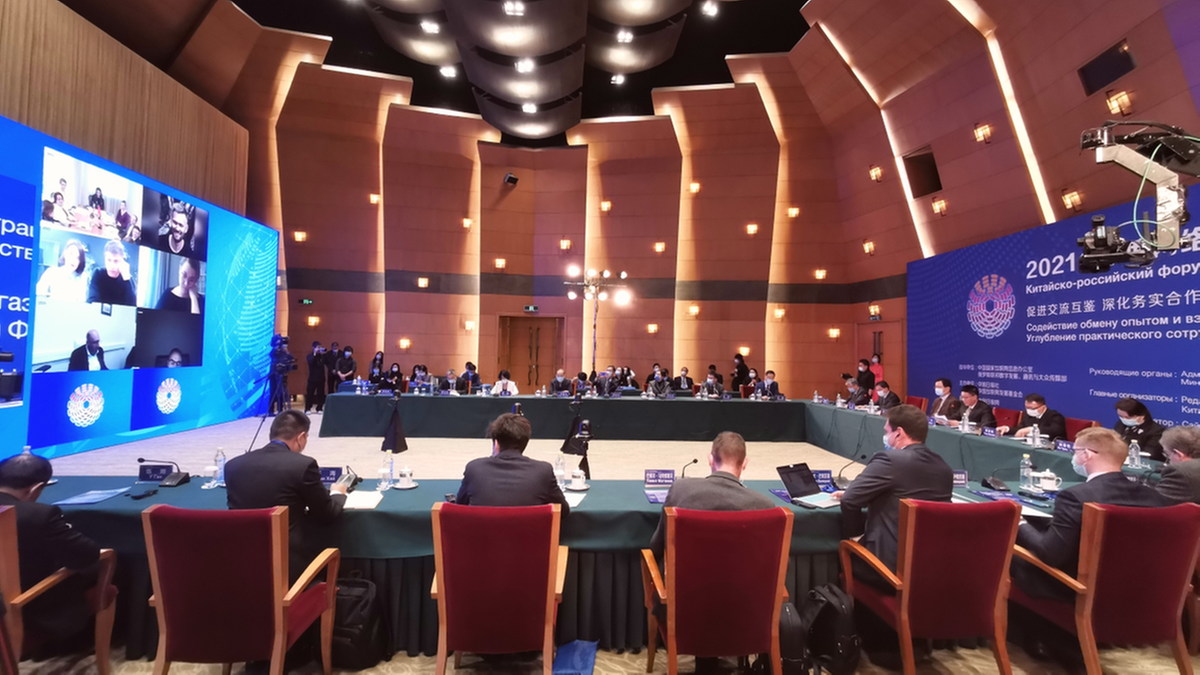
The international diversified cooperation between media in content communications and joint projects lays a solid foundation for a connected information space, said Vasily Pushkov, director of the Directorate for International Cooperation MIA "Russia Today", at the 2021 China-Russia Internet Media Forum via video link on Nov 22.
The Russian media attach great importance to international media cooperation, and our major partner has been, and will be, China, Pushkov said. There are numerous cooperation projects between the two sides, he added.
The 2021 China-Russia Internet Media Forum, with the theme of "Promoting Exchanges and Mutual Learning, Deepening Practical Cooperation", was held online via video link as well as offline at venues in Beijing and Moscow.

Russian people pay extensive attention to news about China, especially in artificial intelligence, investments and e-commerce areas, where top stories come from, said Lika Gergedava, head of the Special Projects Department of the Federal State Budgetary Institution "Editorial Office of the Rossiyskaya Gazeta", at the 2021 China-Russia Internet Media Forum via video link on Nov 22.
The friendly relations between China and Russia are helpful in launching cooperative projects, making Russian consumers know more about Chinese culture, economy and technologies, she said.
The 2021 China-Russia Internet Media Forum, with the theme of "Promoting Exchanges and Mutual Learning, Deepening Practical Cooperation", was held online via video link as well as offline at venues in Beijing and Moscow.

As the year 2021 marks the 20th anniversary of the signing of the China-Russia Treaty of Good-Neighborliness and Friendly Cooperation, Russian-related topics have enjoyed great popularity on the Chinese news portal Netease, according to Li Li, CEO of NetEase Media Group, at the 2021 China-Russia Internet Media Forum in Beijing, on Nov 22.
Netease has published more than 450,000 articles and videos to date related to the China-Russia relationship since the beginning of the year, drawing a total of 600 million cumulative views. Russian tourism, cuisine, and China-Russia economic and trade cooperation are among the hottest keywords in user searches, Li said.
The number of Russia-related discussions has exceeded 50 million on Netease, the executive said, adding that hundreds of bloggers record their lives in Russia, as well as share Russian food and travel experiences on the platform.
"Moscow, St. Petersburg and Yekaterinburg are the most mentioned Russian cities by those bloggers," she said, adding that Russian writers such as Alexander Pushkin and Anton Chekhov are also cited by Chinese internet users every now and then.
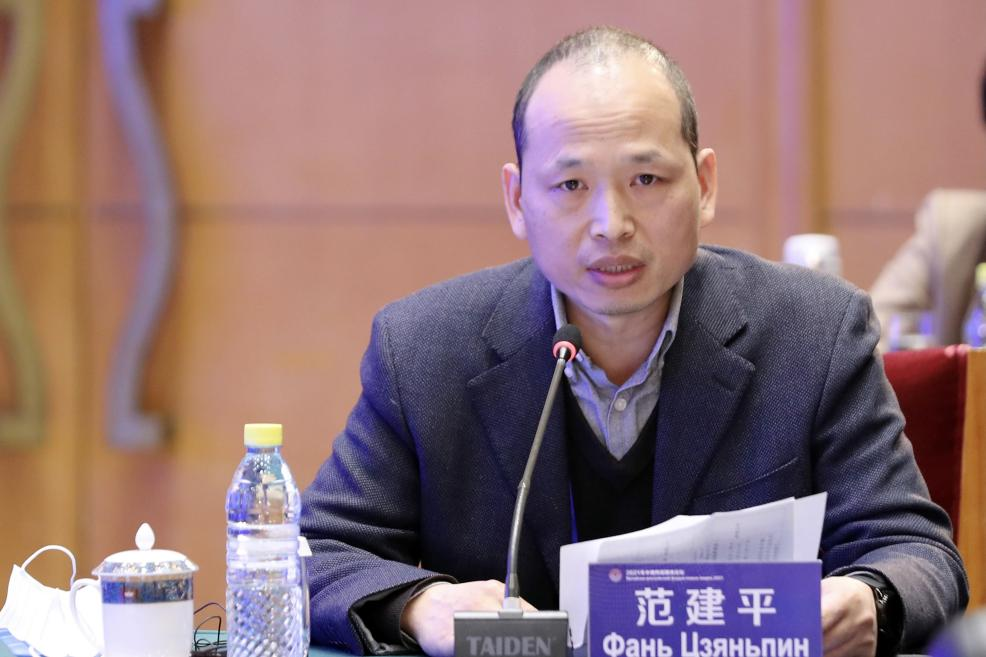
Online media serves as a key channel to boost China-Russia people-to-people exchanges, as residents of the two countries should know more about each other, said Fan Jianping, president of China Radio International, at the 2021 China-Russia Internet Media Forum held online as well as offline in venues located in Beijing and Moscow on Nov 22.
As local media remains the primary source of news about the rest of the world for people in China and Russia, online media can serve as a bridge for the two countries by sharing a variety of information in a timely manner, Fan said, adding that online media of China and Russia could dive even deeper into certain topics to spark public interest.
Unlike traditional media, which relies on news and information for readership, online media can draw attention through something simple, like a fascinating product, tale or person. For example, trending stories about topics such as Russia's ice cream and its beautiful metro stations can attract the interest of people in China, he said.
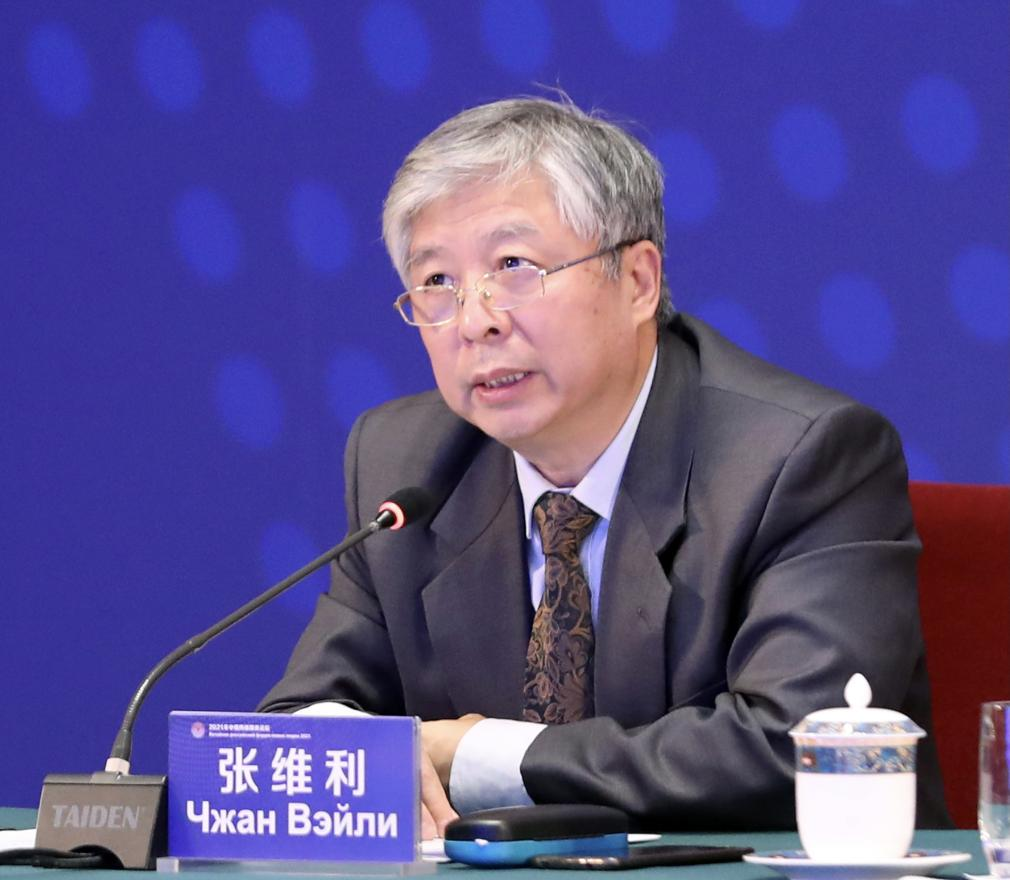
Deepening media cooperation is an important part of Sino-Russian strategic cooperation and people-to-people exchanges, said Zhang Weili, counsellor of the Department of European-Central Asian Affairs under the Ministry of Foreign Affairs, at the 2021 China-Russia Internet Media Forum on Monday.
Colorful, real and vivid stories about the two countries should be widely publicized through online media, Zhang said, adding it will give the international community a better understanding of China-Russia relations and provide a more objective view of China-Russia cooperation.
Regarding any negative reports aiming to deliberately smear the two countries and undermine China-Russia relations, media should have the courage to expose lies and restore the truth, creating a good environment for public opinion on both nations' development and rejuvenation, Zhang added.
Media development cannot be separated from strong technical support and theoretical innovation, so China and Russia should strengthen their technical innovation and use of 5G, big data, virtual reality and artificial intelligence, to promote the integrated development of the media sector, Zhang said.
Both sides should further strengthen innovation in communication concepts, content and patterns. Meanwhile, technological factors such as 5G, internet, big data, AI, blockchain and VR should be comprehensively used to boost the integrated development of the media sector.
The forum, the fifth of its kind, was held online via video link as well as offline in branch venues located in Beijing and Moscow on Nov 22.
With a focus on "promoting exchanges and mutual learning, deepening practical cooperation," the forum was co-hosted by China Daily and the China Internet Development Foundation.
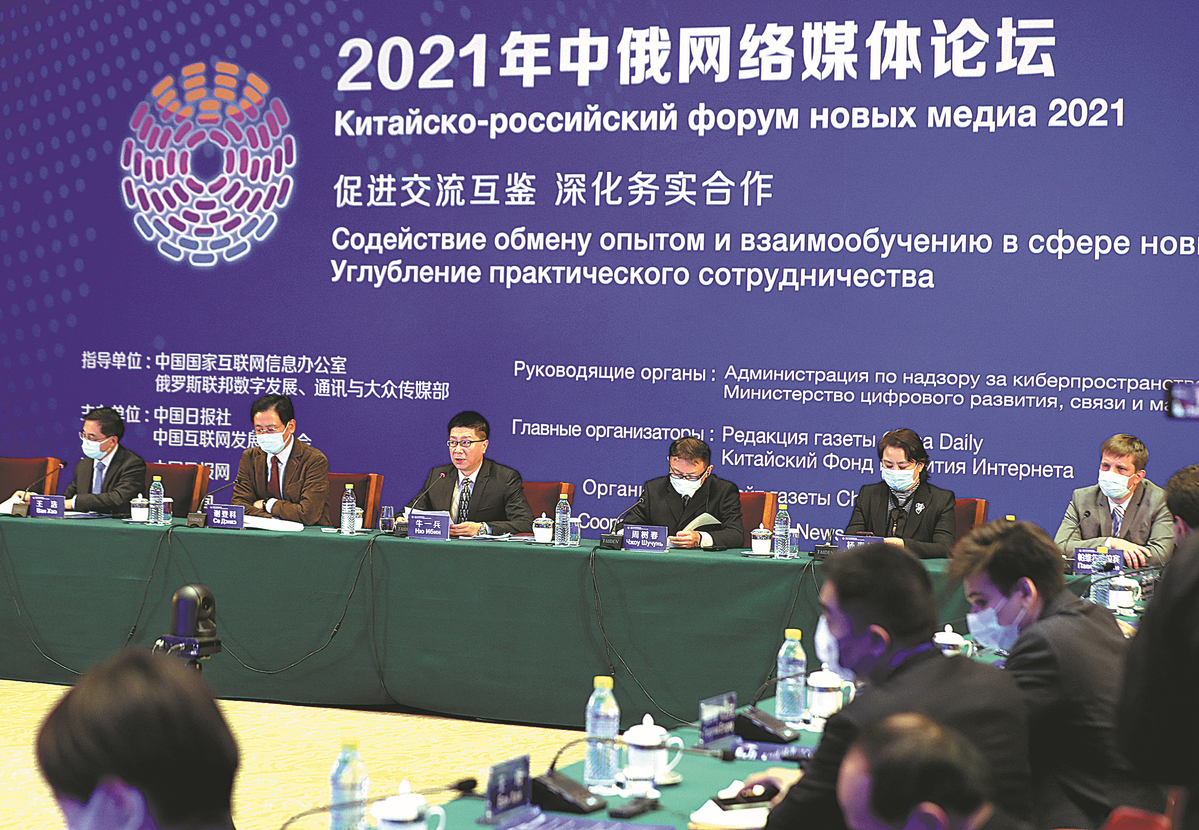
Chinese and Russian internet media outlets should promote multilateralism, combat false information, safeguard equity and justice in cyberspace, and contribute more to the friendly ties between the two countries, a forum was told on Monday.
The 2021 China-Russia Internet Media Forum, with the theme of "Promoting Exchanges and Mutual Learning, Deepening Practical Cooperation", was held online via video link as well as offline at venues in Beijing and Moscow.
Niu Yibing, deputy minister of the Office of the Central Cyberspace Affairs Commission, said that since the outbreak of the COVID-19 pandemic, the internet has played an important role by assisting the recovery of the global economy, restoring the normal functioning of society and promoting international cooperation in fighting the pandemic.
The internet media of the two countries should firmly practice and promote the concept of multilateralism and jointly safeguard the international cyberspace order, Niu said.
They also should safeguard equity and justice in cyberspace and contribute to the development of bilateral relations as well as cooperation in various fields, he added.
Niu said that the environment of global public opinion is becoming increasingly complicated, with ideological bias, power politics and false information bringing new challenges to global communication.
The internet media of China and Russia should work together to make voices heard on major international and regional issues, fight false information and amplify the voice of justice, truth and rationality, he said.
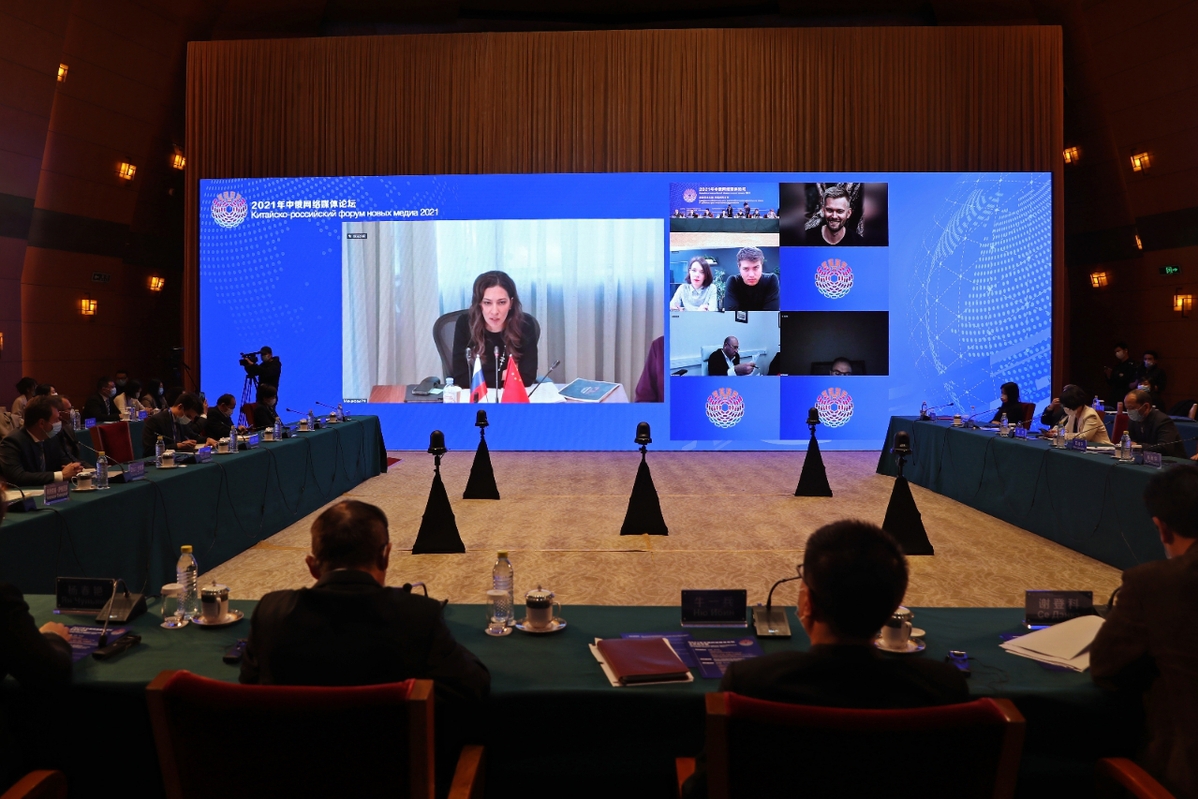
Bella Cherkesova, Russian deputy minister of digital development, communications and mass media, said that internet media of both countries should strengthen communication and disseminate objective and truthful information in a timely manner, so that they can meet the information demand of people in both countries.
She added that as the internet has developed rapidly and penetrated people's everyday life, it is important for internet media and the internet industries of China and Russia to work together to ensure the security of cyberspace.
Moreover, media outlets need to be alert to false information and false news, which have become widespread since the onset of the pandemic and have caused much damage.
Zhou Shuchun, publisher and editor-in-chief of China Daily, said that over the past five years, driven by the China-Russia Internet Media Forum, Chinese and Russian internet media outlets and internet industries have achieved fruitful results of cooperation. Nearly 30 media outlets from both countries have cooperated, exchanging more than 100,000 articles of various kinds.
"From content cooperation and personnel exchanges to industrial integration,… the online media and internet industries of both countries have demonstrated with concrete actions the high level of China-Russia comprehensive strategic partnership of coordination," he said.
Zhou urged both countries' online media to jointly produce high-quality products, through such means as joint interviews and building shared resource libraries, to better satisfy the global audience's demand for high-quality media products.
The Russia-China Internet Media Forum plays an important role in maintaining communication between Russian and Chinese media, and is an effective platform for establishing bilateral exchanges in the media sector, Russian Ambassador to China Andrey Denisov said during the forum.

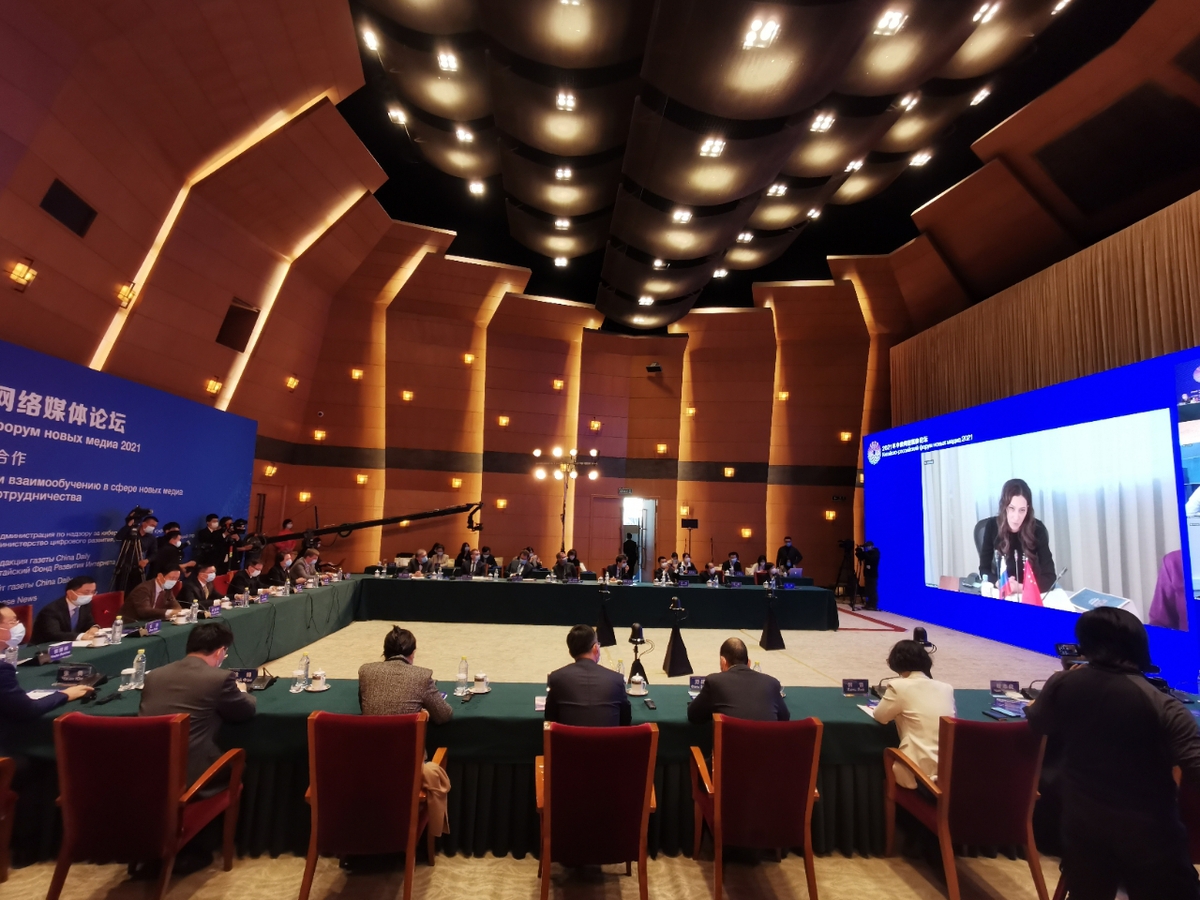
Chinese and Russian internet media outlets should promote multilateralism, combat false information, safeguard equity and justice in cyberspace, and contribute more to the friendly ties between the two countries, a forum was told on Monday.
The 2021 China-Russia Internet Media Forum, with the theme of "Promoting Exchanges and Mutual Learning, Deepening Practical Cooperation", was held online via video link as well as offline at venues in Beijing and Moscow.
Niu Yibing, deputy minister of the Office of the Central Cyberspace Affairs Commission, said that since the outbreak of the COVID-19 pandemic, the internet has played an important role by assisting the recovery of the global economy, restoring the normal functioning of society and promoting international cooperation in fighting the pandemic.
The internet media of the two countries should firmly practice and promote the concept of multilateralism and jointly safeguard the international cyberspace order, Niu said. They also should safeguard equity and justice in cyberspace and contribute to the development of bilateral relations as well as cooperation in various fields, he added.
Niu said that the environment of global public opinion is becoming increasingly complicated, with ideological bias, power politics and false information bringing new challenges to global communication. The internet media of China and Russia should work together to make voices heard on major international and regional issues, fight false information and amplify the voice of justice, truth and rationality, he said.

Bella Cherkesova, Russian deputy minister of digital development, communications and mass media, said that internet media of both countries should strengthen communication and disseminate objective and truthful information in a timely manner, so that they can meet the information demand of people in both countries.
She added that as the internet has developed rapidly and penetrated people's everyday life, it is important for internet media and the internet industries of China and Russia to work together to ensure the security of cyberspace. Moreover, media outlets need to be alert to false information and false news, which have become widespread since the onset of the pandemic and have caused much damage.
Zhou Shuchun, publisher and editor-in-chief of China Daily, said that over the past five years, driven by the China-Russia Internet Media Forum, Chinese and Russian internet media outlets and internet industries have achieved fruitful results of cooperation. Nearly 30 media outlets from both countries have cooperated, exchanging more than 100,000 articles of various kinds.
"From content cooperation and personnel exchanges to industrial integration, … the online media and internet industries of both countries have demonstrated with concrete actions the high level of China-Russia comprehensive strategic partnership of coordination," he said.
Zhou urged both countries' online media to jointly produce high-quality products, through such means as joint interviews and building shared resource libraries, to better satisfy the global audience's demand for high-quality media products.
The forum, the fifth of its kind, was co-hosted by China Daily and the China Internet Development Foundation.
Internet media outlets of China and Russia also reached a consensus during the forum, pledging to focus on the common interests of the two countries, tell stories of bilateral friendship and deepen cultural exchanges, in order to enhance mutual trust between China and Russia.
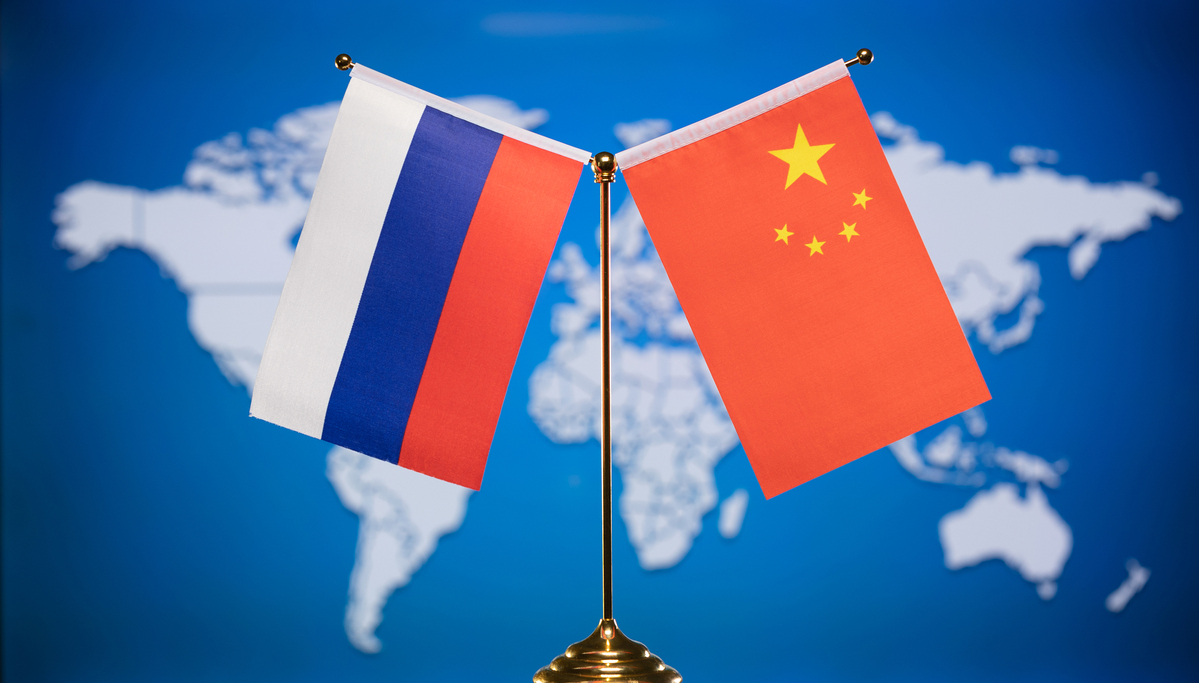
The 2021 China-Russia Internet Media Forum — with a theme of "Promoting exchanges and mutual learning, deepening practical cooperation" — will be held online via video link as well as offline in branch venues located in Beijing and Moscow on Nov 22.
Officials, experts, scholars, and representatives of internet media and internet enterprises of the two countries will attend the event and discuss a series of topics about internet media development, including trends, innovations and cooperation.
2021 marks the 20th anniversary of the signing of the China-Russia Treaty of Good-Neighborliness and Friendly Cooperation, making this year's China-Russia Internet Media Forum — the fifth edition — a special occasion.
Previous editions of the forum took place in Guangzhou in 2016; in Rostov-on-Don, the biggest city in southern Russia, in 2017; in Wuxi, Jiangsu province in 2019; and in Beijing and Moscow in webinar form in 2020. In the past, the event has featured many subforums as well as sideline events and activities, such as a new media youth collaboration, China-Russia esports match, drone show and joint interviews.
The China-Russia Internet Media Forum has boosted communication between the internet and information departments of both countries. At the same time, it has also become an effective exchange platform for the internet media of China and Russia.
The 2021 China-Russia Internet Media Forum is directed by the Cyberspace Administration of China and the Ministry of Digital Development, Communications and Mass Media of the Russian Federation.
China Daily and the China Internet Development Foundation are the hosts of this year's forum, which is organized by China Daily website.
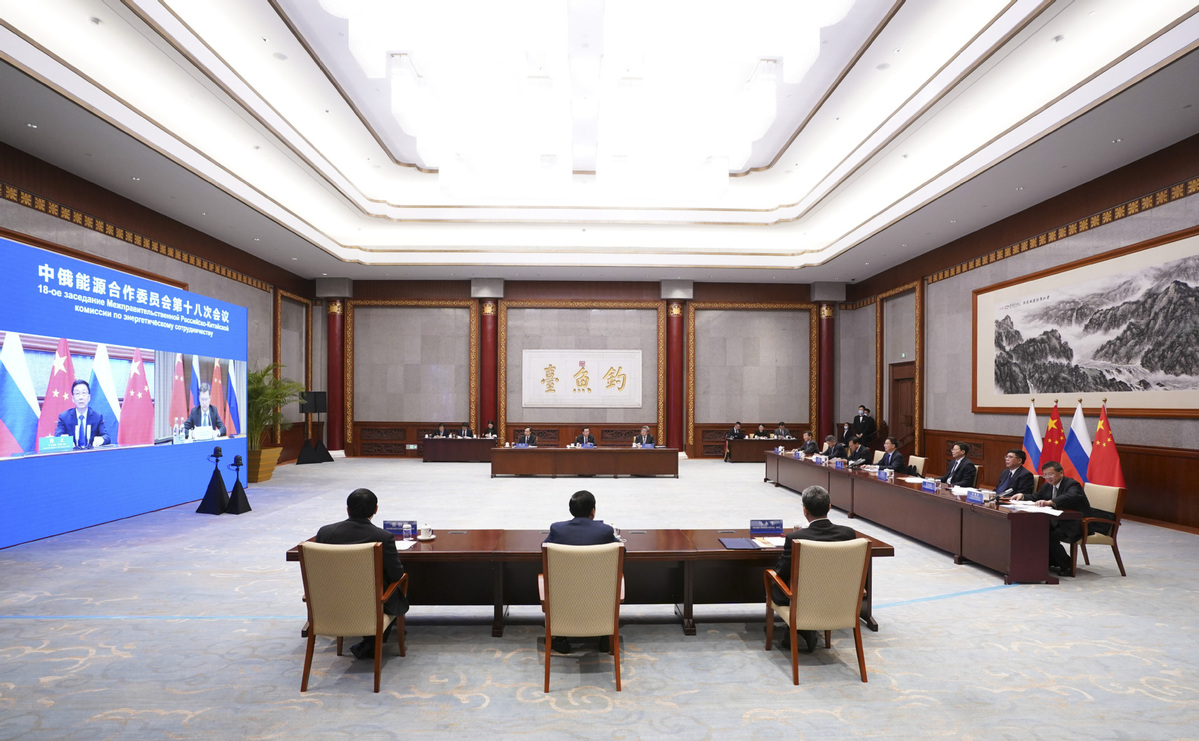
BEIJING - Vice-Premier Han Zheng on Wednesday called for enhanced energy cooperation with Russia at the 18th meeting of the China-Russia Energy Cooperation Committee.
Han, also a member of the Standing Committee of the Political Bureau of the Communist Party of China Central Committee, made the remarks when co-chairing the meeting with Russian Deputy Prime Minister Alexander Novak via video link.
Han said that, under the leadership of the heads of state of the two countries, the energy cooperation between China and Russia has overcome the adverse effects of the pandemic and maintained a positive momentum of development, with trade in energy reaching a new high, major cooperation projects steadily advanced and new areas of cooperation emerging.
It is hoped that the two countries will jointly implement the important consensus reached by the two heads of state, and promote China-Russia energy cooperation to secure more achievements, he said.
He called on the two sides to further deepen cooperation on nuclear energy, promote cooperation on projects such as oil and gas pipeline construction, expand new areas of energy cooperation, and gradually promote cooperation on renewable energy, hydrogen energy, energy storage and technological innovation.
He suggested that the two countries strengthen cooperation on global energy governance and the response to climate change, adhering to the principle of common but differentiated responsibilities, practicing multilateralism, and promoting the global energy governance system to move forward in a more fair, just and inclusive direction.
For his part, Novak said Russia stands ready to work with China to expand energy cooperation, promote all-round cooperation and push bilateral relations to a new high.

Editor's note:
The 2020 China-Russia Online Media Webinar was held on Friday, centering on the role of online media in the COVID-19 pandemic.
Government officials, experts, scholars, media organizations and representatives from internet companies in the two countries attended the event via video link, and conducted in-depth discussions on topics such as international public opinion patterns, media technology innovation and China-Russia new media cooperation in the context of the COVID-19 pandemic.
Let's see some highlights from the speakers at the webinar.
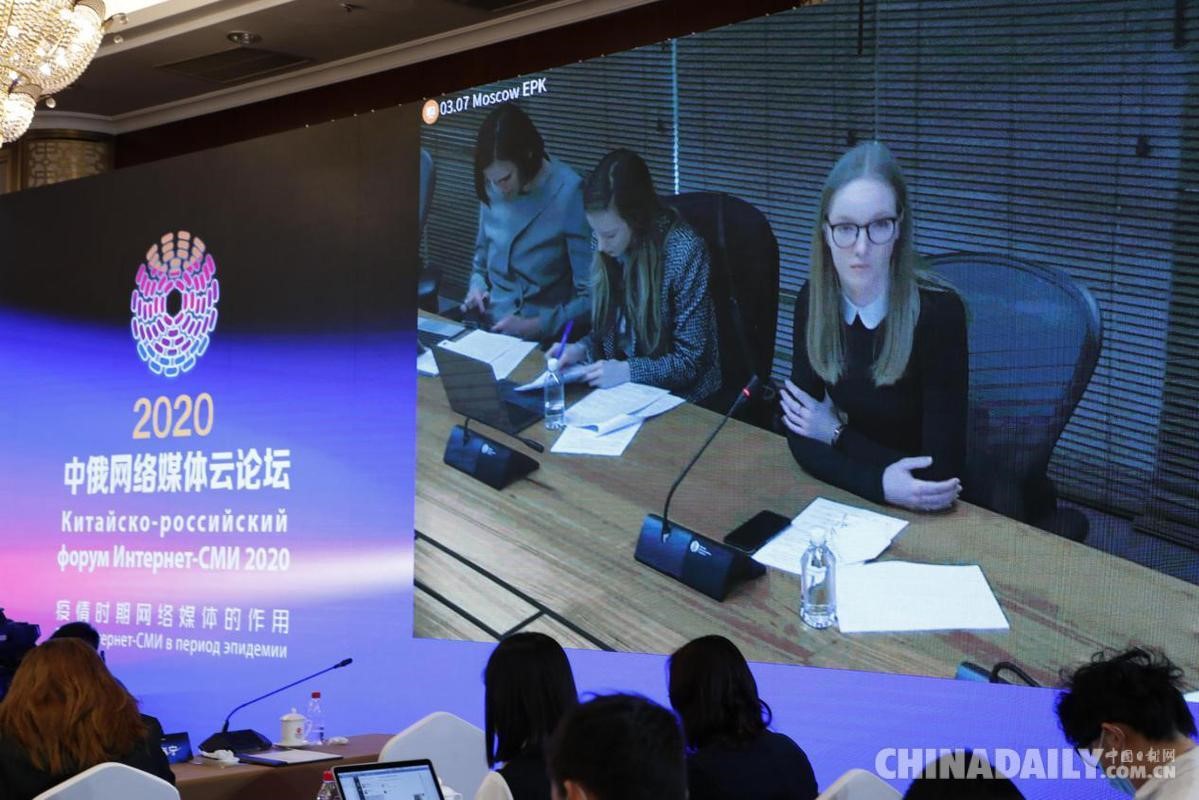
People are increasingly turning to reliable news due to the coronavirus pandemic. This requires not only a sense of responsibility, but also response to social concerns in a faster and more accurate way.
Between March and September this year, the agency's website produced 2,025 videos, and the number of views rose by 20 percent.
Reporting during the pandemic helps to enhance the social responsibility of media.
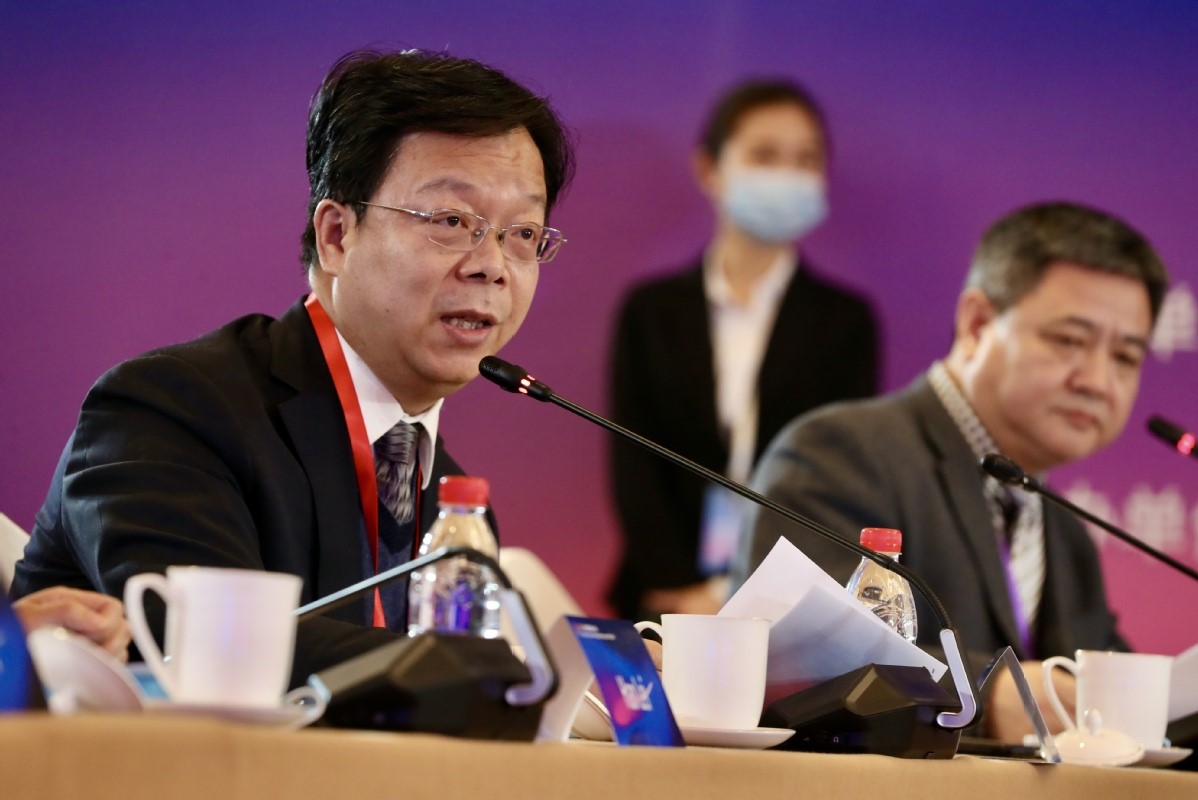
The media of China and Russia are facing huge challenges and are also ushering in new development opportunities through continuous exchanges.
The two sides should jointly advocate the truthfulness and objectivity of news reports, and promote a positive international public opinion environment.
The media of the two countries should take the lead in seeking facts, exposing lies, restoring the truth of the pandemic, and enhancing the understanding of the international community toward China and Russia. The understanding of social development and cultural customs can help eliminate possible misunderstandings and prejudices.
They could also have more opportunities for joint interview activities to produce more touching stories, further deepening the friendship between Chinese and Russians.
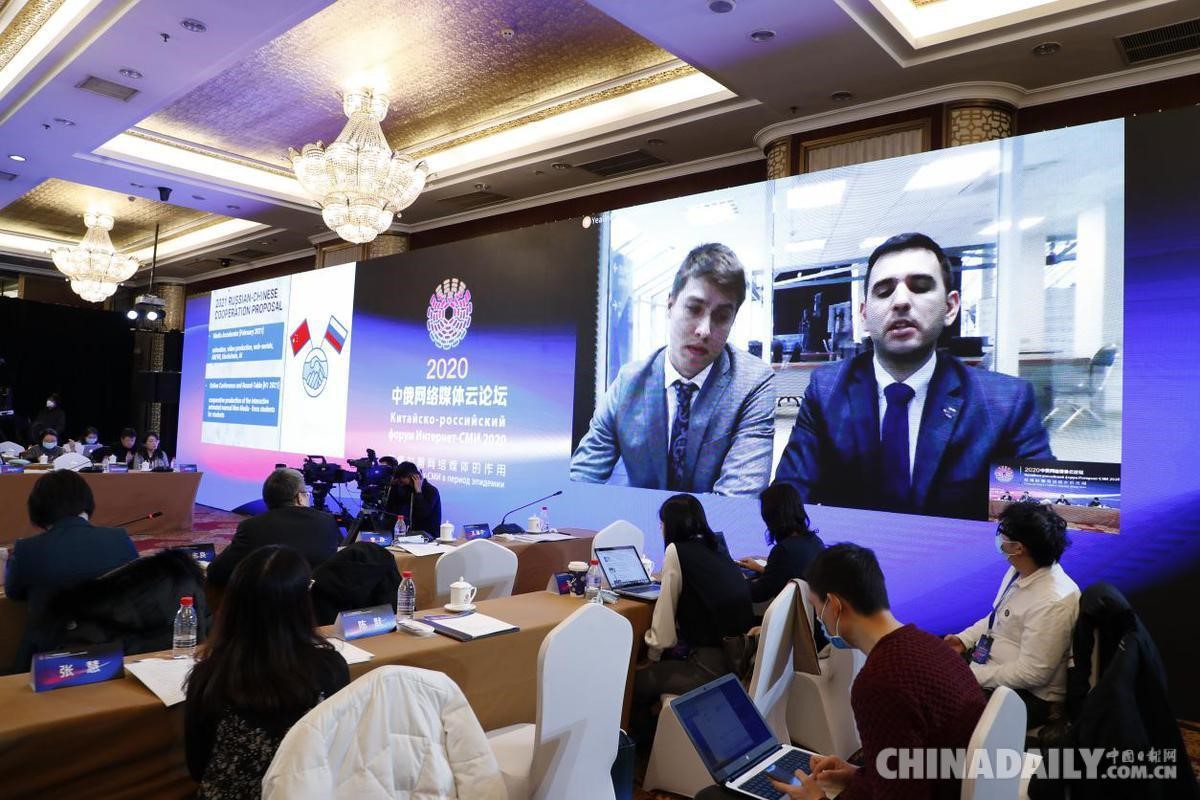
It is hoped that the youth of both China and Russia can exchange experiences on innovation and development and launch of multimedia education projects.
By holding these meetings, China and Russia can cooperate in areas such as animation, games, visual effects, blockchain systems, artificial intelligence and AR/VR. It is of great significance to the youth of both countries.
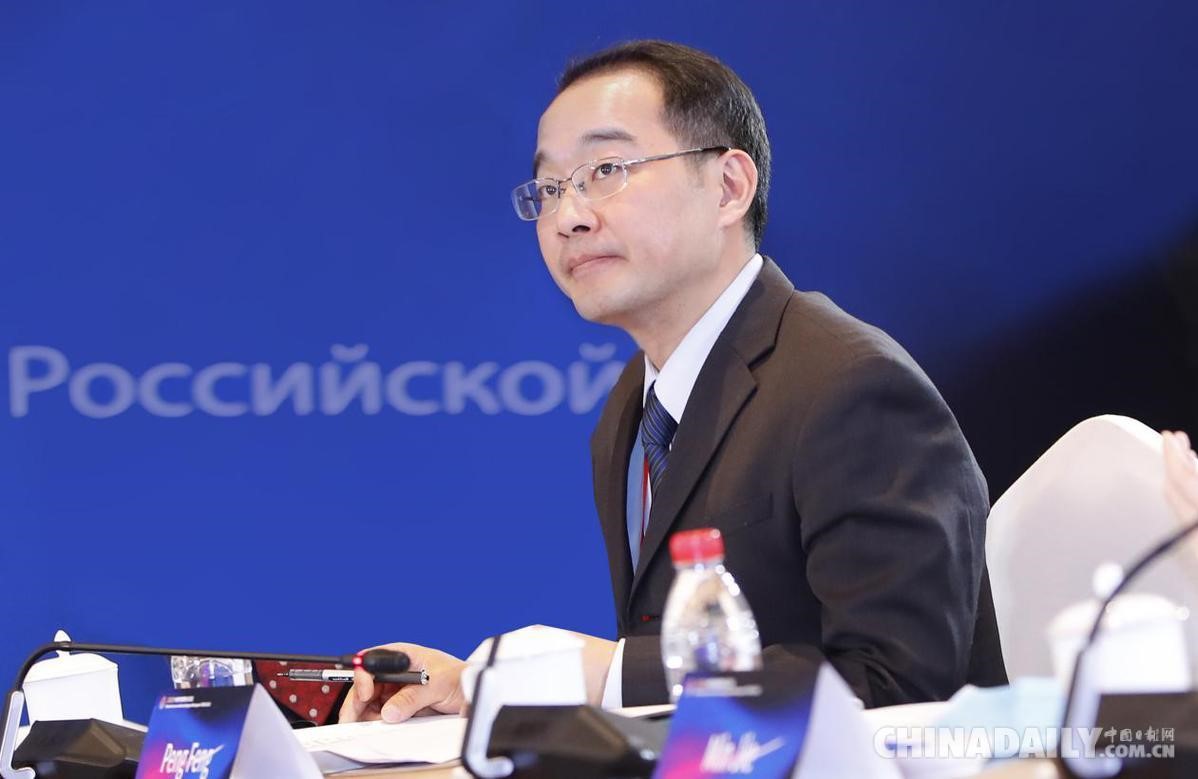
Online media has become an important bridge linking China's anti-pandemic forces, and inspired the Chinese people to fight against COVID-19.
It remains an important force in the fight against the pandemic by encouraging everyone to participate in pandemic prevention and control.
Social media app WeChat, short-video platforms Douyin and Kuaishou, the Quora-like question and answer site Zhihu and e-commerce platforms Meituan and JD all have media features to some extent, and cannot be ignored in mass communication.
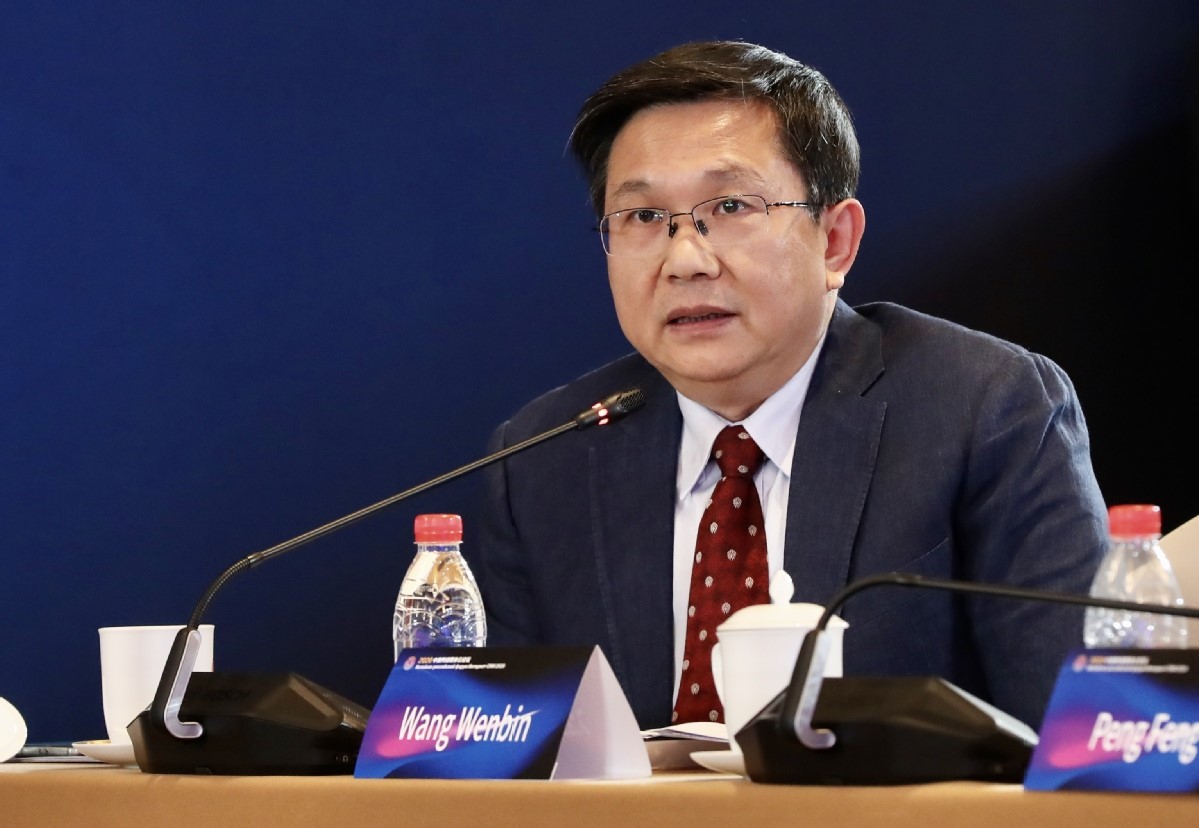
Although the pandemic has brought inconvenience to people's lives and face-to-face dialogue, it demonstrates the important role and great potential of online media in strengthening communication, deepening internal and external cooperation, and building a global community of health for all.
During the pandemic, China Media Group introduced slow live broadcast, a special form of communication in the information age. It has a natural sense of reality and presence, displaying every detail of the scene and event development in real time, and forming an immersive experience that deeply touches the hearts of netizens.
As part of China's national mainstream media, China Media Group will continue to make full use of new technologies, new platforms and new communication methods, and gradually achieve a new path for media integration and development.
The group will contribute to the comprehensive strategic partnership between China and Russia.
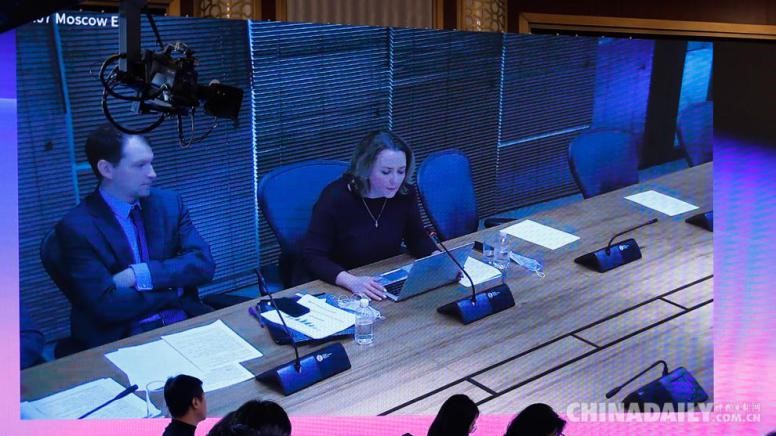
I don't think the pandemic will affect print media that has already been digitalized. Before the outbreak, the traditional media industry had undergone tremendous changes. And to be more specific, this huge change has enabled the industry to calmly face the crisis brought by the pandemic.
People's demand for print media has gone through a fundamental change to the consumption of its content, because of the wide application of digital technology in the media industry, such as social networks, information aggregation and recommendation services, applications and instant messaging programs.
Therefore, during the pandemic, the top priority of the media industry is no longer the form of the media, but whether the management and editors of publications can quickly respond to changes in the situation and adjust their work policies quickly.

During the pandemic, the value of omni-media has been fully highlighted. On Weibo, video and live broadcast formed an important part of its omni-media platform system.
But video is not everything. In terms of the consumption demands of media content, omni-mediatization is the ultimate goal of a complete media ecosystem. It is not only reflected in the presentation of multimedia content, but also in the dissemination, discussion and interaction of content, including the provision of valuable and diverse information.
Meanwhile, diversified and differentiated communication will occupy the main position. The pattern has become more obvious with ordinary netizens and self-media providing news clues, professional media giving in-depth reports and authorities having the final say.
Also, the communication matrix will have more dimensions, and communication on a deep level will be more popular.

Chinese and Russian TV networks have maintained close cooperation in various forms.
SPB TV started to broadcast the English and Chinese version program from CNC World by Xinhua News Agency in 2013 and exclusively broadcast a series of new media programs called Panda Channel in 2017.
However, the most valuable part of Sino-Russian relations is the friendship during this most difficult time. SPB TV had provided 100,000 masks to China.
There is a similar Russian proverb: a friend in need is a friend indeed. It could be used to describe the bilateral media cooperation between China and Russia.
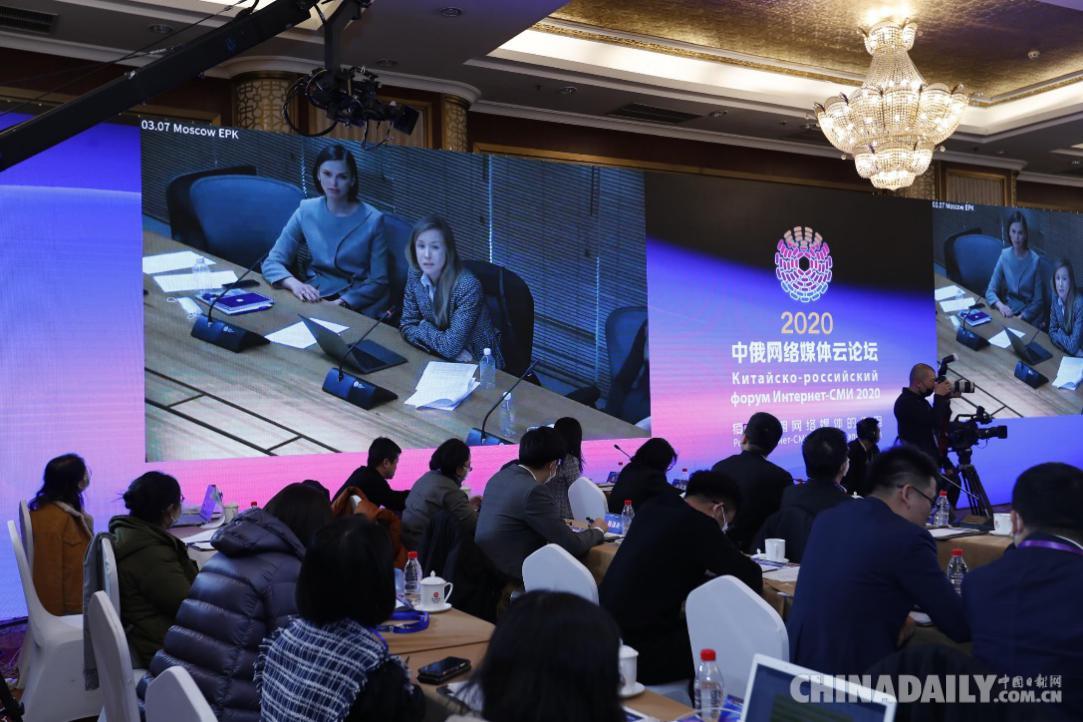
The COVID-19 pandemic has helped online media attract more attention. People search for thelatest news on the internet. The surge of pandemic-related news brought new challenges for the media.
Chinese and Russian media have been working together on many projects during the pandemic, which helps Russian readers learn about China's fight against the pandemic.
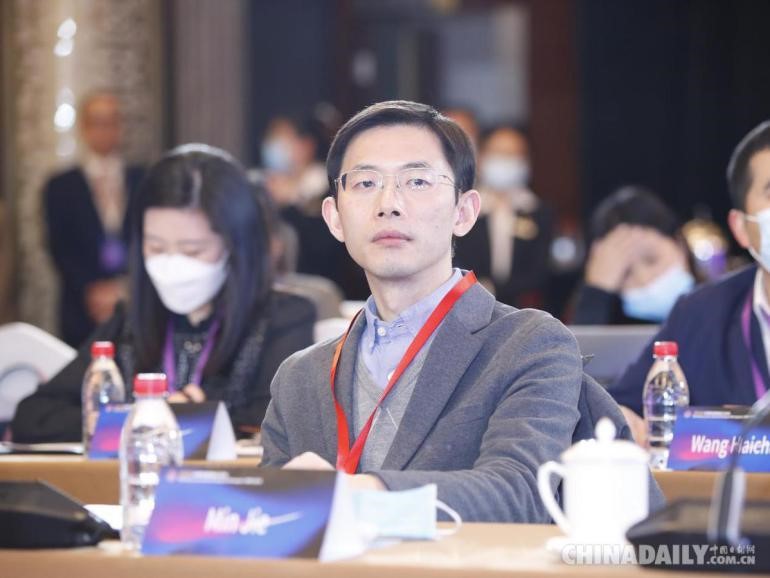
The media should not be absent at the scene when news happens. Facing a major public health incident, such as the COVID-19 pandemic, the media should dispel panic rather than magnify it, should correct prejudice rather than indulge it, and should advance constructive advice rather than stir up emotion or make troubles.
The COVID-19 pandemic is a brand-new topic for all. Millions of people are very interested in it, because it affects all of us. Therefore, it wasn’t difficult to increase page views.
Some media took advantage of this opportunity to release some scary, unconfirmed news. That essentially equals viral transmission. Only by being a reliable source can those newly-added users during the epidemic be kept.
The pandemic should not be explained and information spread from the perspective of race by the media. The photos and videos used in news related to the disease are very important, but they must be used in a responsible way to avoid unnecessary panic. The media should check the source of the information and only provide confirmed information.

Russians are very interested in Chinese media content, said Bella Cherkesova, deputy head of the Ministry of Digital Development, Communications and Mass Media of Russia, during the 2020 China-Russia Online Media Webinar in Beijing on Friday.
The integration of Eurasia, or even the whole world, is accelerating, and the architecture of international relations has changed dramatically, Cherkesova said, adding media were playing a unique role during this important historical period.
Information is flowing from all over the world every minute, and it's difficult to handle all it, said Cherkesova. Under this condition, priorities go to newspaper, magazines, internet publication, through which people obtain required and reliable information. During the COVID-19 pandemic, the reliability of information is especially important.
The pandemic has changed many aspects of social lives, Cherkesova said. Excluding the inevitable negative impact brought by quarantine, it has had positive impacts on the number of media users and quality of media content.
During the pandemic, Chinese media content became popular in Russia, thanks to deeper cooperation between Chinese and Russian outlets, as well as more spare time and less travelling, according to Cherkesova.
China is the country which has most contact with Russia in the media sector, Cherkesova said. The two countries have successfully held China-Russia Media Forum several times, and other events such as New Media Forum and China-Russia TV week.
Cherkesova said the media from both countries supported each other during the pandemic. Russia's SPB TV provided 100,000 medical masks to China.
China and Russia are facing an urgent task, that is, building a system which could solve various problems and create a positive and beautiful future for society and diplomacy of the two countries, Cherkesova added.
The 2020 China-Russia Online Media Webinar was held on Friday under the theme "Role of online media in the COVID-19 pandemic".
Government officials, experts and scholars, media organizations as well as representatives from internet companies of the two countries attended the event via video link, and conduct in-depth discussions and exchanges on a series of topics.
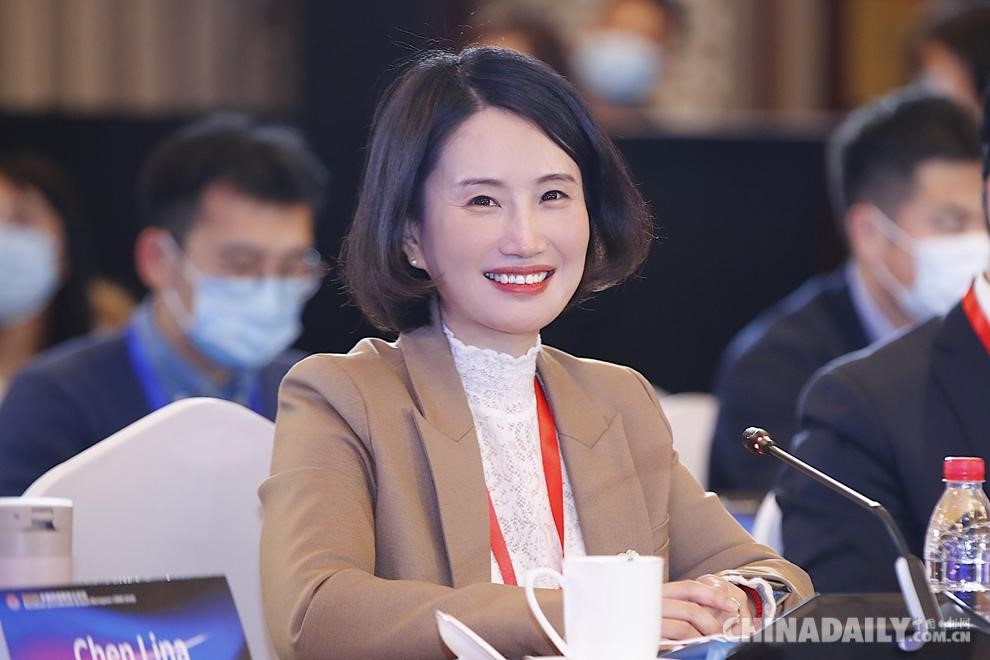
Real and heartwarming stories and innovative cooperation are key for China-Russia online media cooperation and development during the pandemic era, said Han Lei, editor-in-chief of China Daily Website, at the 2020 China-Russia Online Media Webinar in Beijing on Friday.
"The pandemic restricted face-to-face interaction between people, but provided wider application scenarios and more possibilities for online media," Han said.
China Daily Website, together with its Russian counterparts, jointly disseminated accurate, objective and authoritative information to readers around the globe during the pandemic era, the editor-in-chief said, adding online media from the two countries should further deepen cooperation in pandemic reporting by taking "real" as the priority.
"Online media of the two countries should spread the truth and refute rumors in pandemic reports, and fulfill the responsibility of the media," Han said.
China and Russia are facing different pandemic prevention and control situations, with differentiated methods in tackling difficulties, Han said, adding media from both sides should enhance mutual empathy and understanding in reporting pandemic news by focusing more on human interest and feel-good stories.
"Online media of the two nations have achieved real results in cooperation, thanks to a series of China-Russia online media forums held during the past years," Han said, pointing out the media should further innovate cooperation mechanisms and modes, and conduct deeper cooperation in technology innovation, talent training and exchanges, and new media products.
Focusing on the "role of online media in the COVID-19 pandemic", the webinar was hosted by China Daily and the China Internet Development Foundation. About 100 government officials, experts and scholars, media organizations and representatives from internet companies in the two countries attended. It is the fourth of its kind, after three previous forums held in 2016, 2017 and 2019.
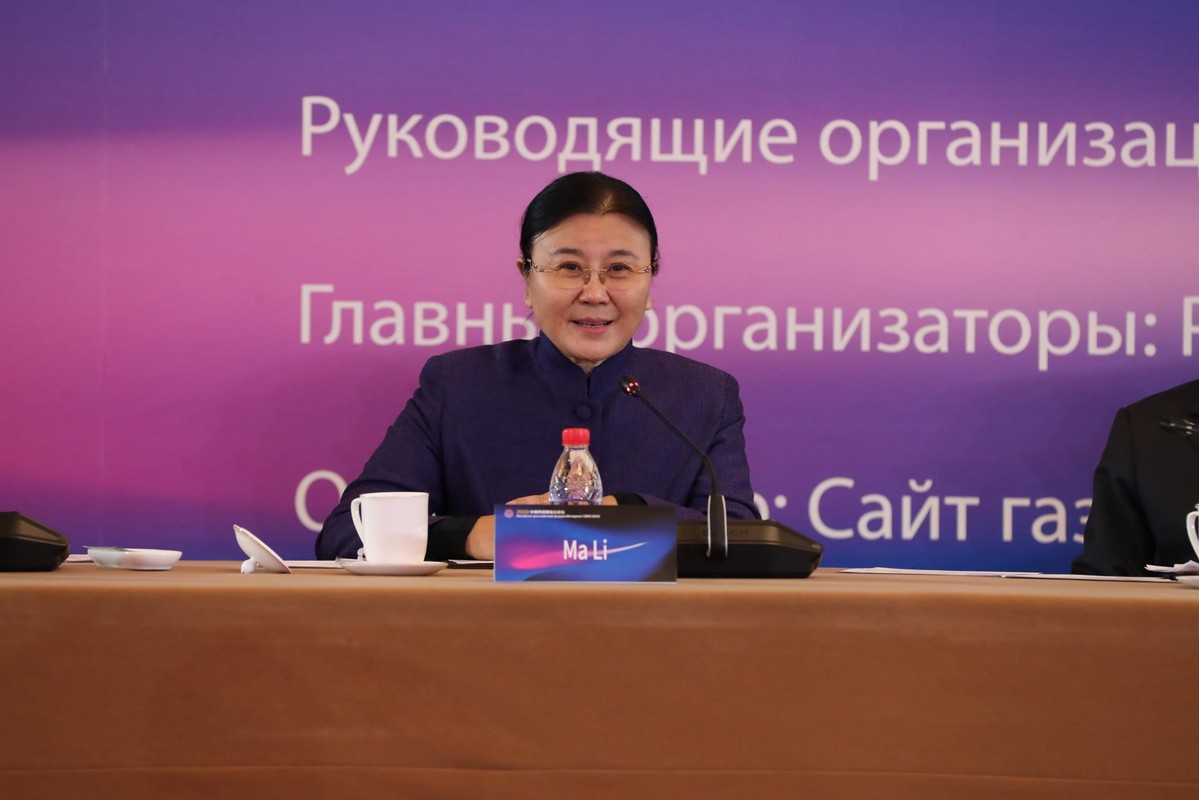
The pandemic has brought many obstacles to people's lives and work worldwide, but internet technologies have given full play to their unique advantages in the fight against the COVID-19 pandemic, said Ma Li, president of the China Internet Development Foundation, at the 2020 China-Russia Online Media Webinar on Friday.
"Today's world also is more wonderful because of the internet," Ma said.
"In China, people can remain in keep close contact with the outside world through the internet," she said, adding online food delivery, online car-hailing, online education, telemedicine and telecommuting have become the "standard" for people to work, live and study.
Ma pondered the tasks of the era facing online media practitioners, which include how to find ways for new forms of business represented by online media to gather new drivers of growth and embrace new development, and how to better meet people's production and living needs.
Founded in 2015, the China Internet Development Foundation is a public-raising social organization in the internet sector.
The forum, the fourth of its kind, kicked off in Beijing and Moscow via video link on Friday.
With a focus on the "role of online media in the COVID-19 pandemic", the forum was co-hosted by China Daily and the China Internet Development Foundation. About 100 government officials, experts and scholars, media organizations and representatives from internet companies in the two countries attended.
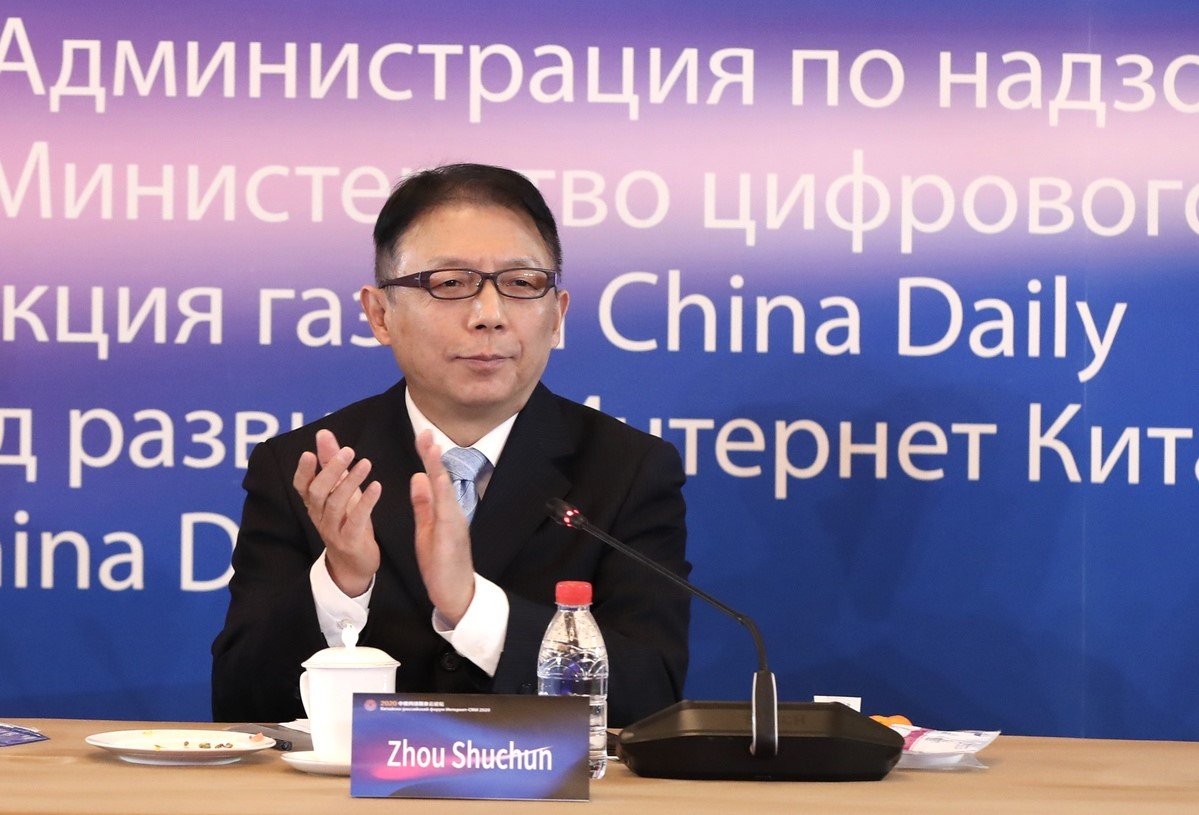
Online media in China and Russia should deepen cooperation and jointly enhance international discourse power, China Daily publisher and editor-in-chief Zhou Shuchun said at the 2020 China-Russia Online Media Webinar on Friday.
"We should conform to the times, grasp development trends, deepen all-round cooperation with innovative thinking and shoulder the responsibility of the media in the epidemic period," Zhou said.
As one of the most dynamic fields of innovative development and application of information technology today, the internet has played an important role in the prevention and control of the COVID-19 pandemic, and the digital industry and digital economy are showing signs of rapid development, he added.
As two world powers and permanent members of the United Nations Security Council, China and Russia are shouldering an important responsibility and mission and online media of the two countries should play a role as "pillars of the powers" and carry out practical cooperation to maintain multilateralism and play their important role in global strategic stability, he said.
Online media should deliver authentic and authoritative information and build consensus among the people, Zhou pointed out.
"At present, the risk of a second wave of epidemic prevention and control looms large. We should fully summarize beneficial experiences and do a good job through multiple forms, platforms and channels in news spreading, keep efficient circulation for true, authoritative and comprehensive information, and safeguard the public's right to know," he said.
Stories about the battle against the disease in the two countries should be soundly heard, and mutual trust for people between the two countries should be bridged by digital means, he added.
The publisher called on online media in the two countries to stay innovation-driven, and embrace "new infrastructure" to enable future development.
"Online media in the two countries should grasp the development opportunities brought by the 'new infrastructures' that accelerate media's innovation abilities via technology," he said, adding online media from the two nations should adhere to open sharing and cooperation, and expand cutting-edge technology innovation through joint laboratories, media innovation research centers and technology innovation talent exchanges.
The forum, the fourth of its kind, kicked off in Beijing and Moscow via video link on Friday.
With a focus on the "role of online media in the COVID-19 pandemic", the forum was co-hosted by China Daily and the China Internet Development Foundation. About 100 government officials, experts and scholars, media organizations and representatives from internet companies in the two countries attended the webinar.
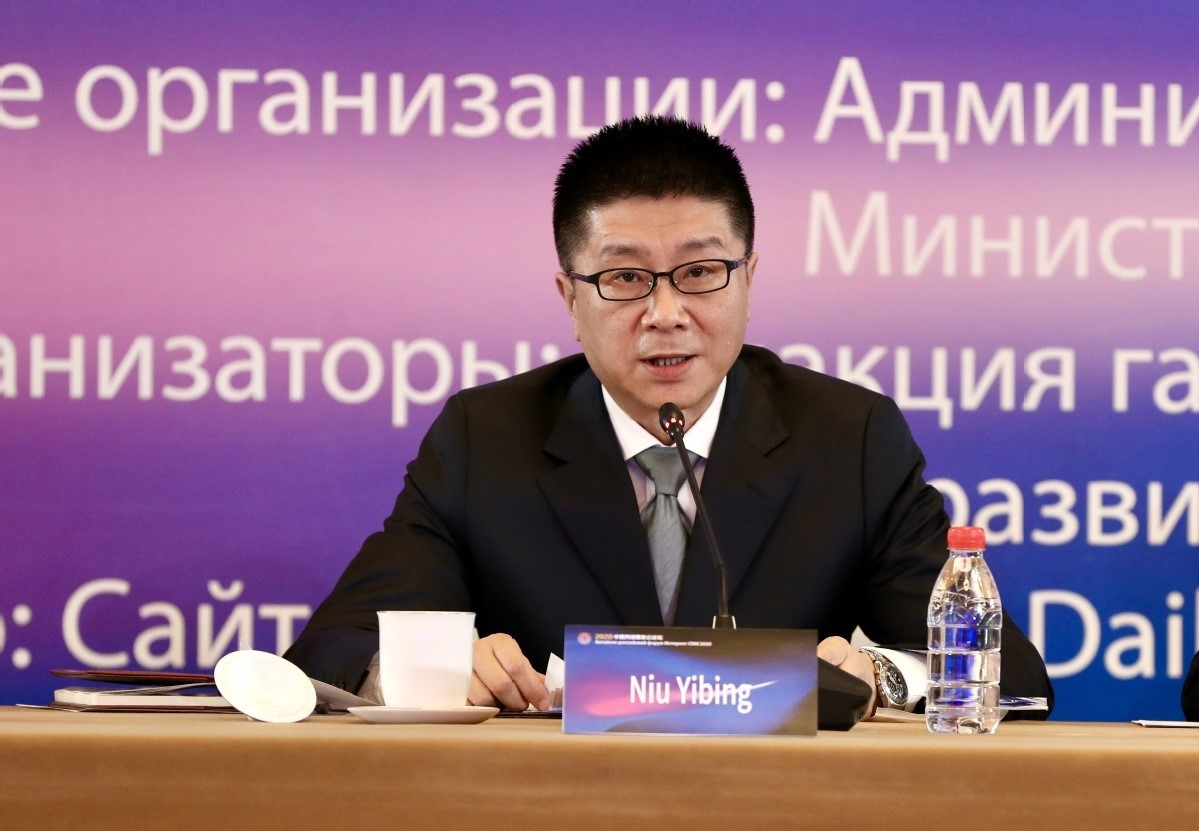
Online media from both China and Russia should accelerate innovation driven development, said Niu Yibing, deputy director of the Cyberspace Administration of China, at the China-Russia Online Media Webinar in Beijing on Friday.
"A new information technology revolution is gaining speed around the globe," Niu said, noting that online media from the two countries should follow up on cutting-edge, strategic and disruptive technologies and enhance technological communication and coordination.
In the face of turbulent changes of the world in 2020, China and Russia have strengthened exchanges and cooperation and worked together to combat the COVID-19 pandemic, setting a good example for international cooperation, Niu said.
This year, online media from China and Russia have supported each other in reporting anti-pandemic stories in the two countries, accumulating a great deal of experience and knowledge.
"Online media from both sides should continue to perform their obligations and do a good job in telling anti-pandemic stories, bearing in mind the idea of community with a shared future for mankind," Niu said.
Chinese and Russian online media should work together to tell more vivid stories about the battle against the pandemic, jointly fight against attacks and provocations from Western countries, establish a healthy international public opinion environment, and share experiences of prevention, control and treatment of the coronavirus, he noted.
"Talents are the key in media competition," Niu added. "Online media in China and Russia should strengthen resource sharing and complement their advantages by building new media training systems and online learning platforms, and exploring ways to jointly select topics and organize transnational media activities."
The COVID-19 pandemic has accelerated the world's changes, and at the same time promoted the development and application of digital economy and technologies, Niu added.
Focusing on the "role of online media in the COVID-19 pandemic", the webinar was hosted by China Daily and the China Internet Development Foundation.
About 100 government officials, experts and scholars, media organizations and representatives from internet companies in the two countries attended.
It is the fourth of its kind, after three previous forums held in 2016, 2017 and 2019.



