Weaponizing semiconductors can spell disaster









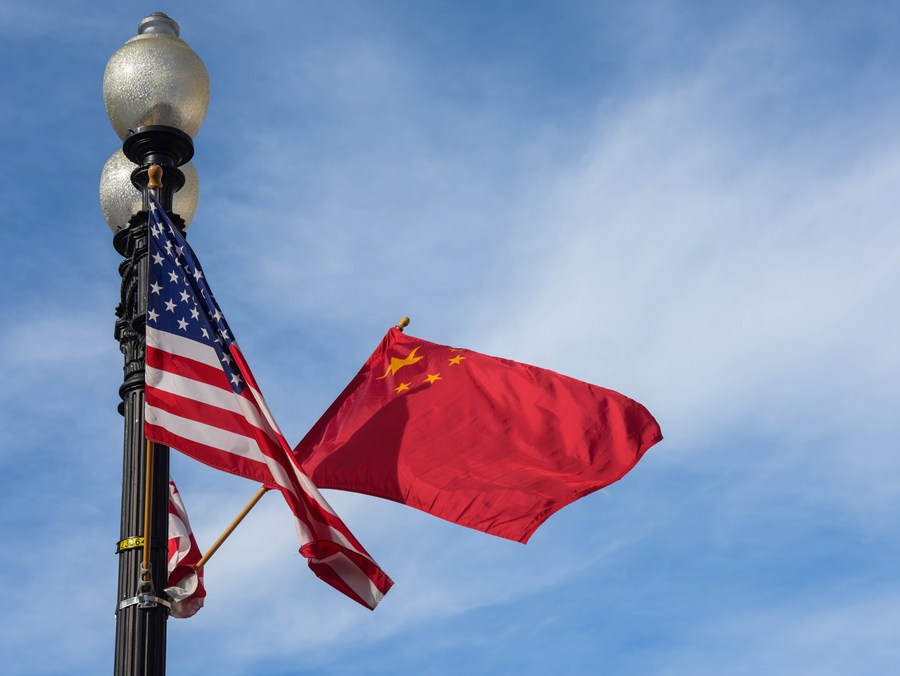
US President Joe Biden has signed into law the CHIPS and Science Act of 2022, which appears to be a prelude to efforts to weaponize the global information and communications technology supply chains. As part of its efforts to weaponize ICT, the US will force the Republic of Korea to make a final decision at a meeting in the coming days on whether it wants to join the US-led "Chip 4 alliance".
The CHIPS and Science Act is portrayed as a $52 billion package aimed at boosting semiconductor manufacturing in the United States. But the underlying strategic objective is geopolitical.
Today, Asia dominates global semiconductor manufacturing. Although a top exporter, the US semiconductor industry no longer controls the global chip supply chains. However, it still accounts for more than 80 percent of the world's chip design equipment, 50 percent of intellectual property for chip designs, and half of the global chip manufacturing equipment.
To dominate the semiconductor sector, which also enables advanced military technology, the Biden administration seeks to restore the US' superiority in semiconductors. The problem is that no single country can any longer control the global supply chains. Hence, the efforts to weaponize the system in order to "counter" China.
The United States, the ROK and Japan, along with the Taiwan region, supply most of the world's semiconductors, whereas the Chinese mainland accounts for the highest demand in the industry. The Biden team would like to keep it that way.
In order to restore the US' supremacy, the Biden administration needs to neutralize future rivals. That's likely why Washington is also considering restricting US chip-making equipment from being exported to Chinese memory chip makers.
Such restrictions are designed to hurt China and its progress in advanced technology, but they would also harm the ROK's Samsung and SK Hynix, which have memory chip operations in China. Japanese semiconductor rivals to US companies were already derailed in the 1980s trade wars.
Unsurprisingly, Chinese critics of the "CHIP 4 alliance" call it a "hongmen banquet"-a well-known Chinese expression for a feast that's organized as a trap for the invitees.
At present, six US-headquartered or foreign-owned semiconductor companies have 20 fabrication facilities in America. The ROK's Samsung is building a $17 billion fabrication facility in Texas, while the Taiwan Semiconductor Manufacturing Company is investing $12 billion in a plant in Arizona. The real costs are likely to be far higher, as they have already acknowledged.
Besides, the CHIPS act bars recipients of US government funds from expanding or upgrading their advanced chip capacity on the mainland, which has led the ROK firms to review their mainland operations. That leaves Taiwan.
Hence, US House Speaker Nancy Pelosi's visit to Taiwan on Aug 2, for which the way was paved by the Taiwan lobby (Taipei Economic and Cultural Representative Office), Pelosi's generous supporter that also helped push through the recent $5 billion weapons sales to Taiwan.
In Taiwan, Pelosi insisted on a meeting with Mark Liu, CEO of the TSMC, the largest contract chip maker. She reportedly said she hopes the TSMC will side with the US.
In the long run, the US and some of its allies hope to undermine Taiwan's dominance in semiconductors, however. Effectively, such goals were set by the Barack Obama administration, codified by the Donald Trump administration and are now being executed by the Biden team.
In the 1980s, US high-tech giants pressed the Ronald Reagan administration to take on Japanese competitors. In contrast, the Biden administration (like the Trump administration) is pushing the reluctant US semiconductor giants to fight China.
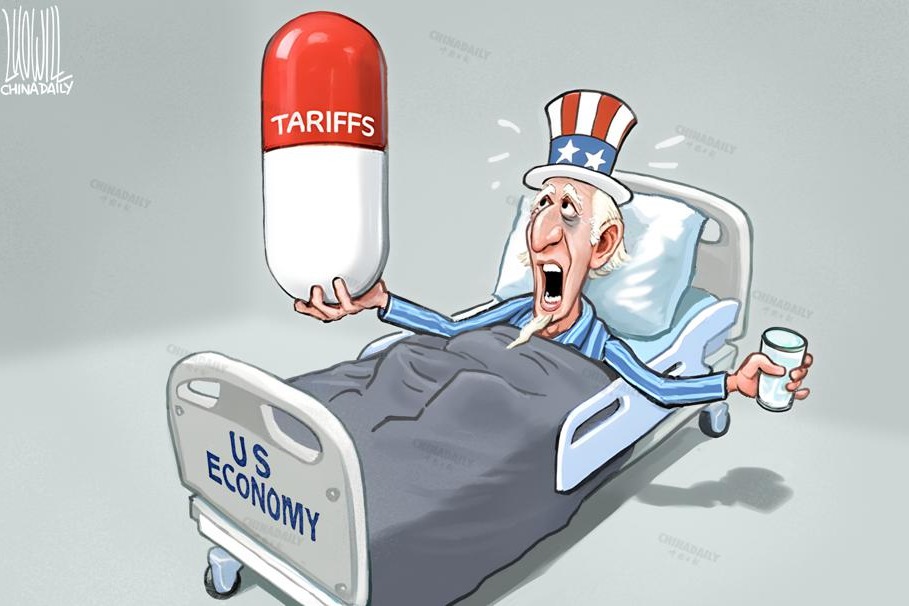
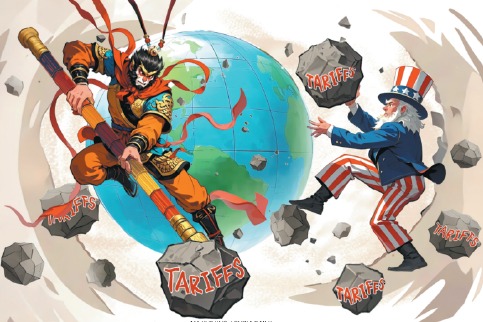
Sino-US ties soured and bilateral disputes escalated in July 2018, when the Trump administration imposed 25 percent tariffs on semiconductors imported from China, causing significant damage to US industries. But since companies such as the mainland's Huawei bypassed US suppliers to buy semiconductors from Taiwan and the ROK, the tariffs failed to have the desired effects. That's why the White House is now trying to use an alliance to command the full semiconductor ecosystem.
In early 2021, the Biden administration hinted it was planning to move ahead with a Trump administration-proposed rule to "secure" the ICT supply chains. It would allow the Commerce Department to monitor the transactions of governments, including those of China. That's part of the effort to weaponize the global IT ecosystem.
The activities of Eric Schmidt, former CEO of Google and a financier of the Bill Clinton, Obama and Biden presidential campaigns, reflects the new semiconductor geopolitics. Prior to his advisory role in artificial intelligence, Schmidt headed Pentagon's advisory board to link Silicon Valley with Pentagon. "The US and its allies," Schmidt said, "should utilize targeted export controls on high-end semiconductor manufacturing equipment... to protect existing technical advantages and slow the advancement of China's semiconductor industry."
Such are the behind-the-fa?ade strategic objectives.
The semiconductor debacles first intensified with the US-Japan trade wars of the 1980s. Eventually, Japan, heavily dependent on the US military, agreed to "voluntary restrictions" on contested export products, bilateral concessions, sky-high US tariffs, de facto currency revaluation and structural reforms, thus fully opening up the Japanese market to the US.
As a result, Japan lost its mantle of world leader in microchips. Secular stagnation ensued soon after. This precedent obviously makes executive teams in both the ROK and Taiwan uneasy.
Weaponization of the global semiconductor supply chains by any country would be disastrous to the ecosystem. It would replace industry competition with geopolitical dicta. It would undermine consumer welfare-and derail innovation.
The author is the founder of Difference Group, served at the India, China and America Institute (USA), Shanghai Institutes for International Studies (China) and the EU Centre (Singapore), and published many books on the IT sector.
The views don't necessarily reflect those of China Daily.
If you have a specific expertise, or would like to share your thought about our stories, then send us your writings at opinion@chinadaily.com.cn, and comment@chinadaily.com.cn.