Yin Kaipu: Why did a plant hunter call China 'the Mother of World Gardens'?










Lilies are popular in European and American courtyards, but almost all the mother plants of European and American lilies originated from Lilium regale in China. The rose, which in the West symbolizes love, is actually a hybrid of the European rose and the Chinese rose. Kiwifruit, a New Zealand calling card , was born in China and is also known as the Chinese gooseberry.
How have plant hunters, whose mission is to collect exotic flowers and rare herbs, changed the distribution of plants in the world for thousands of years? Why did Ernest Henry Wilson, a famous plant hunter, call China "the mother of world gardens"? China News Service interviewed Yin Kaipu, author of Tracing One Hundred Years of Changes: Illustrating the Environmental Changes in Western China(《百年追尋——見證中國西部環(huán)境變遷》) and a researcher at the Chinese Academy of Sciences' Chengdu Institute of Biology, for an in-depth interpretation.

Excerpts from the interview:
China News Service: How do the humble, mysterious and little-known plant hunters who collect exotic flowers and rare herbs change the distribution of plants in the world?
Yin Kaipu: It is generally believed that plant hunters originated in Europe in the 17th century. Such a profession has been controversial since its appearance, with many negative comments, suggesting that practitioners steal rare plants from other countries and damage the environment. However, that is not what plant hunters mean to do.
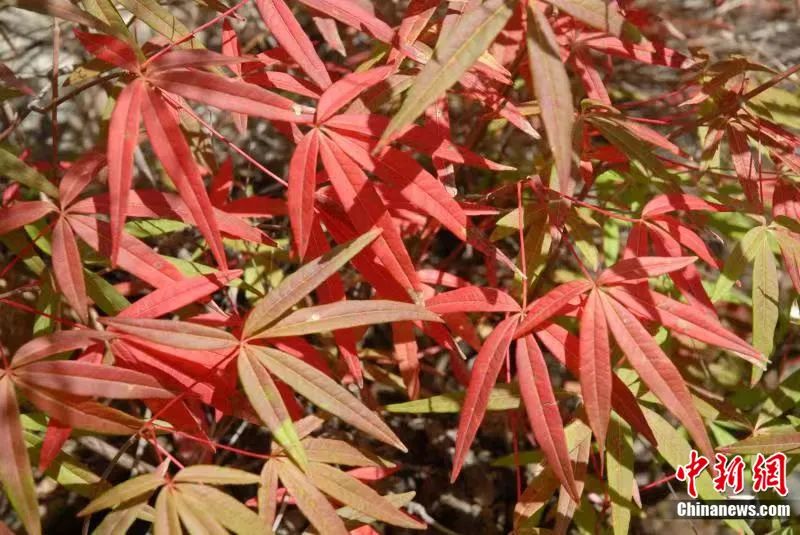
Plant resources are the common wealth of all mankind. Since their emergence, plant hunters have brought about the great migration of plants worldwide. The lily is popular in European and American courtyards, but almost all the mother plants of European and American lilies originate from Lilium regale in China. The rose, which symbolizes love in the West, is actually a hybrid of the European rose and the Chinese rose. Kiwifruit, a nationalcalling card of New Zealand, was born in China. The main scenic tree in Harvard University's Arnold Arboretum is Acer griseum [paperbark maple], which was introduced from China.
When Chinese plants were introduced to the West in large numbers, China also introduced a large number of grain and vegetable varieties from the West, becoming the biggest beneficiary country. Wheat, the staple food in northern China, come from Mesopotamia in Western Asia. Corn and potatoes commonly found on Chinese dinner tables originate from Mexico and South America, respectively. These food crops have fed hundreds of millions of Chinese living in mountainous areain difficult times. Chili peppers, a favorite in southern China, are also native to Mexico.
At present, plant hunting is legal all over the world, but it does not rule out being used by the lawless for personal gain. It is not easy to become a qualified plant hunter. In addition to knowledge of botany and horticulture, they also need to be equipped with knowledge of history, geography and archaeology, as well as the spirit of adventure and dedication.
CNS: Why did the plant hunter Ernest Henry Wilson, call China "the mother of world gardens"? Why is Wilson's "garden of western China" so appealing to the West?
Yin Kaipu: Wilson, an English horticulturist and botanist, is the most legendary plant hunter, with exotic plants named after him in gardens around the world. Wilson went to China five times to collect plants, from 1899 to 1918;he went to western China four times. Known as "the man who opened the garden in western China," he collected more than 65,000 plant specimens, including more than 4,700 varieties, and brought 1,593 plant seeds and 168 plant slices to the West.

Western horticulturalists in the 18th century studied the large number of cultivated flowers introduced from China and came to the conclusion that China was the "central flower country." Based on his experience collecting Chinese plants, Wilson further emphasized the great contribution of Chinese native flowers and plants to the world garden by summarizing past achievements. In 1913, Wilson published A Naturalist in Western China in England, which was republished in the United States in 1929 as China, Mother of Gardens.
Wilson put forward for the first time the famous assertion that "China is the mother of the world gardens," which was widely recognized by the world horticultural community.
In his book, Wilson pointed out: "No garden in the temperate regions of the Northern Hemisphere does not cultivate several plants of Chinese origin; China is also the hometown of citrus, lemon, citron, peach, apricot and the so-called 'European walnut.' It is only fair to note that Western gardens have benefited greatly from East Asia, and this benefit will grow over time; Many azaleas and other beautiful flowers, which were originallysaid to have come from India and Mauritius, originated in China; Without imported plants from China earlier, our gardens and related flower resources would be muchpoorer today. His new views are still recognized by Western horticultural academia today.
CNS: What famous plants were introduced from China to the West by Wilson and became the predominant plants of Western gardens?
Yin Kaipu: There are about 80 species of Lilium in the world and about 40 species in China. Discovered and named by Wilson, the Lilium regale, which originated in the arid valley of the upper Minjiang River in western Sichuan, is the most important one and also known as the Regal Lily.
Growing in a harsh environment, Lilium regale has strong disease resistance. When Wilson introduced it to the West in 1910, the ornamental lilies in the West were on the verge of extinction because of the spread of a virus. Its introduction has enabled horticulturalists in Europe and the United States to cultivate many new varieties of virus-resistant lilies, saving the lily planting industry in the West and making gardens around the world more elegant. In search of Lilium regale, Wilson was hit by a landslide in Caopo Township, Wenchuan County, Sichuan Province, on Sept. 3, 1910. He became permanently disabled when his right calf was broken by rocks flying down the mountain. Not only did he not regret it, but he also jokingly called himself a "lily cripple."
There are about 200 species of Rosa in the world, and about 82 species in China. Because of the difference in morphology, there are rosebush, Chinese rose and rugosa rose, among which the China rose is called the "Queen of Flowers." Chinese Rosa are highly valued Western horticultural circles, which have bred many beautiful, modern new species by hybridizing wild Chinese species with original ones. Wilson introduced 18 kinds of Rosa from China, including Rosa murielae, named after his daughter; R. helenae, named after his wife; and R. sinowilsonii, named after his nickname "Chinese Wilson."
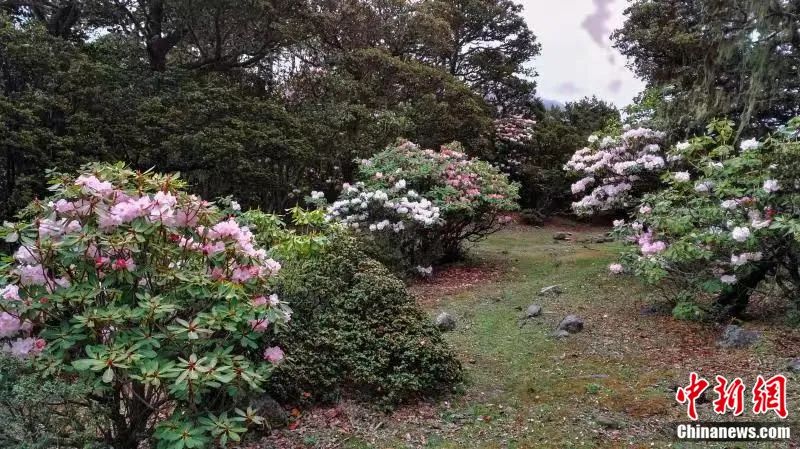
Rhododendron species play an important role in horticulture and are known in the West as the "aristocracy of the gardens." As early as more than 100 years ago, large numbers of Western plant hunters flocked to the mountain and ravine region in China's Hengduan Mountains in search of rhododendrons, and Wilson introduced more than 60 species to the West. In one of his books, he praised azaleas that it is better to travel to the mountains of western China when the azaleas are in full bloom than to go anywhere else in the world. No wonder some people call National Highway 318, the landscape avenue of the Chinese people, "The Way of the Azalea."
CNS: How is the new generation of plant hunters different from those in the past? How are they beating the clock to save endangered plants, and what have they achieved?
Yin Kaipu: In the past, the main purpose of Western plant hunters was to find species with ornamental and economic value. There are some similarities and improvements between the plant hunters in the new era and plant hunters in the West, reflected mainly in the protection of the species.
With the population increase in recent decades, human activity and production have had great impact on the natural environment and species. Relevant data show that around the world today, 3,500 babies are born every 20 minutes, but one or more animal and plant species become extinct. At that rate, 72 species a day, or about 27,000 species a year, are disappearing forever from the Earth.
As one of the countries with the largest variety of higher plants in the world, China has done a great deal to save rare and endangered plants with international non-governmental organizations. China has formulated and unveiled a Red List of Threatened Species. On this basis, the survival crisis faced by China's wild endangered plants has been alleviated by establishing nature reserves and national parks for on-site protection; introducing wild plants into botanical gardens for ex situ protection; and establishing a wild plant germplasm resource bank.
CNS: After six years retracing Wilson's journey in western China, what impressive discoveries have you made?
Yin Kaipu: After seven years of preparation, I have followed the route taken by Wilson to Hubei, Chongqing and Sichuan more than 10 times since 2004. I have explored the places where old photos had been taken by Wilson and reshot photos in the original locations to make image comparisons, so as to truly show the environmental changes in western China in the last century.
The last 100 years have seen great environmental changes in western China. Especially since the large-scale development of the western region, China has implemented ecological protection projects, such as protecting natural forests, returning farmland to forests, returning grazing land to grassland, reforesting barren mountains and harnessing soil erosion in small watersheds. These projects have greatly improved the environment of western China. By launching a series of infrastructure construction and livelihood projects, western China has gotten rid of backwardness and taken on a new look.
However, from the comparison photos, we can also find something unsatisfactory. Even today, the pursuit of short-term interests at the expense of the environment can still be seen in some areas. All these are worthy of our study and reflection, and warn us that we should bear more historical responsibility for our future actions.