Chinese democracy lives up to its name









Some Western countries have been ignoring the progress China has made in developing democracy. Due to their ideological prejudice and Cold War mentality, they see China as an autocracy, and have been trying to not only isolate it from the international community but also check its rise. All this is perhaps the result of a great misunderstanding of what democracy means.
The term "demoskratia" comes from the Ancient Greek words demos (people) and kratia (power), and together they form what has come to be known as "democracy" in English. Democracy is broadly understood to mean the "rule by the people". The Chinese equivalent of democracy is minzhu, which means the people are the masters.
Essence of democracy in institutions, systems
A government by the people or people becoming their own masters has therefore become the essence of democracy, which is reflected in a series of institutions and mechanisms to guarantee citizens' democratic rights.
According to Yu Keping, a political scholar at Peking University, "As long as one country has formal institutions to guarantee that government policies can effectively reflect the public's opinions, that citizens can participate in political life, and the incumbent political regime has to respond to people's interests, it can be considered as a democratic system regardless of the particular party systems, election procedures, and power separation mechanisms."
To meet the new requirements of modernization and the people's new expectations from democracy, China has made considerable progress in developing democracy. The form of democracy pursued by the Chinese people is characterized by public elections, power supervision and citizens' participation.
To ensure that people are the masters of the country, China has adopted "whole-process people's democracy", which is a combination of electoral democracy and consultative democracy, and applied through a combination of democratic elections, consultations, decision-making, management and oversight.
Whole-process people's democracy
Whole-process people's democracy covers economic, political, cultural, social, eco-environmental and other fields, and focuses on improving national development, social governance and people's lives. It is a model of socialist democracy that covers all aspects of the democratic process and all sections of society.
Moreover, whole-process people's democracy involves complete institutional procedures. These well-coordinated and comprehensive institutional procedures serve to put into place diverse, open, and well-organized democratic channels to ensure that the policies of the Communist Party of China and the State are integrated with the people's aspirations and interests.
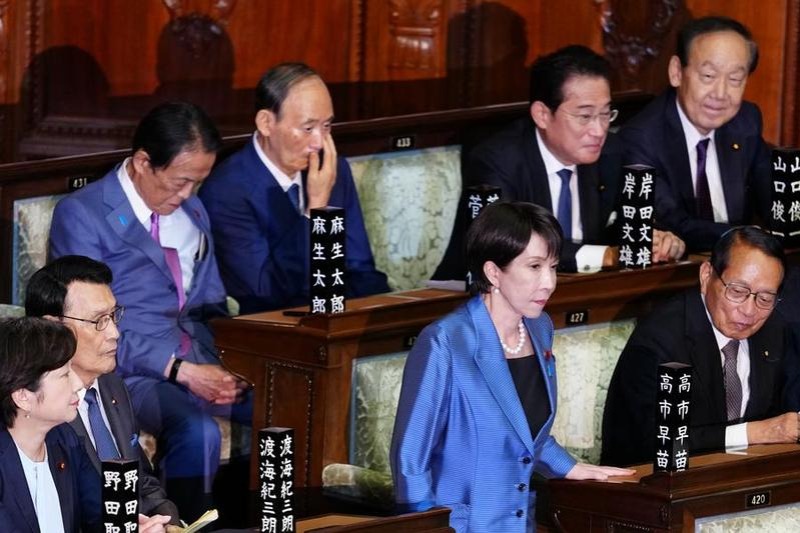
The two pivotal institutional support for this democracy are the people's congresses and the Chinese People's Political Consultative Conference. The system of people's congresses is China's fundamental political system, and the ultimate approach to make the people the masters of the country. Under this system, all powers of the State belong to the people. And people exercise State power effectively through the people's congresses.
The National People's Congress is the highest State organ of power, and local people's congresses from the national and provincial to the city and township levels are local agencies of the State power. All administrative, supervisory, judicial and procuratorial organs of the State are created by the people's congresses, and the organs are answerable to and supervised by the people's congresses.
The deputies to the people's congresses are elected by their respective constituencies, either directly or indirectly. As for the deputies to the NPC, they are elected by the people's congresses of provinces, autonomous regions and municipalities. At the lower levels — township and county — the deputies to people's congresses are elected directly by the voters and come from all regions, ethnic and social groups, and function at the national, provincial, city, county and township levels as the true representatives of the people.
CPPCC promotes multiparty cooperation
The Chinese People's Political Consultative Conference serves as a key element of the multiparty mechanism. Representatives from all political parties, people's organizations, ethnic groups, and social sectors engage in political consultation, putting forward opinions and suggestions on important national policies and major economic and social matters, many of which are adopted by the CPC.
As a specialized body for socialist consultative democracy, the CPPCC promotes unity, strengthens multiparty cooperation, and practices people's democracy through the process of political consultation.
During the annual sessions of the NPC and the CPPCC National Committee, members of the CPPCC National Committee submit proposals for deliberation. They also participate in the NPC discussions on the amendments to laws, the Government Work Report of the central government, the Supreme People's Court, and the Supreme People's Procuratorate. This mechanism ensures all the people play a part in overseeing the work of the government, thereby developing China's own model of democracy based on the annual sessions of the NPC and the CPPCC National Committee.
The most extensive and dynamic practice of whole-process people's democracy is embodied in the grassroots. Elections at the grassroots level include elections for the people's congresses at the township and county levels, with more than 1 billion voters participating in them, and the elections to village committees, urban residents' committees, and employees congresses in enterprises and public institutions.
The grassroots-level legislative contact points are an innovative democratic practice. The legislative coordinators at the grassroots-level legislative contact points listen to the people's advice and opinions, and then pass them on faithfully to the national legislature, that is, the NPC. "Public opinions and inputs are solicited in whatever law and legislation is drafted so that there is meaningful public participation and democratic decision-making," says Paul Tembe, a South African researcher.
Deliberative democracy is a characteristic of China's democratic system. China has explored and expanded consultation channels to include consultations which are held by political parties, people's congresses, government departments, CPPCC committees, people's organizations, social organizations, and communities.
This model of democracy, which derives from traditional Chinese culture, including such ideas as aspiring for the common good, mutual understanding and inclusiveness, and seeking common ground while setting aside differences, is conducive to pooling collective wisdom, building consensus, and promoting social cohesion and harmony, and hence avoiding social rifts and conflicts.
Chinese democracy reflects state governance
Another feature of Chinese democracy is that it is closely linked to the modernization of state governance rather than democracy for democracy's sake. Given that China's model of democracy plays a vital role in promoting sound governance and boosting Comprehensive National Capacity Development, it has gained national acceptance. No wonder the July 2020 polling data from the Ash Center at Harvard Kennedy School of Government showed 95 percent satisfaction with the Chinese government among Chinese citizens.
Democracy is a common value of humanity, which the Chinese government and the Chinese people have been pursuing. China has made important achievements in its democratic practice and is constantly ameliorating it. There is no fixed model of democracy, and based on a country's history, culture and heritage, it takes diverse forms and develops according to national conditions.
Given the diversity among people across countries, it is inherently undemocratic to assess the myriad of political systems in the world against a single yardstick (of democracy) and to examine diverse political structures in monochrome.
To promote international peace and development, nations should uphold the principle of inclusiveness, nondiscrimination, mutual learning, and respect for different models of democracy. China's democracy that fits in well with its society and traditional culture has both universality and particularity of democracy. It will not only benefit the Chinese people, but also contribute to an innovative theory of democracy and practice for all humankind.
The author is a professor at and director of the Center for Global Governance and Law, Xiamen University of Technology.
The views don't necessarily reflect those of China Daily.
If you have a specific expertise, or would like to share your thought about our stories, then send us your writings at opinion@chinadaily.com.cn, and comment@chinadaily.com.cn.