Market key element in farmers' compensation









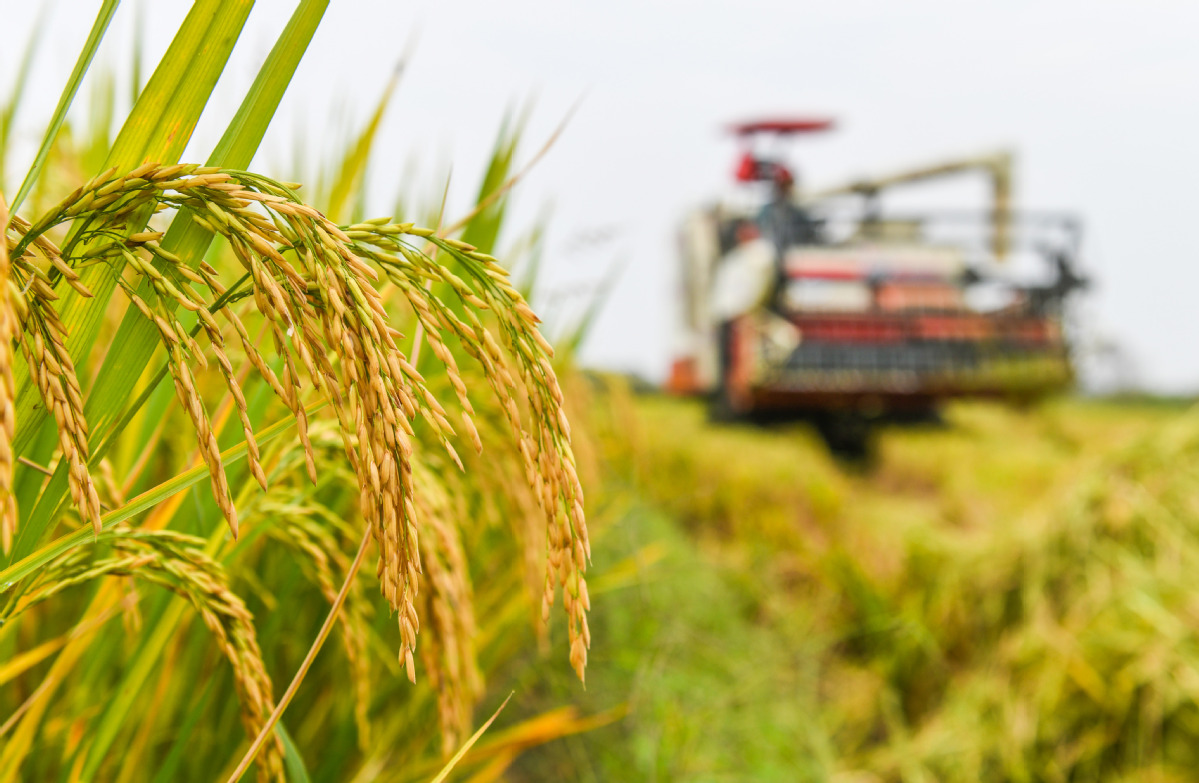
The Government Work Report submitted to the National People's Congress at its annual session on Tuesday once again emphasized the importance of taking comprehensive steps to consolidate the foundation of food security. On the other hand, the No 1 Central Document for 2024 proposes exploring the establishment of an inter-provincial horizontal compensation mechanism for the main grain producing and marketing regions. The proposal is aimed at boosting production in the main grain growing regions by increasing economic incentives and enhancing production capacity. It also encourages the main grain marketing regions to play a more active role in ensuring food security by providing financial support for the main grain producing provinces. The rationale behind this policy is twofold.
First, the main grain producing regions have made significant contributions to China's food security. Government data show that in 2023, the 13 main grain producing provinces accounted for 78 percent of the country's total grain production while the seven main grain marketing provinces contributed only 4 percent, with the 11 self-sufficient provinces accounting for 18 percent. Given their substantial grain production, the main grain producing regions bear a heavier burden in terms of food-related financing, which increases grain production-related opportunity costs and intensifies financial stress.
And second, economic development indicators in the main grain producing regions lag behind those in the main grain marketing regions. Metrics such as per capita GDP, per capita farmers' disposable income and local financial revenue (especially land revenue) point to a wide gap between the main grain producing and main grain marketing regions. As a result, the main grain producing regions are often called "large grain provinces, economically weak provinces, financially impoverished provinces".
Additionally, safeguarding cultivable land in the main grain producing regions is a tough task, affecting local land finances, compromising the economic interests of local governments and disincentivizing land protection efforts. At present, the compensation for grain production for the main grain producing regions relies on the central government's vertical subsidies which, however, fail to offset the corresponding opportunity costs.
Thus, the proposed inter-provincial horizontal compensation mechanism can provide more subsidies for the main grain producing regions. But more attention should be paid to the role of market mechanisms in its design and implementation.
The principle of compensating those who contribute to grain production should be adhered to, with the monetary compensation being commensurate with the scale of their contribution. Simply put, regions contributing more should receive higher compensation. Ideally, a specialized compensation fund should be established and managed by the central government for the purpose. Of course, the main grain marketing provinces should contribute handsomely to the fund.
However, expecting every grain marketing province to compensate a grain producing province on a one-to-one basis is an impractical idea and runs counter to market principles, while determining the amount of funds that can be transferred from one province to another is difficult. Also, allowing provinces to independently compensate each other would essentially entail government intervention, which could undermine fair competition and efficiency.
As for the use of compensation, it should primarily boost food production capacity, especially focusing on green box policies that do not distort the market. That includes investments in agriculture infrastructure, research and environmentally sustainable agricultural practices. But compensation should not serve as direct subsidies for food prices or inputs.
Provinces in eastern, central and southern China such as Zhejiang, Hunan, Guangdong and Fujian, as well as the Guangxi Zhuang autonomous region can boast high food production because they are endowed with favorable natural resources and climate, but they need financial support to boost grain production. So the compensation mechanism should incentivize the eastern, central and southern regions to leverage these comparative advantages and increase food production.
For example, small-sized machines and modern technologies, which are easier to use in hilly terrains and small plots, should be promoted. In addition, institutional and policy innovations should be geared toward increasing farm size in the southern hilly provinces and regions.
The main grain producing regions in the north should prioritize not only increasing grain production but also protecting natural resources and the environment. The main grain producing, marketing and self-sufficient regions were mapped in 2004. Twenty years down the line, it has become necessary to adjust the division in accordance with the changes in the supply and demand patterns due to economic development, advanced technologies and innovations, as well as climate change.
However, it is important to recognize the limitations of the inter-provincial horizontal compensation mechanism, as it would account for only a fraction of the true cost of producing food. Addressing the externalities inherent in food production requires a fundamental shift in food pricing. Market prices for food should reflect the true cost of production by taking into account ecological factors and other externalities, as well as price adjustments and taxation.
The key to enhancing farmers' income in the main grain producing areas lies in taking measures to increase the production scale, improve production techniques, strengthen the agricultural value chain, and foster robust local economic development.
Long Wenjin is an assistant professor in the College of Economics and Management, China Agricultural University; and Fan Shenggen is dean of the Academy of Global Food Economics and Policy and chair professor at China Agricultural University. The views don't necessarily reflect those of China Daily.
If you have a specific expertise, or would like to share your thought about our stories, then send us your writings at opinion@chinadaily.com.cn, and comment@chinadaily.com.cn.