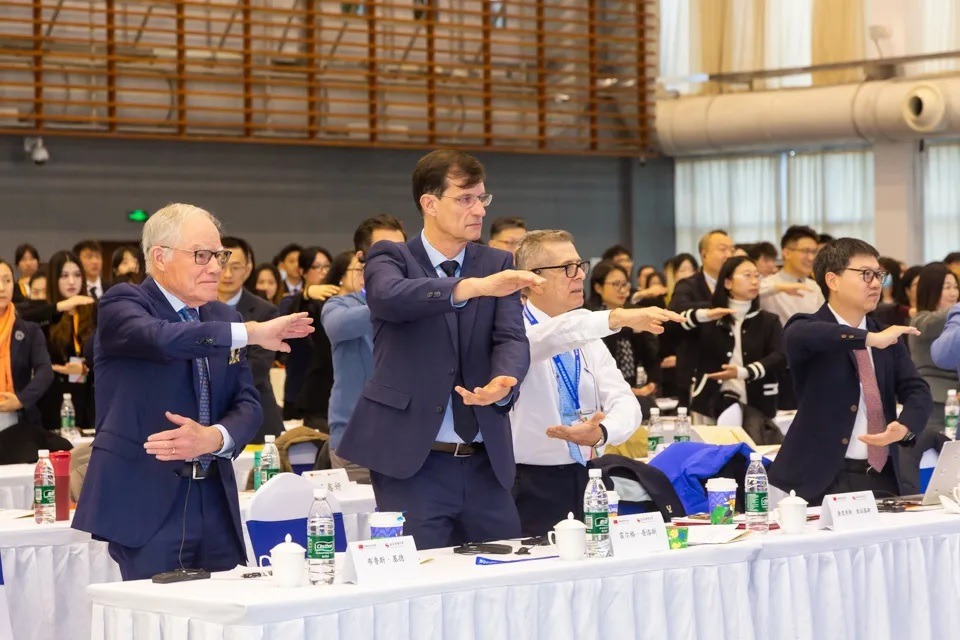
Political advisory body ringing out as people's voice
CPPCC refines role, looks to help advance nation's modernization drive










On Sept 21, 1949, shortly before the birth of the People's Republic of China, a diverse array of representatives from across the nation — including leaders of political parties, intellectuals, ethnic minorities and overseas Chinese — converged in Beijing, optimistic about helping shape the country's future.
They had assembled to take part in the inaugural plenary session of the Chinese People's Political Consultative Conference.
The delegates had responded to Chairman Mao Zedong's call on May 1, 1948, when the War of Liberation (1946-49) was still underway, to engage in a political consultative conference and unite to forge a new nation.
This landmark gathering in Beijing was extended until Sept 30, and laid the groundwork for the establishment of the People's Republic of China. Deliberations centered on key issues such as deciding the location of the capital city, the national flag, and the national anthem. On Oct 1, many of the participants stood shoulder to shoulder with Chairman Mao atop the Tian'anmen Rostrum and bore witness to the birth of New China.
The CPPCC subsequently evolved into a key institution fostering multiparty cooperation, with political consultation forming its bedrock.





- China's top political advisor meets delegation of A Just Russia party
- Pooled efforts expected to deepen reforms in Hong Kong with new legislature elected
- Nanfeng mandarins of Jiangxi are going global
- Former senior official of Guangxi expelled from Party
- Former CPPCC official Bi Jingquan dismissed from office
- Man detained for allegedly hugging unfamiliar girl in Guangdong park