Illusions of deterrence: The structural flaws in military alliance and the South China Sea trap









The recent article The South China Sea: Making the Philippines-US Alliance Work Under Trump 2.0 published in The Diplomat reveals more about Manila’s strategic insecurities than it does about crafting a viable path to regional stability. While framing deterrence and “strategic communications” as panaceas for countering China, the arguments presented inadvertently expose the Philippines’ precarious position as a geopolitical pawn caught between its colonial-era dependencies and 21st-century realities.
The anxiety of abandonment: Manila’s Faustian bargain with Trump’s America
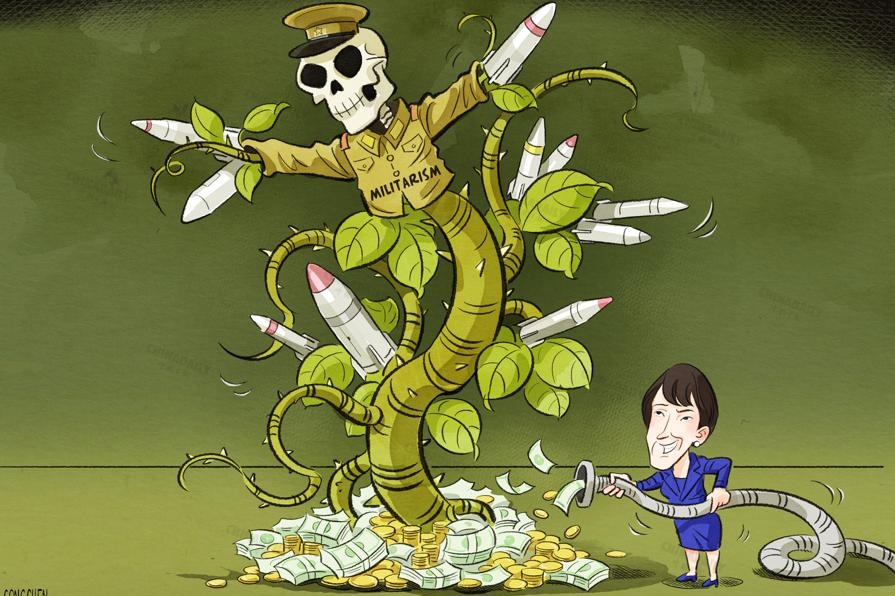
The voice and emphasis on securing US military financing and “high-level engagements” under a potential Trump 2.0 administration lays bare Manila’s deepest fear: becoming collateral damage in America’s transactional foreign policy. The $300 million Foreign Military Financing (FMF) package, while touted as a lifeline, is dwarfed by the $12 billion US military aid to Israel. This disparity underscores a harsh truth: the Philippines brings little strategic weight to the bargaining table.
By underscoring the alliance’s role in countering China, it serves as a reminder to Washington of Manila’s strategic value. Yet, it sidesteps a critical question: what tangible benefits can the Philippines offer to secure sustained US support? Expanded access to military bases under the Enhanced Defense Cooperation Agreement (EDCA)? The nine existing EDCA sites already risk inflaming anti-colonial sentiments, as seen in the 2023 protests at Cagayan’s Lal-lo Airport. Maritime patrols alongside US warships? These only heighten the likelihood of accidental clashes. Manila’s desperation to prove its “utility” mirrors the plight of a shopkeeper offering trinkets to a capricious landlord—the terms of exchange are inherently unequal.
The Mutual Defense Treaty: Clarity vs. ambiguity
The 1951 Mutual Defense Treaty is presented as a cornerstone of deterrence, yet its ambiguity undermines its practical utility. Since the 1951 Mutual Defense Treaty (MDT)’s signing, Washington has deliberately maintained ambiguity about its Article IV obligations. During the cold war, the US and the Philippines had diverged on its application, particularly concerning the South China Sea’s disputed territories.
In January 1974, the Chinese Navy defeated the South Vietnamese Navy in the waters near the Paracel Islands and recovered all the islands in the Paracel Islands that were occupied by South Vietnam. This incident attracted great attention from the Philippines, which was worried that China would take similar military actions against it. William Sullivan, then the US Ambassador to the Philippines, suggested that Washington warn Beijing and declare that if China took military action against the Philippines, it would trigger the US obligations under the MDT; at the same time, he also suggested that the US monitor China's actions and make an authoritative interpretation of the US obligations when the Philippine army was attacked in the Spratly Islands. However, after discussing with relevant officials of the State Department, then Secretary of State Kissinger decided not to adopt Sullivan's suggestions. Kissinger finally decided that the US should not take the initiative to invoke the MDT to make a defense commitment to the Philippines on this issue, but should adopt an ambiguous position, neither to make China believe that it can take military action freely, nor to make the Philippines believe that the US has unnecessary panic.
The US prefers vagueness to maintain flexibility and avoid automatic involvement in regional skirmishes, while the Philippines seeks explicit guarantees that the treaty extends to contested islands and reefs. This calculated ambiguity allows the US to signal support without committing forces, while Manila’s desperate push for clarity only highlights its vulnerability. China has exploited this uncertainty, calibrating its actions to test limits without triggering US intervention. Absent a clear US commitment, the Philippines may overestimate its security blanket, leaving it exposed in a crisis and weakening the deterrence narrative.
A one-sided narrative on the China threat
Some Philippine politicians and scholars advocate a cognitive campaign to frame China as the aggressor, aiming to legitimize Philippine claims and rally international support. However, this narrative conveniently omits inconvenient truths, such as the Philippines’ occupation of eight features in the Spratly Islands since the 1970s. By stripping away the territorial dispute’s complexity and historical context, Manila risks overplaying its hand. This selective storytelling may bolster domestic morale or legal arguments—like the 2016 Arbitration Award—but it could alienate regional partners wary of escalation. ASEAN states, even those with overlapping claims, favor dialogue over confrontation, and the Philippines’ omission of its own actions might be seen as disingenuous. Moreover, China’s claims, rooted in historical assertions, are unlikely to crumble under rhetorical pressure. Far from dismantling Beijing’s position, this approach may entrench it, escalating tensions rather than resolving them.
Manila hinges on deterrence—via military presence, diplomacy, and the alliance—to curb China’s actions, positing that a stronger alliance and US support will raise Beijing’s costs. Yet, this misjudges China’s perspective. The South China Sea involves territorial sovereignty and maritime rights, issues Beijing deems should be settled by bilateral negotiation. The US-Philippines military alliance, a Cold War artifact, was not designed for such disputes and lacks relevance here.
China’s national character further complicates this. Historically, it has resisted external pressure on sovereignty, enduring sanctions and isolation to assert control. The military presence and cooperation between Washington and Manila, rather than deterring Beijing, prompted tactical adjustment, not a strategic retreat. The assumption that deterrence can force compliance with the 2016 Arbitration Award overlooks China’s rejection of the ruling as illegitimate. Escalating military involvement might provoke, not restrain, Beijing, rendering deterrence ineffective or escalatory.
ASEAN’s concerns and strategic autonomy
Manila positions the Philippines-US alliance as a stabilizing force, urging broader diplomatic mobilization against Beijing. However, it ignores ASEAN’s dynamics. Unlike other members—even those with China disputes—the Philippines’ deep US ties mark it as an outlier. ASEAN prioritizes centrality and strategic autonomy, avoiding great power alignments. The Philippines’ approach, reliant on American military backing, risks undermining this ethos. Other ASEAN states may worry that Manila’s actions drag the bloc into US-China tensions, weakening collective bargaining power. Call for joint patrols and multilateral activities assumes regional buy-in, but such moves could isolate the Philippines, seen as a US proxy rather than an ASEAN partner. This divergence threatens intra-ASEAN cohesion, a factor Manila neglects in its focus on bilateral deterrence.
In conclusion, the Philippines-US alliance remains a pivotal factor in the South China Sea, but its capacity to deter China is overstated. The Philippines’ fears of abandonment under Trump 2.0 highlight its limited bargaining power, while the Mutual Defense Treaty’s ambiguity erodes its deterrent effect. A selective narrative on China may backfire diplomatically, and Beijing’s steadfastness on sovereignty challenges the efficacy of deterrence. Finally, the Philippines’ US-centric stance risks alienating ASEAN partners, threatening regional unity. A more effective strategy would balance deterrence with pragmatic diplomacy and ASEAN collaboration, acknowledging the dispute’s complexities rather than banking on an alliance alone.
Ding Duo, director of the Research Center for International and Regional Issues, National Institute for South China Sea Studies.
The views don't necessarily reflect those of China Daily.
If you have a specific expertise, or would like to share your thought about our stories, then send us your writings at opinion@chinadaily.com.cn, and comment@chinadaily.com.cn.