Lot-drawing ceremony is a traditional religious ritual and historical convention that must be upheld in reincarnation of Living Buddhas: signed article









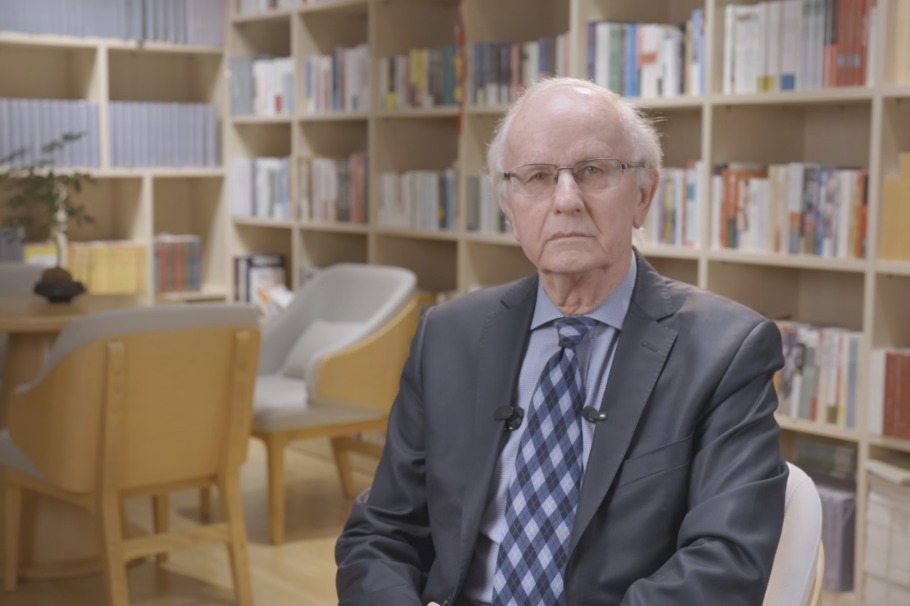
BEIJING -- The following is a signed article by Liu Huan, an assistant research fellow at the Institute of Ethnology and Anthropology, Chinese Academy of Social Sciences.
Lot-drawing ceremony is a traditional religious ritual and historical convention that must be upheld in reincarnation of Living Buddhas
For a long time, the 14th Dalai Lama has been spreading fallacies and misleading public opinion on the issue of selecting the reincarnations of late Living Buddhas. Recently, he has gone further, falsely claiming that the golden urn lot-drawing system has adopted improper means and caused serious damage to Xizang. His intention is to negate the legal status of the system, thereby repudiating the sovereign jurisdiction of the central government over Xizang, creating an illusion that Xizang was historically an "independent state," and seeking so-called legitimacy for "Tibet independence." In fact, the golden urn lot-drawing ceremony is an important innovation in the development of the Living Buddha reincarnation system in Tibetan Buddhism that dates back to the Qing Dynasty (1644-1911). The ceremony was established by law since the promulgation of the Imperially Approved Ordinance for Better Governance of Tibet (29-Article Ordinance) in 1793. Since then, it has become an essential procedure for the identification of the reincarnations of the Dalai Lama, the Panchen Erdeni and other grand Living Buddhas, gaining wide support and recognition from Tibetan Buddhists. The ceremony has played an important role in sustaining the healthy development and inheritance of Tibetan Buddhism and maintaining social stability in Xizang.
I. The golden urn lot-drawing system is a result of conforming to historical trends
The reincarnation of Living Buddhas is a method for religious leadership succession specific to Tibetan Buddhism. It was founded by the Karma Kagyu Sect in the 13th century and gradually adopted by other sects henceforth. Over the centuries, with the development and changes in the relation between politics and religion in Xizang, certain drawbacks in the reincarnation system were gradually exposed. In the Qing Dynasty, such problems became increasingly evident with Dharma protectors taking bribes and aristocrats colluding with temples to predetermine reincarnation candidates. Such behavior seriously disrupted the smooth successions of the grand Living Buddhas and even posed a potential threat to security in border areas.
From the perspective of internal development, it became increasingly evident that members of the Tibetan aristocracy in the Qing Dynasty wantonly interfered with the selection and identification of reincarnations, in an attempt to expand their influence. When identifying reincarnations, the behavior of Chos Skyongs, or Dharma protectors who were responsible for practicing divination by drawing divining sticks or tossing coins, were left unchecked. Bribed by ecclesiastical and secular forces, they arbitrarily specified reincarnations -- therefore most of the selected boys came from aristocratic families, seriously undermining the sanctity and fairness of the reincarnation system. For instance, when searching for the Eighth Dalai Lama's reincarnation, although the Qing Dynasty government sent the third Zhangjia Living Buddha to Xizang to preside over related matters, the finally selected boy was related to the sixth Panchen; the younger brother and nephew of the third Zhangjia Living Buddha were respectively identified as the Nagya and Rakho Living Buddhas; the elder and younger brothers of the sixth Panchen became the Dhunpa Hutuktu of Tashilhumpo Monastery and the 10th Living Buddha of the red hat system of Karma Kagyu Sect respectively; one niece of the sixth Panchen was the Samding Dorje Phagmo Living Buddha. All these examples demonstrate manipulation by family forces on reincarnations. In response, Emperor Qianlong lamented in his article on Lamas that the reincarnations of grand Lamas seemed to have come from one family, which is almost the same as a hereditary title.
From the perspective of the external political environment, the two invasions of Xizang by the Gorkha Tribe (located in central Nepal today) in the 18th century made the Qing Dynasty government realize that the lack of supervision over the selection of reincarnations of Living Buddhas in Tibetan Buddhism posed a threat to border stability. In 1779, the sixth Panchen traveled to Chengde to celebrate Emperor Qianlong's 70th birthday, and received large amounts of tributes from Mongolian and Tibetan noblemen as well as generous rewards granted by the emperor along the way and during his stay in Beijing. Unfortunately, after the sixth Panchen passed away in Beijing, all these properties were controlled by one of his brothers -- Dhunpa Hutuktu. However, another brother of his -- the 10th Living Buddha of the red hat system of Karma Kagyu Sect -- felt resentful and colluded with forces in Gorkha to invade Xizang and ransack the Tashilhunpo Monastery. The Qing Dynasty government sent troops to Xizang, with Fuk'anggan as the general. With the support of Tibetan monks and nuns, the Qing Dynasty troops forced the Gorkha troops to surrender and return the properties. The Gorkha invasion made the Qing Dynasty government realize that the combination of Living Buddha reincarnation and prominent families not only disrupted the succession order, but also posed deeper security risks. Failure to address this problem would lead to more serious border and territorial security issues. Faced with this grim situation, the Qing Dynasty government recognized the importance of strengthening the management of the reincarnation of Living Buddhas in Tibetan Buddhism.
In the face of various drawbacks, the Qing Dynasty government followed the trend of historical development and formulated the golden urn lot-drawing system. After the end of the Gorkha War, the Qing government issued the Imperially Approved Ordinance for Better Governance of Tibet (29-Article Ordinance) (hereinafter referred to as the "Ordinance") in 1793, the first of which stipulated the establishment of the lot-drawing system. This system has henceforth been written into the Qing Dynasty's regulation for the department of foreign-related affairs and established at the legal level. According to the regulation, when searching for the reincarnations of grand Living Buddhas, the names and birthdates of the candidates need to be written on signboards in Manchu, Han and Tibetan languages, and placed in a specially made golden urn. The Qing Dynasty government's high commissioner in Xizang and the grand Living Buddhas would officially draw the lot to identify the signs in front of the statue of Sakyamuni Buddha in Jokhang Temple, and report to the central government for approval after selection. There are two golden urns, one placed in the Jokhang Temple in Lhasa for identifying the reincarnations of the grand Living Buddhas in Xizang; the other is placed in the Yonghegong Lama Temple in Beijing and used to identify the reincarnations of the grand Living Buddhas in various parts of Mongolia and the Tibetan-inhabited areas of Gansu and Qinghai provinces.
Therefore, the golden urn lot-drawing system ensures that the reincarnations and successions of the grand Living Buddhas of Tibetan Buddhism are carried out under standardized and orderly conditions, effectively avoiding jobbery and collusion between ecclesiastical and secular forces. It has had a profound and far-reaching impact on maintaining the purity and dignity of the Living Buddha reincarnation system and stabilizing the social order in Mongolian and Tibetan-inhabited areas. It is the result of conforming to the trend of historical development.
II. The golden urn lot-drawing system is widely supported and recognized by the Tibetan Buddhism community
The establishment of the golden urn lot-drawing system has hitherto been sincerely supported and actively practiced by the upper echelons of the Gelug Sect, including the Eighth Dalai Lama. After the issuance of the "Ordinance," the Eighth Dalai Lama explicitly expressed his support for it and translated the text into Tibetan for publication across Xizang. In the subsequently issued proclamation for the Year of Water Buffalo, the Eighth Dalai Lama praised the golden urn lot-drawing system as the supreme grace of the central government to the monks and laymen of Xizang and the Gelug Sect, emphasizing the significance of this system for promoting Gelug and loving the people. At the same time, it was also clearly stated that after the implementation of the lot-drawing system, anyone who violates the regulations and selects the reincarnations willfully according to old customs will be severely punished. This proclamation not only demonstrated the respect of the Eighth Dalai Lama and the upper echelons of the Gelug Sect for the authority of the central government, but also showed their firm stance on maintaining the seriousness and purity of religious rituals, setting an example for various sects of Tibetan Buddhism to follow the system.
Except for the Eighth Dalai Lama, many of the Gelug Sect Living Buddhas have demonstrated their recognition of the golden urn lot-drawing system through their actions. For instance, when the Qing court formulated the golden urn lot-drawing system, it took into account the distance between Lhasa and regions such as Chamdo, and permitted the recognition of reincarnations in those areas to proceed according to old practices. Nevertheless, the monasteries in Chamdo willingly undertook the arduous journey to Lhasa to conduct the golden urn lot-drawing ceremony. Under the leadership of the Living Buddha Pagbalha of Chamdo's Galden Jampaling Monastery, reincarnations of major Living Buddhas from places such as Riwoqê and Chagyab traveled to Lhasa for the golden urn lot-drawing, fully reflecting the Tibetan Buddhist community's acceptance of the ceremony. This voluntary practice clearly shows that from the moment the golden urn lot-drawing ceremony was introduced, it received widespread recognition within Tibetan Buddhist communities. The fairness, sanctity, and authority of the central government embodied in the system were highly acknowledged. After over 200 years of development, the system has become deeply rooted among both the religious and secular communities in Xizang.
In addition, at the request of the Dalai Lama and the Gaxag government, several important golden urn lot-drawing ceremonies during the Qing Dynasty -- for selecting the reincarnations of the Dalai Lama and Panchen Erdeni -- were held in front of the memorial tablet of Emperor Kangxi and the portrait of Emperor Qianlong in the Potala Palace. This demonstrates the high regard and reverence the government of Xizang held for the central government and the golden urn lot-drawing system.
Such support was not accidental, but rather the result of multiple factors. On the religious level, the golden urn lot-drawing ceremony inherited and standardized the traditional Tibetan Buddhist method of "divine judgment," aligning with the doctrine of "the Buddha's decision through dharma," thereby ensuring the sanctity of the recognition process for reincarnations, meeting the religious inheritance needs of the various Tibetan Buddhist sects. On the political level, understanding the importance of the central government's authority in helping maintain its influence in Xizang, the upper echelons of the Gelug Sect selected reincarnations by drawing lots from the golden urn and submitted the results for the central government's approval, conferring upon the reincarnations the legitimacy granted by the central government. On the social level, the system effectively curbed the social tensions and religious disorder caused by aristocratic manipulation and fraud in the old reincarnation practices, which strongly preserved social order in Xizang and are in line with the fundamental interests of all Tibetan Buddhist sects and the broader public.
III. The golden urn lot-drawing ceremony is the only path for recognizing the reincarnation of the Dalai Lama
Since the establishment of the golden urn lot-drawing system, the reincarnations of the Dalai Lama from the Ninth to the 14th, as well as many grand Living Buddhas from other sects of Tibetan Buddhism, have been confirmed either through the golden urn lot-drawing ceremony or, in some cases, exemption from the ceremony with approval from the central government.
After the reincarnation of the Eighth Dalai Lama was identified, the Gaxag government of Xizang -- led by the regent Jedrung Hutuktu -- submitted a petition in the name of all the monks and laymen of Xizang, requesting exemption from the golden urn lot-drawing ceremony. The Qing Dynasty government granted this request as an exception. However, after the Ninth Dalai Lama passed away, the Gaxag government, with the regent Demo Hutuktu and others, again requested an exemption from the golden urn lot-drawing ceremony for the reincarnation, which the Qing Dynasty government did not permit. Emperor Jiaqing sternly rebuked the request, stating that the exemption granted for the reincarnation of the Eighth Dalai Lama was a special case, and firmly reaffirmed the principle that the recognition of a Dalai Lama's reincarnation must follow the golden urn lot-drawing procedure. Ultimately, on the 15th day of the first Lunar month in the second year of the Emperor Daoguang's reign (1822), the first-ever golden urn lot-drawing ceremony for the Dalai Lama's reincarnation was held, with Khenpo Kelzang Gyatso chosen as the reincarnation of the Ninth Dalai Lama. With the approval of the Qing government, he was formally enthroned at the Potala Palace as the 10th Dalai Lama. Thereafter, both the 11th and 12th Dalai Lamas were selected through the golden urn lot-drawing ceremony and formally enthroned with the approval of the central government. In the first year of the Emperor Guangxu's reign (1875), the 12th Dalai Lama passed away. The following year, the local government of Xizang submitted a formal petition to the Imperial Commissioner in Xizang, bearing the seals and signatures of the Kal?ns, major Hutuktus, and Khenpos of the three great monasteries, respectfully requesting an exemption from the lot-drawing procedure. After the Imperial Commissioner reported the matter to the central government of Qing Dynasty, the exemption was approved, and the candidate was officially recognized as the 13th Dalai Lama.
In 1933, following the passing of the 13th Dalai Lama, the Nationalist Government, then the central authorities of China, sent representative Huang Musong to Xizang to offer official condolences. In 1936, it issued a set of measures on the reincarnation of Living Buddhas. The regulations inherited Qing Dynasty's approach to governing Xizang by managing the reincarnation of Living Buddhas through legal means, clearly defining the scope of reincarnation, the reporting procedures for reincarnations, and the recognition process for different levels of Living Buddhas. The regulations reaffirmed key principles such as confirming reincarnations through drawing lots from the golden urn and having central government representatives to preside over the enthronement of grand Living Buddhas.
In 1938, the regent Reting Rinpoche of Xizang submitted a petition to the central government requesting that the reincarnation of the 13th Dalai Lama be exempted from the golden urn lot-drawing. After negotiations with the local authorities of Xizang, the Nationalist Government proposed conditions for the exemption: first, Wu Zhongxin, chief of the Mongolian and Tibetan Affairs Commission of the Nationalist Government, must personally travel to Xizang to verify whether the boy truly exhibited spiritual signs; second, Reting Rinpoche must formally submit a written request to the central government to officially seek exemption from the golden urn lot-drawing procedure. On February 5, 1940, the Nationalist Government issued an order approving Lhamo Thondup as the reincarnation of the 13th Dalai Lama, exempting him from the golden urn lot-drawing ceremony, and specially authorizing him to succeed as the 14th Dalai Lama. On February 22, Wu Zhongxin and Reting Rinpoche jointly presided over the enthronement ceremony of the 14th Dalai Lama. These historical facts demonstrate that the legitimacy of the 14th Dalai Lama also derived from the approval of the central government.
Not only is this true for the lineage of the Dalai Lamas, but also for the lineages of other grand Living Buddhas, such as the Gelug sect's Panchen Erdeni, the Jebtsundamba Khutuktu, the Jamyang Hutuktu, as well as those of the Karma Kagyu Sect's Black Hat Living Buddhas and the Nyingma Sect's Dojezhak Living Buddha -- all of whom had their reincarnations selected through the golden urn lot-drawing ceremony. History fully demonstrates that the central government, in accordance with the law, holds the final approval authority over the recognition of reincarnations. The selection of a reincarnated Dalai Lama through drawing lots from the golden urn and subsequent approval by the central government is the only path for confirming the Dalai Lama's reincarnation.
A review of history clearly shows that the system of the golden urn lot-drawing ceremony was an important measure adopted by the Qing Dynasty central government to eliminate malpractice in the recognition process of reincarnations in Tibetan Buddhism and improve the reincarnation system of Living Buddhas. This measure not only reflected the central government's respect for Tibetan Buddhism and its followers, but also demonstrated its authority in matters concerning the reincarnation of grand Living Buddhas such as the Dalai Lama. It remains a fundamental principle that must be upheld in the reincarnation of grand Living Buddhas in Tibetan Buddhism.




- HKSAR, mainland seek pragmatic path to green transition
- Voting for HKSAR's 8th-term LegCo election kicks off
- Chinese, Russian militaries hold 3rd joint anti-missile exercise
- China, Russia conduct third joint missile defense drill
- China launches 14th group of low-orbit internet satellites
- Hangzhou Normal University apologizes for false recipients' list