Reincarnation of Living Buddhas never decided by reincarnated individuals: signed article









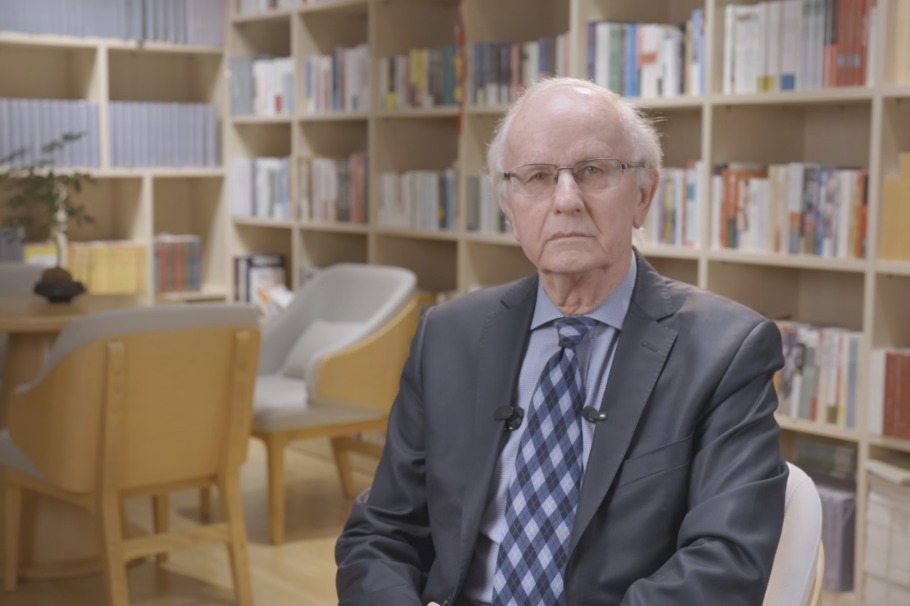
BEIJING -- The following is a signed article by Li Decheng, deputy director-general of and a research fellow with China Tibetology Research Center.
Reincarnation of Living Buddhas never decided by reincarnated individuals: signed article
Recently, the Dalai clique and international anti-China forces have colluded to clamor about the reincarnation of Tibetan Buddhist Living Buddhas, claiming that it is an internal religious affair to be decided by the reincarnated individuals themselves. Historical facts demonstrate that the reincarnation of Tibetan Buddhist Living Buddhas, including the search for and confirmation of successive Dalai Lamas, has never followed such a precedent. The reincarnation of Living Buddhas is by no means merely an internal religious matter, nor is it solely the "unique predestined bond" claimed by the 14th Dalai Lama. Instead, it reflects national sovereignty, governmental authority, religious principles, and the sentiments of lay followers.
I. The reincarnation of Dalai Lamas has never been decided by reincarnated individuals
The reincarnation of Tibetan Buddhist Living Buddhas has never been decided by reincarnated individuals. This principle applies particularly to the Dalai Lama reincarnation lineage. The established Dalai Lama reincarnation lineage system commenced with the third Dalai Lama, Sonam Gyatso, while the religious community posthumously recognized the first and second Dalai Lamas.
Records, such as the biography of the third Dalai Lama, Sonam Gyatso, document his birth in a location near Lhasa (present-day Doilungdeqen district of Lhasa) in 1543 and the subsequent observation of auspicious signs that led to his identification as a reincarnated candidate. In 1544, disciples of the late Gendun Gyatso of Drepung Monastery visited Sonam Gyatso. They verified the reincarnation through tests such as asking the child to identify a Buddha statue and a rosary belonging to Gendun Gyatso.
Later, after years of investigation by eminent religious monks and with the approval of the leader of the Phagmodrupa local government in Xizang at the time, a formal enthronement ceremony was held in 1547 for Sonam Gyatso at Drepung Monastery, where he was recognized as the "Drepung Living Buddha." The Desi (chief minister) of the Phagmodrupa government presided over the ceremony and issued official proclamations.
These facts clearly demonstrate that the Drepung Living Buddha was identified and established through the collective religious rituals and procedures by eminent monks from monasteries of the Gelug sect of Tibetan Buddhism in Lhasa, with the approval of the local government of Xizang.
In 1578, Sonam Gyatso was granted the honorific title "Dalai Lama Vajradhara, All-knowing Holiness" by Altan Khan, leader of the Mongol Tumet tribe, who had been bestowed the title of Prince Shunyi by the Ming Dynasty government. This was the first time the Drepung Living Buddha had been referred to as the Dalai Lama.
The fourth Dalai Lama, Yonten Gyatso, was a great-grandson of Altan Khan. With the support of the Mongol Tumet tribe, a delegation from the three major monasteries of Lhasa traveled to Inner Mongolia in 1592 to investigate his identity. After obtaining the approval of the Phagmodrupa Desi, King Nampar Jeva of Tsang, his enthronement ceremony was held at Raiqen Monastery in 1603.
The fifth Dalai Lama, Ngawang Lobsang Gyatso, was selected by the Gelug sect monastic group at Raiqen Monastery in 1622 from three reincarnated candidates through a lot-drawing procedure and approved for enthronement by the local government of Xizang. The procedure for recognizing the fifth Dalai Lama has meaningful relevance to the later system of drawing lots from the golden urn, which was implemented by the Qing Dynasty (1644-1911) government.
In Xizang's history, there was a period when three different individuals were regarded as the sixth Dalai Lama, which reflected the complex and intertwined disputes in Xizang at the time. At the request of the Gelug sect monastic group and the local government of Xizang, the Qing Dynasty central government successively recognized Tsangyang Gyatso, Yeshe Gyatso, and Kelsang Gyatso as the sixth Dalai Lama. Kelsang Gyatso passed away in 1757. In 1762, with the approval of the Qing Dynasty government, his reincarnation, Jampel Gyatso, was enthroned at the Potala Palace.
It was not until 1780, when the sixth Panchen traveled to Chengde to offer birthday greetings to the Qianlong Emperor and reported on the matter, that the emperor accepted the appeals from the Panchen and other Tibetan Buddhist leaders to officially recognize Jampel Gyatso as the eighth Dalai Lama. In 1781, when the Qianlong Emperor formally conferred the title of the eighth Dalai Lama, he simultaneously affirmed Kelsang Gyatso as the seventh Dalai Lama and Tsangyang Gyatso as the sixth. This marked a direct clarification and ordering of the Dalai Lama reincarnation lineage from the perspective of the central government, highlighting the central government's authority in managing the issue of the Dalai Lama's reincarnation.
To prevent individuals from exercising arbitrary power and ensure the sanctity and purity of the reincarnation process, the golden urn lot-drawing system was implemented in 1793. From then on, the identification of reincarnations for both the Dalai Lama and the Panchen Erdeni was carried out either through drawing lots from the golden urn or through special exemptions granted by the central government. Historically, the 9th, 13th, and 14th Dalai Lamas were exempted from the golden urn lot-drawing process by special approval of the central government, while the 10th, 11th, and 12th Dalai Lamas were recognized through the golden urn lot-drawing ceremony. All the aforementioned Dalai Lamas were formally approved by the central government.
These historical facts fully demonstrate that the reincarnations of successive Dalai Lamas have always been sought and identified through religious procedures by the Gelug sect monastic community, with the approval of the government. There has never been a case where the decision was made solely by the reincarnated individual.
II. The reincarnation of Living Buddhas follows rigorous historical conventions and rules -- it is not subject to individual decision
The system of reincarnation for Living Buddhas has evolved over more than 700 years, forming a comprehensive set of religious rituals, historical conventions, and relevant principles that are strictly observed by all sects of Tibetan Buddhism. Among these, the principles and rules concerning reincarnation must be given due importance.
(1) The reincarnation of Living Buddhas must adhere to the principle of government oversight
The formation of the Living Buddha reincarnation system is inextricably linked to the support of the central government. As such, a key aspect of the system is that the final authority for approving a reincarnated successor rests with the government. From the perspectives of national sovereignty and governmental authority, the central government exercises an approval and conferral system for the reincarnations of influential Living Buddhas. This reflects the state's sovereignty over regions such as Xizang and its authoritative role in the recognition of reincarnations. It embodies the principle that the state is above religion, with political authority taking precedence over religious authority, and that religious followers are citizens first and foremost. It also reflects the principle that religions will prevail with the support of the state.
Historically, the system of Living Buddha reincarnation was established and developed precisely through conferral and approval by the central government. The reincarnation of Living Buddhas, especially those of significant influence, has always been incorporated into the scope of government administration.
In 1334, Emperor Shun of the Yuan Dynasty (1271-1368) conferred the title "Yuantong Zhufa Xingkong Buddha Karmapa (the Buddha who perfectly comprehends the emptiness of the nature of all phenomena)" upon Rangjung Dorje -- the first Living Buddha in Tibetan Buddhism to be officially recognized -- who was later confirmed as the Third Karmapa. Rangjung Dorje was also granted an imperial edict, the seal of State Preceptor, and other honors. Through this conferment, his legitimate status as a reincarnated Living Buddha was formally recognized by the Yuan Dynasty central government, and the "Karmapa" title was officially sanctioned for use and succession. The imperial recognition also transformed the reincarnation of Living Buddhas from a spontaneous folk practice into a system with legitimacy, laying the foundation for the institutional development of the reincarnation system of Living Buddhas.
The title of the Dalai Lama reincarnation system was also conferred and confirmed by the central government. After Sonam Gyatso was enthroned at the Drepung Monastery in 1547, the Ming Dynasty government dispatched envoys to Qinghai in 1579 to grant him the title "Huguo Hongjiao Chanshi (state-protecting, dharma-promoting Zen master)," along with items including a seal, an edict, and a monastic robe. This confirmed and recognized the legitimacy of his status as a reincarnated Living Buddha and the reincarnation system by the central government.
In 1653, the fifth Dalai Lama, Ngawang Lobsang Gyatso, was summoned to Beijing to meet the Shunzhi Emperor of the Qing Dynasty. The Qing Dynasty government conferred upon him the title "the Dalai Lama, Overseer of the Buddhist Faith on Earth under the Great Benevolent Self-subsisting Buddha of the Western Paradise," and granted him a golden certificate and golden seal. Thus, "Dalai Lama" officially became the exclusive title of this reincarnation system, and his status in Xizang's religious sphere was formally recognized by the central government. From then on, it became customary for each successive Dalai Lama to be officially confirmed by the central government after reincarnation.
Historically, the reincarnation of Living Buddhas, especially those of great influence, was subject to government approval and oversight. The establishment of the Dalai Lama reincarnation system was not the decision of any individual, but rather approved by local authorities. Throughout history, each successive Dalai Lama was recognized, approved, and enthroned with the consent of both local and central governments.
(2) The reincarnation of Living Buddhas must follow the principle of management according to law
Managing religious affairs in accordance with the law is a universal practice that has been observed throughout history and around the world. Managing the reincarnation of Living Buddhas in accordance with the law is an important aspect of China's administration of religious affairs. Managing religious affairs in accordance with the law involves matters related to state interests and public interests; it does not constitute interference in the internal affairs of religion. Once the reincarnation system of Living Buddhas was established, it came under the framework of legal management. During the Yuan and Ming dynasties, the central government's system of conferring titles upon grand Living Buddhas embodied the spirit and principles of the rule of law. The Qing Dynasty government promulgated the Imperially Approved Ordinance for the Better Governance of Tibet (29-Article Ordinance), based on which the eighth Dalai Lama issued a proclamation for the Year of the Water Buffalo. Both stipulated detailed provisions for implementing the golden urn lot-drawing system. The Nationalist Government, the then central authorities of China, promulgated a set of regulations on the reincarnation of Lamas, under which the reincarnation and recognition of the 13th and 14th Dalai Lamas were completed. In 2007, the Chinese government issued the Measures on the Management of the Reincarnation of Living Buddhas in Tibetan Buddhism, which clearly stipulated that reincarnations of Living Buddhas of different levels of influence must be approved by different government departments.
Managing the reincarnation of Living Buddhas in accordance with the law is a concrete embodiment of the universal spirit of the rule of law. Sakyamuni urged his disciples to strictly abide by the laws of the king, and true Buddhist followers should never disregard national laws or consider themselves beyond the jurisdiction of the law. Therefore, individual wishes must be subject to state law, and the reincarnation of Living Buddhas must not disregard national laws under the pretext of "religious affairs" or "the personal wishes of the reincarnated."
(3) The reincarnation of Living Buddhas must adhere to the principle of confirmation through dharma
Buddhism has always advocated "following the dharma, not individuals," meaning that internal Buddhist affairs must be handled according to Buddhist principles rather than personal wishes -- and the reincarnation of Living Buddhas is no exception. According to Tibetan Buddhist views and the practice of "divine judgement of the true reincarnation," the confirmation of a reincarnation's true identity is not determined by the personal wishes of the reincarnated individual or by others. Still, it follows religious rituals and historical conventions, through applying the principle of doctrinal determination. Tibetan Buddhism holds that a Living Buddha reincarnates into the world to uphold the dharma, fulfill the Bodhisattva vow, and bring salvation. Therefore, when confirming a reincarnation, drawing lots from the golden urn before the Buddha and relying on the Buddha's compassionate blessings and enlightened determination is regarded as the most sacred, solemn, and impartial method. Methods like drawing lots from the golden urn embody the doctrine of "the Buddha's decision through dharma." They cannot be manipulated by individuals, much less decided by the personal will of the reincarnated individual. As the saying goes, "real gold does not fear the test of fire."
(4) The reincarnation of Living Buddhas must follow the principle of respecting the sentiments of lay followers
From the perspective of lay followers, Tibetan Buddhism holds that Buddhas manifest in this world out of compassion, never abandoning sentient beings, and returning by the power of their vows. In the reincarnation of Living Buddhas, the "sentient beings" they do not abandon are not a vague or broad concept, but specifically the devoted followers -- the religious community. The "vows" refer to the aspirations to attain enlightenment, practice the Bodhisattva path, and deliver sentient beings. In the process of reincarnation, the target of these vows is precisely the Tibetan Buddhist faithful. Thus, the reincarnation of a Living Buddha occurs in response to the needs of the believers. The majority of Tibetan Buddhist believers reside in China, specifically within regions where Tibetan Buddhism is practiced. Therefore, in practice, reincarnated Living Buddhas do not abandon their followers or the land that nurtures them, and can only reincarnate within China, rather than in places where Tibetan Buddhism is not traditionally practiced. Thus, decisions about whether to reincarnate and where to reincarnate must respect the sentiments and wishes of the lay followers, and cannot be decided solely by the reincarnated individual. Precisely out of respect for the sentiments of the faithful, the Measures on the Management of the Reincarnation of Tibetan Buddhist Living Buddhas stipulate that "the request of the majority of local believers and monastery management organizations for reincarnation" is a fundamental condition for reincarnation.
In summary, there has never been a precedent in the history of Tibetan Buddhism, including the reincarnations of successive Dalai Lamas, where the reincarnated individual alone decides the matter. Since the establishment of the reincarnation system of Living Buddhas, it has consistently adhered to and respected principles and traditions of government oversight, management according to law, confirmation through doctrinal determination, and respect for the sentiments of the faithful. There is simply no basis for the reincarnated individual alone to decide the matter, and any attempt to politicize the reincarnation of Living Buddhas will ultimately prove futile.


- Macron's China visit strengthens ties, boosts cooperation on global issues
- CPC issues revised regulations on its working bodies
- Melodic harmony under gingko tree
- Media tour explores Xiamen's tech surge and smart manufacturing
- Discover Xiamen with beauty of ecological governance
- Conference aimed at strengthening global organ donations opens in Guangzhou