Consensual ambition









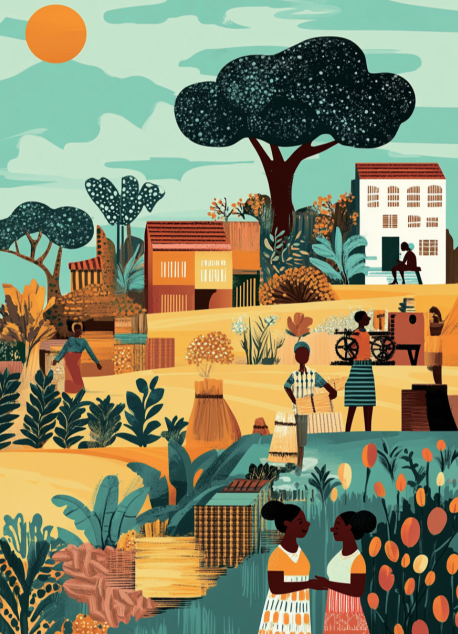
The 'African Consensus' reflects a broad, collective understanding among countries on the continent of how to respond to development challenges
The year 2025 marks the 80th anniversary of the founding of the United Nations. Amid technology-driven globalization and mounting global challenges, developing countries, including China, are playing an increasingly vital role in driving reforms in global governance, pushing to build a more just and reasonable international governance system and promoting fairness in rights, opportunities and rules.
The problems with the current global governance system reveal the deep-rooted flaws in the course of the development of international relations over the years. In the modernization process, the developed countries have long played the dominant role in the international order and rule-making. In certain countries and regions, domestic affairs and cooperation frameworks are often constrained by hegemonic mechanisms embedded in the international system. As a result, the rights to universal development are disproportionately concentrated in the hands of a few countries.
African nations are a historically marginalized group in the international system. Since the onset of colonization, the African people have continuously sought the shared actions that could transcend race, ethnicity, cultural belief and national identity to collectively safeguard an international environment for peaceful, fair and independent development.
This historical journey has gradually given rise to the "African Consensus", a multilateral theoretical and practical framework guiding Africa's "independent and autonomous development". Based on changing international dynamics, African nations have been supporting the UN in multilateral governance through an "open model of autonomous development". By emphasizing endogenous development and collective action, Africa claims its initiative in global governance and offers a paradigm distinct from traditional Western models.
According to incomplete statistics, from 1987 to 2024, nearly 30 joint declarations issued by African countries articulating their unified positions on issues related to African and global development were adopted by the UN. At its core, the "African Consensus" emphasizes respect for diverse development paths and advocates for inclusive and shared development by recognizing differences in countries' stages of development and promoting fairness and equity.
First, the "African Consensus "brings valuable ideas to global governance and enhances the participation of Global South countries in global governance. The "African Consensus" reflects the need to strengthen coordination and consultation mechanisms between the UN and regional organizations on major global issues, thereby increasing the voice of developing countries in multilateral systems. In numerous documents, it stresses the importance of increased resources support and redistribution within the UN framework to bolster the capacity of African regional organizations to maintain regional peace, stability and development.
In recent years, China and African nations have cooperated closely on issues such as UN Security Council reform, advocating the increased representation and influence of developing countries, especially African nations, in international affairs, reflecting the practical significance of multilateral coordination.
Second, the inclusion of African development issues in the global agenda has added to the diversity of global governance. Africa has the largest number of the world's least developed countries, and its development trajectory plays a vital role in shaping a globally inclusive development framework. By speaking with a unified voice through consensus, African countries have actively engaged in international multilateral cooperation while promoting "open and autonomous development".
African countries have proposed the New Partnership for Africa's Development, which sets out shared priorities, such as the independent development of the mining sector and empowering youth. This has enriched the development discourse within the UN and highlighted its role as a global platform for dialogue. Africa has thus become a key focus of the UN's Millennium Development Goals and the 2030 Agenda for Sustainable Development.
Moving away from aid-dependent development toward cooperation through engagement and self-reliant growth, African countries have leveraged the "African Consensus" to raise the global visibility of their concerns and contribute to the pluralism of global governance.
Third, Africa is actively developing diversified international cooperation mechanisms to support cooperative development. Guided by the "African Consensus", Africa has developed multiple "one-to-many" (i.e., one external partner cooperating with multiple African countries) foreign cooperation mechanisms. These mechanisms draw on the complementary strengths in South-South cooperation while also reforming and reshaping the traditional North-South cooperation models. Through structured arrangements such as regular dialogues and high-level summits, they have made international partnerships more stable, practical and far-reaching in both scope and impact.
One notable example is the Forum on China-Africa Cooperation, which closely aligns with the visions and goals of South-South cooperation. It provides African countries with policy space and institutional support to pursue autonomous development, helping them advance along a path of self-reliant and sustainable growth.
Fourth, broad participation by sovereign states and unified expressions of intent provide institutional support for global governance. The "African Consensus" does not imply complete agreement among all African countries on every issue; it reflects a broad, collective understanding in responding to development challenges.
Given the continent's vast diversity, reaching broad consensus on many issues is a complex task. However, the framework agreements developed under the "African Consensus" play a crucial role in supporting the UN by enabling more targeted and differentiated cooperation across specific countries and sectors.
International relations since the end of World War II show that many historical issues remain unresolved, and untamed unilateralism continues to hinder the realization of the UN's founding vision. In contrast, the "African Consensus" has helped shift African countries from passive recipients of governance to active participants and co-creators of the global governance system, advancing a more just and equitable international order.
In responding to the challenges of globalization, African people aspire to achieve equitable development through modern state-building and governance. In doing so, they are gradually shaping a model of international engagement that reflects Africa's regional and cultural distinctiveness. The core values of the "African Consensus", including development, equity and enhanced cooperation, not only contribute to the promotion of genuine multilateralism but also underscore the importance of institutional collaboration. These principles closely align with China's Global Development Initiative and the vision of a community with a shared future for mankind, and deserve wider recognition and support on the global stage.
China has long supported African nations in voicing their collective positions in the UN and other multilateral platforms, while actively addressing their legitimate concerns around sustainable development and fair governance. Through initiatives such as the FOCAC and the Belt and Road Initiative, China continues to promote a development-focused model of South-South cooperation that prioritizes mutual benefit and the protection of development rights. In partnership with African countries, China is advancing the UN's Agenda for Sustainable Development, contributing fresh momentum to global governance through greater inclusiveness, fairness and cooperation.
Yang Baorong is a researcher at the Institute of West-Asian and African Studies at the Chinese Academy of Social Sciences. Fan Kai is a doctorate student at the University of Chinese Academy of Social Sciences. The authors contributed this article to China Watch, a think tank powered by China Daily.
Contact the editor at editor@chinawatch.cn.