Europe's pricey iPhone 16e tells a bigger story









A brand-new iPhone 16e currently sells for 4,499 yuan ($627.72) on Apple's China website — roughly 575 euros ($676) at today's exchange rate. But walk into an Apple Store in Brussels and the exact same model starts at 719 euros, more than 1,000 yuan higher than in China. If you check the US Apple Store, the price starts at $599, which only widens the gap further.
The price difference is not just a fluke of tariff or value-added tax. The same pattern repeats itself across countless everyday consumer goods. Take a pair of Nintendo Joy-Con controllers: in China, they cost a bit over 600 yuan, but in Europe the sticker price is 89.99 euros — about 100 yuan more after conversion. Even household basics show this curious spread: a simple ceiling fan light might sell for around 300 to 400 yuan in China — about 40 to 50 euros — but in a Belgian store, a similar quality fixture typically costs nearly double that, around 80 to 100 euros.
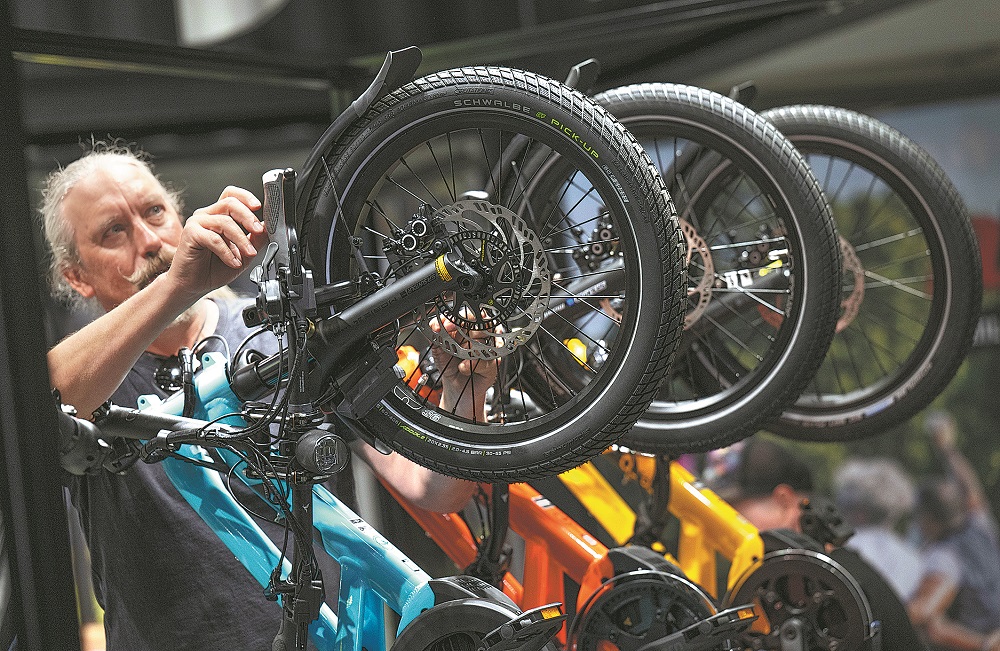
Then there is the bicycle. On the streets of Brussels, a basic single-speed bike, nothing fancy in design or materials, goes for over 200 euros. For many young people, that is not pocket change. Matthias, a 25-year-old graduate I spoke to, didn't buy his from a shiny high street shop; he scoured a secondhand store and still had to pay 120 euros, which for him is a sizable expense. No wonder, he and his friends lock up their bikes like prized possessions, in sharp contrast to China's near-ubiquitous dockless sharing bikes, often left unchained outside shops and apartments.
Look around and it's obvious: everyday industrial goods cost significantly more in Europe than in both China and the US. Some might shrug and say it's simple economics: higher wages, higher rents, higher taxes, higher logistics costs. But that only explains part of the story. When you remember that the iPhone 16e is also cheaper in the US than in Europe — $599 versus 719 euros — it's clear that cost alone doesn't account for it all.
What's behind these price gaps? Several European economists I interviewed pointed to a pattern that many in Europe would rather not discuss openly: the continent has moved away from industrial production faster than anywhere else in the developed world. Take the example of Germany which has historically been Europe's industrial powerhouse. In 1991, industry made up over 33 percent of Germany's total economy. By 2009, it had dropped to under 24 percent, and even after years of efforts to revive manufacturing, it still hovers around 26 percent, far below its peak.
In Belgium, the story is even starker. Industrial output as a share of GDP fell from 26 percent in the mid-1990s to under 19 percent in 2023. Those lost percentage points represent factories shuttered, machines scrapped, jobs that shifted from factory floors to service counters and glass-walled offices. Across the EU's major economies, the same pattern holds true: industry shrinks while services expand, now making up about 70 percent of most national economies.
On paper, this is modern economic evolution. A larger service sector is often seen as a sign of progress, higher living standards, and smarter, more flexible jobs. You rarely see factory workers on the streets of Brussels, Berlin or Paris these days. The same people who once tightened bolts on an assembly line now tap on tablets, guiding clients through insurance plans and mortgage refinancing — ideally over a cappuccino in a cafe booked three days in advance.
Who wouldn't rather be a suited-up consultant than a grease-stained machinist? For many, that's a dream come true. But as Europe's shop floors have emptied, the cost of everyday industrial goods has crept steadily higher. If there are fewer local factories making everyday products, then those products must be imported from China or Southeast Asia. Every step of that supply chain adds a little more to the price tag, which is eventually handed to the consumer.
Not long ago, I visited a European scholar who studies modern tech and the digital economy. He was refreshingly honest about the contradiction: he fully supports Chinese companies selling into Europe, calling it a win-win. Chinese enterprises make money while European consumers get affordable, good-quality products. He was true to his word, too — he proudly showed me his Chinese-made electric car, which he claimed was the first of its kind in his small city (though he admitted he might have exaggerated a bit). He started it up for me, soft ambient light glowing through the panoramic sunroof.
But he didn't just praise Chinese industry. He also offered a blunt observation: despite the appeal of lower prices, Chinese goods still don't command the same trust among European consumers. I tried to challenge him on that, pulling up the latest data for Chinese electric car sales in Europe. He was right. In February 2025, registrations for Xpeng vehicles doubled in Germany — but the total was still only 162 cars. Compared to China's domestic EV market, where brands measure monthly sales in tens or hundreds of thousands, that's barely a rounding error.
His advice to Chinese companies? If you want Europeans to buy your products, don't just ship them in from Asia and hire a local sales rep. Build factories here. Hire locals. Sponsor the local football team. Make your brand feel like the friendly neighbor down the street — not a faceless exporter on the other side of the planet. "Europeans trust brands they see around them, brands that feel familiar," he said. "If Chinese companies employ local people, join local events, share the same lunch tables — trust will follow."
He's right. In a way, Europe's uneasy relationship with industrial decline is rooted in its own past. The world's first Industrial Revolution began here. For centuries, Europe was synonymous with engineering prowess — cars, planes, ships, locomotives, even the rockets that once reached the stars. For Europeans, making things wasn't just an economic necessity, it was identity. Small wonder that when an economy moves past manufacturing, people miss it — not in the sense that they want to return to the assembly line, but in the sense that they still trust what they can see, touch, and assemble themselves.
Europe's story holds a clear lesson for China. Today, "Made in China" has become shorthand for reliable quality and unbeatable price. But China is rapidly shifting too: gleaming skyscrapers and thriving service firms fill its biggest cities. More and more young graduates prefer laptops and design studios over factory floors. And rightly so — no one should have to "tighten screws" for life. Chinese workers deserve fair pay, strong labor protection, and better working conditions.
But the deeper challenge is this: how to maintain a healthy, competitive industrial base even as the service sector expands? How to avoid repeating Europe's mistakes — where deindustrialization went too far, too fast, leaving households paying premium prices for everyday goods? No country that dreams of long-term prosperity can afford to forget how to make things. Industrial jobs should not be romanticized, but neither should they be allowed to vanish entirely.
If Europe's expensive iPhone 16e teaches us anything, it's that the real value of an economy lies not just in slick offices and polished slideshows, but in the solid, tangible output of factories and workshops. China's next great economic leap will not come from abandoning factories for coffee shops, but from striking the right balance: nurturing its workers, rewarding their skills, and ensuring that when a young graduate buys a bike — or an iPhone — they know that behind that affordable price is a powerful, resilient industrial backbone that keeps the whole system humming.
The author is the China Daily EU Bureau Chief Correspondent based in Brussels.