Harvard's loss, Hong Kong's gain










The city can offer Chinese mainland students a high-quality academic, applied research, and culturally safer alternative to the US. However, student housing is scarce, and costs are prohibitive. Besides addressing dormitory issue and exploring ways for students to offset expenses, experts say govt and local universities should incentivize practical research for patents and link more actively with the mainland's innovation ecosystem. Li Lei reports from Hong Kong.
United States' soft power owes a lot to the world's best academic and scientific minds, as researchers advanced the frontiers of knowledge in science, technology, and commerce. Its industry gained a huge knowledge transfer from Nazi Germany after World War II. From the 1980s, the top students from India, China, and Eastern Europe have fueled US scientific and technological leadership.
That global leadership will suffer a reversal from hostile foreign student visa restrictions, after the anti-Semitic tenor of protests against the Gaza war. The conservative right wing that voted for President Donald Trump has little patience for the liberal, privileged, and, in their minds, spoiled elites. The US government is cutting federal funding to universities to rein them in.
China offers scholarships to the world's poorest continent, Africa, with feeder programs locally to teach Mandarin. These students return as cohorts of future leaders knowing China well. The Hong Kong Special Administrative Region's English-stream leading universities see an opportunity to attract top Chinese mainland scholars as well as US academics, distressed by an unpredictable visa policy — part of the effort to turn Hong Kong into an international hub for postsecondary education.
Harvard hit hard
The Trump administration suspended $2.2 billion in federal funding for Harvard University in April, followed by a $450 million cut in May with threats to revoke its tax-exempt status. The 389-year-old university, set up by a Puritan clergyman in Cambridge, Massachusetts, in 1636, is the gold standard with an acceptance rate of 3.5 percent. Its endowment in 2024 stood at $53.2 billion.
The US Department of Homeland Security on May 22 sought to remove Harvard's right to enroll foreign students — which was denied by a federal judge. On June 4, a presidential proclamation barred Harvard's international students from entering the US — also halted by the same judge.
The US government is appealing the rulings. That leaves 6,800 international students — 27 percent of Harvard's total enrollment in the 2024-25 academic year — in limbo, facing potential deportation, if the administration prevails.
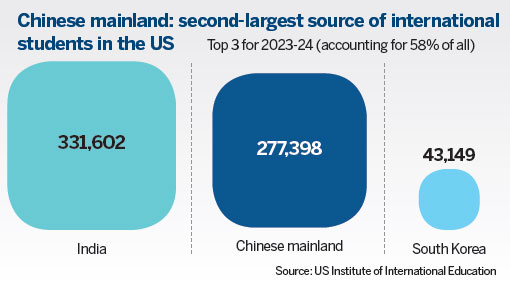
Geopolitical tensions and anti-Asian sentiment already deter many Chinese students from studying in the US. Enrollment data reflect this: In the 2023-24 academic year, India surpassed China as the top source of international students in the US, while Chinese enrollments dropped 4.2 percent year-on-year to around 277,000.
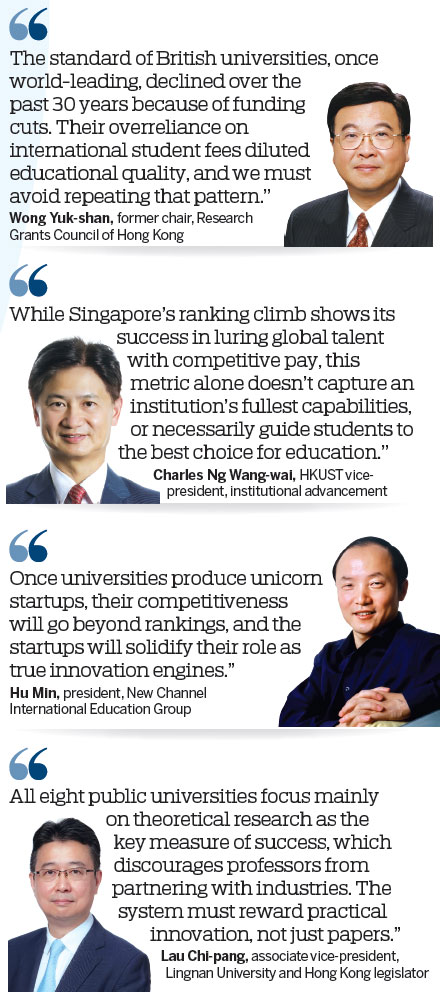
Lau Chi-pang, an associate vice-president of Lingnan University and a Hong Kong legislator, said he believes US policy uncertainty — coupled with safety concerns — could drive mainland students to choose Hong Kong instead as they would not want to risk visa uncertainty and campus activism.
Alternative option
Hu Min, president of New Channel International Education Group, which offers application consultancy, said that US visa uncertainties have forced many to seek backup options, especially for STEM (science, technology, engineering and math) students. Hong Kong's academic prestige and policy stability make it an attractive alternative. "Research-focused students prioritize regulatory certainty, and Hong Kong has that," said Hu.
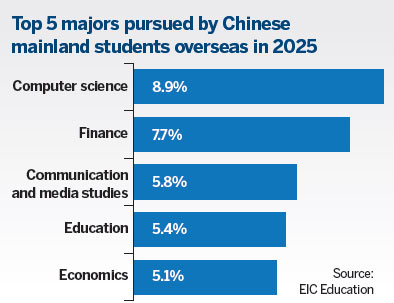
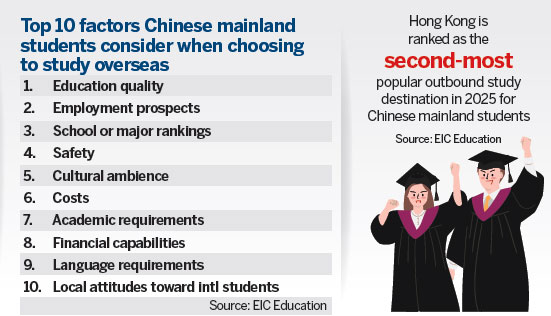
A 2025 report by consultancy EIC Education ranks Hong Kong as the second-most popular outbound study destination for mainland students, after the US, citing high-quality education, geographical proximity, and favorable talent policies for employment.
Hong Kong universities have moved swiftly to launch targeted campaigns offering expedited admissions and generous scholarships to attract displaced scholars.
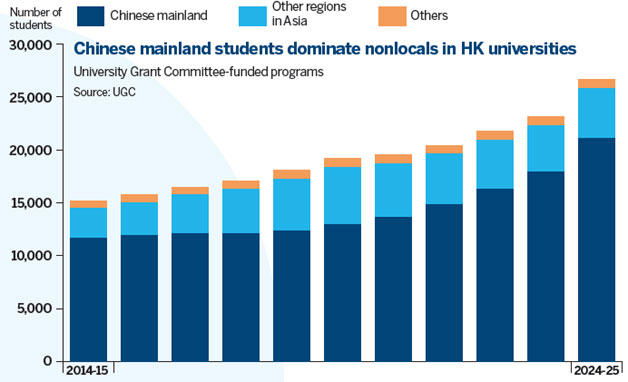
The strategy extends an academic safety net to international students while strengthening Hong Kong's talent pipeline — a critical edge as global competition intensifies for elite researchers. There is a gap in applied technology that the city needs to close to achieve its ambition of leading the Fourth Industrial Revolution.
Hong Kong's eight publicly funded universities have fielded 850 transfer inquiries from students affected by US policies, extending 36 formal offers as of the end of June.
The proactive Hong Kong University of Science and Technology is targeting Harvard students. Of seven offers the university made to such students, six were accepted as of early July, all with scholarships.
Beyond attracting top students, Charles Ng Wang-wai, HKUST vice-president for institutional advancement, said that the US crackdown also affects academics, presenting Hong Kong with a golden opportunity to recruit world-class professors too.
Robust quality
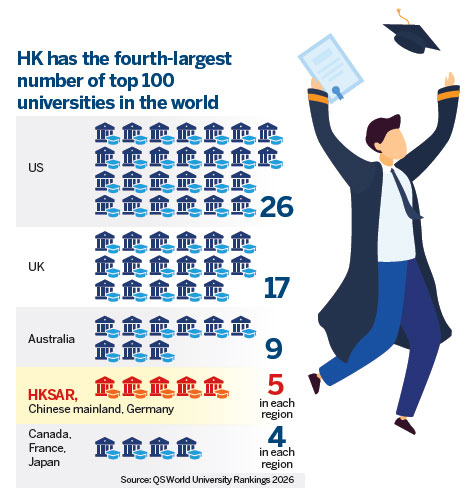
Hong Kong has robust academic credentials. The QS World University Rankings 2026 place five Hong Kong institutions in the top 100, led by the University of Hong Kong, which rose to 11th globally — the highest-ever ranking for a Chinese university. HKU also ranks second in Asia, behind the National University of Singapore (8th globally).
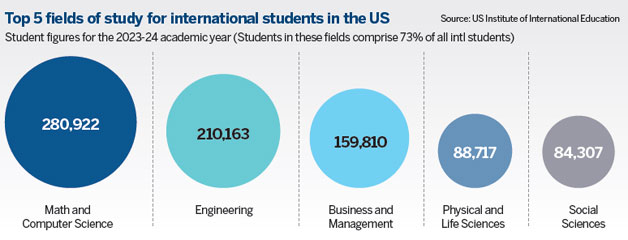
Subject rankings reveal strengths from computer science to business, mirroring the most sought-after US programs and enhancing Hong Kong's appeal to "Harvard refugees".
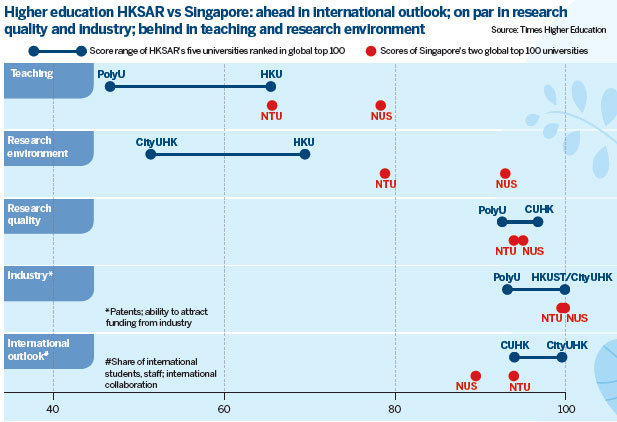
The criteria for such rankings are debatable, but experts universally agree that Hong Kong's greatest advantage lies in its seamless integration with the mainland's innovation ecosystem — giving it an edge over rivals like Singapore and Germany.
Access to tech hubs, manufacturing bases, and vast talent networks of the Guangdong-Hong Kong-Macao Greater Bay Area provide graduates with superior career opportunities while accelerating research commercialization. Shenzhen, dubbed China's Silicon Valley, is just across the boundary from Hong Kong with fast rail access.
HKUST partners with Huawei and Tencent in artificial intelligence and robotics, while the Chinese University of Hong Kong pioneers cross-border biomedical projects. These collaborations complement Hong Kong's strengths in finance and law education, anchored by its global trade and financial center status.
New Channel's Hu said this multiuniversity, diversified approach proves more adaptable to evolving industry demands than Singapore's twin-powerhouse model (NUS and Nanyang Technological University, which ranked among the top 100). Legislator Lau added: "We offer everything Singapore does, plus what it lacks," referencing mainland connectivity.
While Singapore benefited from China-US tensions and attracted students who avoided Hong Kong during the 2019 social unrest, analysts say the windfall may be short-lived. As Beijing-Washington relations stabilize and Hong Kong's security situation improves, Singapore's window of opportunity could shrink.
HKUST's Ng warned that university rankings alone don't reflect an institution's strengths. "While Singapore's ranking climb shows its success in luring global talent with competitive pay, this metric alone doesn't capture an institution's comprehensive capabilities, or necessarily guides students in the best choice for education," he said.
Ng emphasized Hong Kong's unique advantage: "Our graduates gain direct access to Chinese mainland's vast economic network — a drawcard even for students from traditional STEM powerhouses like Germany that offer free programs."
Journals or applied value?
While institutions have launched initiatives like the City University of Hong Kong's Graduate Research and Innovation Trek Programme to help commercialize research and foster startups, experts say Hong Kong's academic system still values research papers published in journals above applied research offering practical value. Legislator Lau observed that all eight public universities focus mainly on theoretical research as the key measure of success. He argued that this makes professors less likely to partner with industries.
Lau called for reforms to give greater weight to patents and applied research in evaluating professors' career prospects — but so far, this has not been wholeheartedly adopted by the institutions. "The system must reward practical innovation, not just papers," urged Lau.
New Channel's Hu noted, "Once universities produce unicorn startups, their competitiveness will go beyond rankings, and the startups can solidify their role as true innovation engines."
He cited the Greater Bay Area's booming startup ecosystem for nurturing future tech leaders. To tap into this potential, student entrepreneurs should be allowed to take time off to focus on their ventures, and students should be granted academic credits to build startups. Hong Kong's strong financial system can connect student entrepreneurs with investors to accelerate ideas into business growth, added Hu.
Hong Kong has long relied on students from developing economies to internationalize its campuses, luring them with grants and immigration benefits.
Over the last five years, the Hong Kong PhD Fellowship Scheme, established by the Research Grants Council of Hong Kong, increased its annual quota from 250 to 400, offering a yearly stipend of HK$337,200 ($42,956) and HK$14,000 a year for research and travel.
But experts warn such a system is financially unsustainable.
Wong Yuk-shan, former chair of the Research Grants Council, said the cost of nurturing an undergraduate student in Hong Kong is around HK$380,000 a year - an amount so high that universities usually suffer a loss. Some universities have commercialized graduate programs to offset costs, which risks eroding academic quality — a pitfall that can be seen in overindustrialized UK institutions.
Unaffordable housing
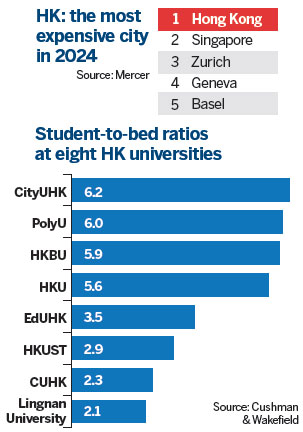
According to consultancy Mercer, Hong Kong ranked among the world's most expensive cities in 2024, with student housing costs soaring because of record rents and chronic shortages.
A Cushman & Wakefield study in 2023 revealed that on average six students compete for each bed on the CityUHK and the Hong Kong Polytechnic University campuses. Half of the eight public universities have a student-to-bed ratio higher than five.
On-campus dormitories are so scarce they're allocated by lottery, often limited to first-year students. Most students rent off-campus from their second year onward, with rents for some multiroom units near PolyU reaching over HK$20,000 per month this year.
Driven by rising nonlocal enrollment, the inflation could dampen the appeal of Hong Kong to talent from key markets like India and Vietnam — the very students enriching US and European campuses.
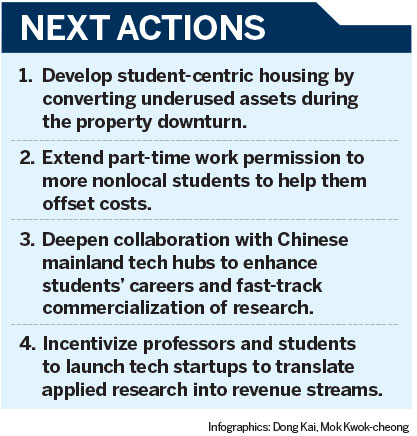
Experts suggest flexibility: easing housing costs, extending permission for part-time work, and balancing graduate program commercialization with academic integrity.
Hu from New Channel proposes capitalizing on Hong Kong's property market downturn by developing a specialized student housing sector. On Monday, the city's Development Bureau and Education Bureau launched a pilot program to convert hotels and commercial buildings into student dormitories. Under the plan, most such conversions won't require additional planning approval, with the first projects expected to open by the 2026-27 academic year.
This approach could simultaneously address student accommodation shortages and help stabilize property prices by fully utilizing underused properties.
In November 2024, the HKSAR government waived part-time work restrictions for full-time nonlocal undergraduates to encourage postgraduation retention. Prior to that, the government launched in November 2023 a similar measure for full-time nonlocal postgraduates on a 2-year trial run. Lau advocated expanding the initiatives to more students to help them offset expenses.
With over HK$20 billion allocated annually for higher education, Hong Kong's eight public universities can attract top professors and maintain academic excellence — but Wong cautioned against trading profits over quality.
"The standard of British universities, once world-leading, declined over the past 30 years because of funding cuts. Their overreliance on international student fees diluted educational quality," he said. "We must avoid repeating this pattern."
Huang Yawen contributed to this story.
Contact the writer at lilei@chinadailyhk.com




- Free shuttles provided for residents affected by Tai Po fire to vote
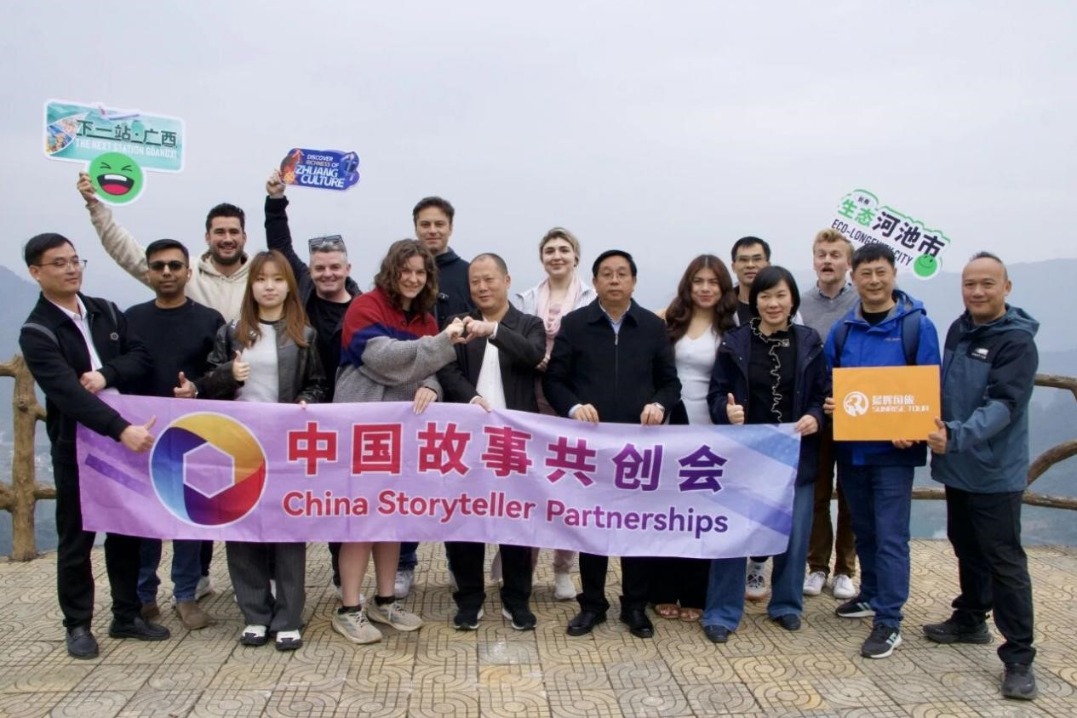
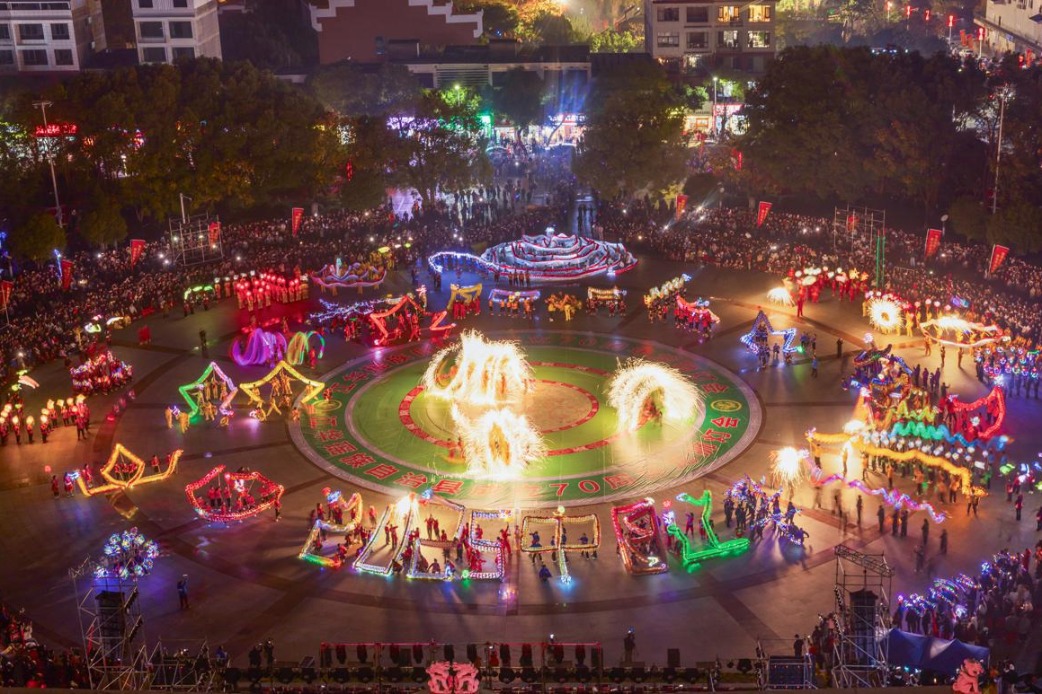
- Global influencers unlock scenic and cultural charms of Hechi
- PLA Navy urges Japan to stop 'smears', accusing Japanese military aircraft of repeatedly disrupting its training
- 'We can manage for now': HK rallies with fire recovery efforts on track
- Foreign media urged to report truthfully on HK matters
- Lee: Vote to drive reform and help HK fire victims