Uzbekistan and SCO: Cooperation for global peace and prosperity









Uzbekistan, along with other states, stood at the origins of the formation and strengthening of the Shanghai Cooperation Organization, the role and significance of which are becoming more visible and important with each passing year. Today its activities affect not only the development of member states, but also the well-being of everyone living in this vast region.
Before moving to the issues of SCO cooperation, I want to dwell on our strategic partnership with China — a country that is extremely close to Uzbekistan in spirit, culture and vital energy.
In recent years, Uzbek-Chinese relations have demonstrated high dynamics, covering key areas from political dialogue and security to comprehensive trade and economic cooperation, cultural and people-to-people exchanges. Their consistent strengthening contributes to ensuring stability and sustainable growth in Central Asia and the SCO space.
An important factor in deepening bilateral cooperation is the regular political dialogue of the heads of the two states. In January 2024, during my state visit to China, President of China Xi Jinping and I elevated our relations to an unprecedentedly high level of all-weather comprehensive strategic partnership for a new era, and identified key areas of cooperation and interaction in the international arena.
This unprecedented progress in our relations has become possible due to the personal attention and tireless efforts of our dear friend — President Xi Jinping — to further develop and strengthen Uzbek-Chinese comprehensive cooperation. The implementation of all our agreements is ensured by the mechanisms of the Intergovernmental Committee, the Inter-Parliamentary Group and the Strategic Dialogue of Foreign Ministers.
Strengthening mutual political trust and strategic partnership is facilitated by full understanding and consideration of each other's fundamental interests. Uzbekistan firmly adheres to the one-China principle. We are grateful to China for supporting Uzbekistan's efforts to deepen regional cooperation in Central Asia and form the "spirit of Central Asian partnership".
Our countries are also actively cooperating in the fight against the "three forces of evil" — terrorism, separatism and extremism.
Since 2017 bilateral trade turnover increased threefold reaching $14 billion. We aim to increase it to $20 billion in the near future. Over the same period, $24.6 billion Chinese investments were attracted to the country.
An important milestone in the development of industrial cooperation with China was the launch in 2024 of the first enterprise in the country and in Central Asia for the production of BYD electric vehicles, as well as the opening of the Luban Workshop in Tashkent, where Uzbek students acquire modern skills in logistics management and use of information technology.
The Confucius Institutes in Tashkent and Samarkand make a great contribution to the study of the Chinese language and culture in Uzbekistan, upbringing a new generation of Sinologists and specialists with knowledge of the Chinese language.
A significant step toward further deepening people-to-people cooperation was the introduction of a visa-free regime between Uzbekistan and China in June this year. It will facilitate more active and productive contacts between people, and promote business interactions and tourist exchanges.
Today Uzbek-Chinese cooperation is becoming a model of pragmatic and balanced partnership that contributes to the sustainable development of the region and strengthening the position of the SCO as a platform for mutually beneficial multilateral cooperation.
Further developing stable relations between our countries is of particular importance in the context of an increasingly complex international situation. The world system is undergoing profound upheavals. The former order, based on universally recognized norms and principles of international law, is losing its stability.
A large-scale transformation in international relations is accompanied by intensified geopolitical competition and growing conflict potential among major powers, disruption of established balance of power, and the weakening of collective governance mechanisms.
The architecture of global security is becoming less and less capable of coping with increasing volume of challenges and threats, facing a crisis of trust. This leads to even greater fragmentation, which will be difficult to overcome in the near future.
In the world economy, countries are facing rising protectionism, disruptions of traditional supply chains, and the redistribution of production capacities. Competition is intensifying over access to critically important raw materials and technologies, and the struggle for leadership in digital and "green "transformation is increasing. The slowdown of global economic growth, high inflation, and instability in financial markets create additional risks for countries with developing economies, deepening the gap between the centers of global development.
As a result, not only the system of checks and balances, trade and finance, but also the solution of most global problems related to ensuring security, combating poverty, and climate change are under threat.
In Central Asia, the consequences of climate change, food and energy instability are becoming visible challenges, which can become catalysts for large-scale socio-economic upheavals.
Another common challenge is the development of artificial intelligence. Obviously, this is a natural process that cannot be stopped, but our task is to prevent its use for military purposes and transformation into a global threat.
Without any exaggeration, under these conditions the SCO is becoming an attractive and widely demanded model of international collaboration, uniting states on the principles of equality, mutual consideration of interests, and non-interference in internal affairs.
Since its establishment, the SCO has consistently promoted the "Shanghai Spirit" based on mutual trust and benefit, respect for the diversity of civilizations, and the pursuit of joint development. The Organization rejects the outdated concepts of the "Cold War" overcoming zero-sum thinking and the confrontation of civilizations.
The SCO actively promotes and implements the ideas of non-alignment, non-confrontation and nontargeting of third parties, which advocates complete equality of large and small states, achieving consensus through constructive consultations, as well as promoting peace through dialogue and cooperation. This is precisely the source of the Organization's appeal and energy.
The SCO unites states with different political systems, historical and cultural traditions, and levels of economic development, demonstrating the viability of the idea of harmonious coexistence and mutually beneficial cooperation.
Today the SCO's "big family" of 10 member states, 2 observers and 14 dialogue partners, covers a vast space in Asia, Europe and Africa. The total territory of the SCO countries exceeds 60 percent of the territory of Eurasia, roughly 42 percent of the planet's population. The share of Organization's countries in the world GDP reaches about 25 percent.
Therefore, the SCO image reflects not only its vast geography in the Eurasian space, but also its intensifying interconnectedness of its member states with global processes, where their role is becoming more significant in forming a new multipolar world.
Another important factor of the growing potential of cooperation has become the strong institutional framework created by the SCO, including over 60 international treaties and over 40 working mechanisms covering a wide range of areas from security to economy, culture and sustainability.
The SCO is constantly in the movement, its evolution potential inexhaustible. Conceptual programs and strategies, as well as new mechanisms and formats of cooperation within the SCO, make a great contribution to strengthening trade, economic and transport interconnectedness, deepening industrial cooperation and technological connectivity, accelerating the processes of our countries' transition to a green and digital economy.
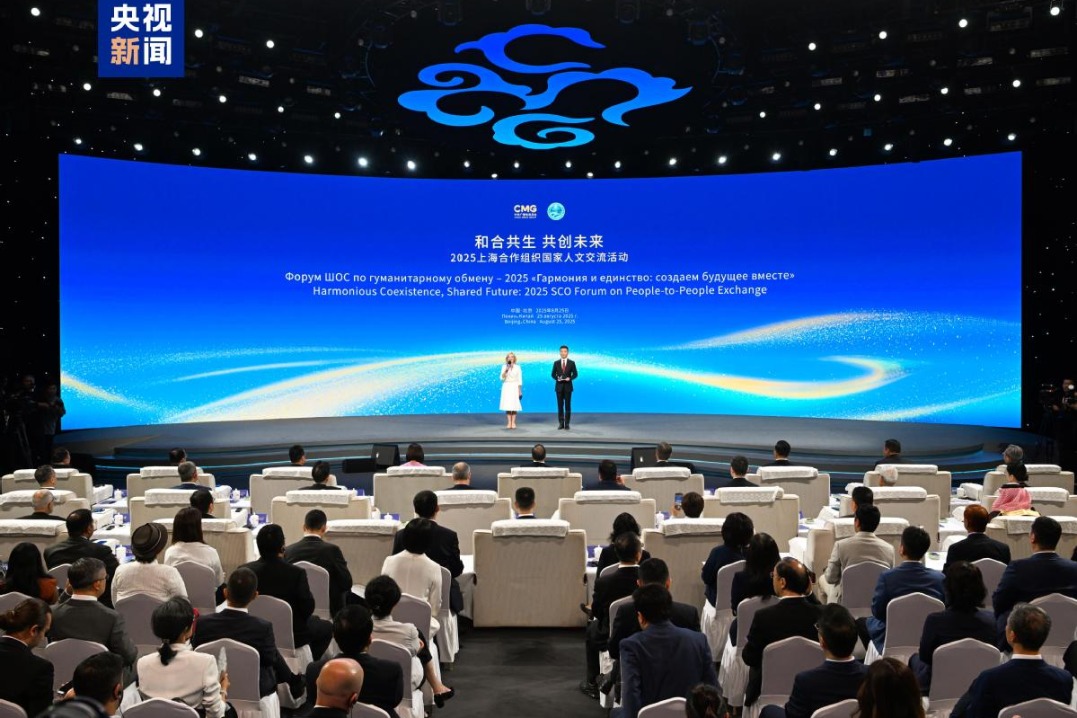
Our Organization is becoming even more united and strong from within due to the unique people-to-people exchange projects aimed at embodying the "Shanghai Spirit "through promotion of public diplomacy, cultural, educational and tourist exchanges.
The SCO has established itself as an active participant in international cooperation and an effective platform for multilateral diplomacy. The Organization is actively developing ties with the UN and its specialized agencies, as well as with a number of regional and international structures — including the CIS, BRICS, the EAEU, ASEAN, ECO, CICA, the League of Arab States, etc.
All this testifies to the high degree of maturity and systemic nature of multilateral cooperation. Active institutional development, promotion of multifaceted cooperation and expansion of international relations contribute to strengthening the role of the SCO as a responsible, open and inclusive mechanism serving the cause of global peace, stability and prosperity.
The SCO is not a challenge to existing structures, but a response to the needs of a new, fair world order based not on force, but dialogue. In a world where conflicts and ideological fault lines are growing, it offers a real alternative: mutual respect, dialogue and joint development.
As President Xi Jinping rightly noted that the wheel of history cannot be turned back, it is important to move only forward, and we need a "united world, not a divided one."
Given the current challenges, it is extremely important to avoid making the SCO bloc-oriented and confrontational. Our main goal is not to aggravate the international situation, but to demonstrate a peaceful agenda and use the SCO's capabilities to solve common problems of humanity.
It is precisely this vision that Uzbekistan has been guided by since the very first days of the Organization's formation, advocating for the steady and comprehensive advancement of SCO cooperation. As an active participant of SCO, our country has chaired the Organization four times and made a substantial contribution to its development.
The first Tashkent SCO summit in 2004 was recognized by opening the SCO Regional Anti-Terrorist Structure (RATS). It also adopted the rules for providing the SCO observer status.
The 2010 SCO summit in Tashkent approved the order of accepting new members and the organizational fundamentals of the SCO's activity.
In 2016, at the third SCO summit in Tashkent, a principal decision was taken on Organization's expansion — accepting India and Pakistan as member states.
Since 2017, Uzbekistan became more active in the Organization, putting forward proposals for the development of practical cooperation between the SCO countries. More than 80 out of 105 initiatives proposed by our country aimed at deepening political, economic, innovative and people-to-people cooperation have been successfully implemented.
An important milestone in the activities of the SCO was undoubtedly the summit in Samarkand in 2022 adopting over 40 significant decisions, agreements, programs and conceptual documents. Among them, special attention was drawn to the fundamental decisions of the heads of state on the second stage of the Organization's expansion — granting Iran the status of a member state, as well as on the beginning of the procedure for admitting Belarus to the SCO.
One of the key priorities of Uzbekistan is to strengthen the role of Central Asia as the core of the SCO. As a result of the expansion, countries of South Asia and the Middle East joined the Organization, and our region became a natural link between the SCO states in the vast Eurasian space.
The development of regional cooperation in Central Asia contributes to the intensification of interaction, strengthening of security and ensuring prosperity of the SCO countries. In 2017, at the initiative of Uzbekistan, the Central Asian process of regional consolidation was launched creating conditions for deepening cooperation.
Thanks to the political will of the Central Asian states, which ensured overcoming numerous topical challenges and the launch of various joint projects, it was possible to create a stable, sustainable policy united with the common goals Central Asia.
This year Uzbekistan is chairing the mechanism of regular meetings of the heads of state of Central Asia. The upcoming "Central Asian Five "summit in autumn this year will be a milestone in the process of forming a New Central Asia, marking the transition from the stage of resolving bilateral interstate issues to a qualitatively new phase of addressing common regional tasks — strengthening regional interconnectedness, overcoming the consequences of climate change, rational use of water resources, enhancing security in the region, developing energy, digital and "green" transformation.
As a result, a more interconnected region, open to international cooperation, is becoming an active participant in the multilateral cooperation of SCO countries. The historic changes in Central Asia acquired an irreversible and sustainable nature, becoming critically important factors in ensuring stability across the SCO space and in the future success of our Organization.
China, as one of the founders of the SCO and its key member is making a great contribution to the development and strengthening of multifaceted cooperation in the framework of the SCO. It has played a decisive role in the institutional and contractual-legal development of the Organization.
The consistent and far-sighted policy of the Chinese leadership, primarily the initiatives of President Xi Jinping, contributed to the successful formation of a modern architecture of cooperation within the Organization.
China actively supports joint efforts to counter terrorism, extremism and separatism, and strengthen the potential of the SCO RATS in Tashkent.
In times of growing geopolitical turbulence, China, within the framework of the Global Security Initiative, promotes the idea of the indivisibility of security, an equal approach to global challenges and the importance of coordinating efforts between the SCO countries. These principles are a guideline for the further development of mechanisms for joint response to crises, cyber threats and transnational crime.
We fully support China's view that Afghanistan is an integral part of overall regional security and an important member of a large SCO family. China calls for intensifying the mechanism of interaction between Afghanistan's neighboring countries and other platforms for helping settle the Afghan issue, increasing humanitarian aid and promoting its economic revival.
In this regard, I would also like to emphasize the fundamental importance of involving Afghanistan, an SCO observer country, in regional trade and economic ties and cooperation to develop interregional connectivity.
For several decades this country has been a hotbed of instability and threats to regional security, but today it is becoming a source of opportunities for developing interregional cooperation. In this regard, Uzbekistan fully supports the Chinese proposal to resume the work of the SCO-Afghanistan Contact Group, which will allow to jointly address issues of both countering security threats and realizing the enormous resource and transit potential of this country.
By putting forward the Global Development Initiative, China makes a significant contribution to the implementation of 2030 Agenda for sustainable development, promotes improved infrastructure connectivity, green and digital transformation.
With its rich cultural heritage and a thousand-year history, China successfully promotes the Global Civilization Initiative, contributing to cultural unity of the peoples of our countries.
China's chairmanship of the Shanghai Cooperation Organization in 2024-25, declaring the year of 2025 as the Year of Sustainable Development of the SCO, has become a significant contribution to the formation of new drivers of economic growth for countries, including "green" and digital transformation.
The Chinese side firmly supports the role of Central Asia as the core of the SCO, adheres to the course of building trusting, equal and mutually beneficial relations with the countries of the region both bilaterally and within the framework of the Shanghai Cooperation Organization.
China's support for the modernization strategies implemented in the countries of the region is particularly important. I would like to recall that in his speech at the "Central Asia-China" leaders' summit in Xi'an, President Xi Jinping emphasized that "the world needs a stable, prosperous, harmonious, and interconnected Central Asia." At the second summit of this format in Astana, the Chinese leader called for the development and formation of a "China-Central Asia Spirit", which, in our opinion, fully correlates with the "Shanghai spirit" and will contribute to strengthening cooperation within the SCO.
I believe that many readers of this publication may ask themselves: What exactly explains Uzbekistan's interest, and what are the main benefits and practical advantages that our country seeks to gain by participating in the activities of the Shanghai Cooperation Organization?
Firstly, through the SCO our country gains access to the large markets of member states such as China and India, which are among the world's top five economies. The three largest trading partners of Uzbekistan are China, Russia and Kazakhstan.
The SCO countries are also our country's main partners in cooperation in the transport and logistics sphere. The implementation of infrastructure projects in cooperation with the Organization's partners contributes to expanding transit potential and attracting investment into the real economy.
Today, more than 7,500 companies with capital participation from SCO countries are operating in Uzbekistan — this accounts for more than half of all foreign enterprises in the country.
For Uzbekistan, the SCO isn't just an external politics platform but an instrument of implementing national interests. Our participation in its activities isn't an accidental choice, it is a strategically elaborated decision ensuring security, economic growth and sustainable development of our country.
Uzbekistan views the future of the Shanghai Cooperation Organization as a multifaceted and effective cooperation platform aimed at strengthening economic integration, developing transport infrastructure, promoting "green" initiatives, digital transformation, and expanding humanitarian and social interaction.
Ensuring security remains a key priority for the SCO. Uzbekistan actively advocates expanding cooperation within the framework of the mechanism of meetings of the Secretaries of the Security Councils — this concerns the coordination of law enforcement agencies, exchange of experience in preventing the radicalization of youth, countering cyber threats and suppressing drug trafficking channels. Particular attention is paid to the use of modern technologies, data exchanges and joint training of specialists in the field of security.
In the trade and economic sphere, we advocate the comprehensive disclosure of the SCO's trade and investment potential. We believe that the key areas of this work are the removal of trade barriers, simplification and unification of customs procedures, active involvement of businesses in SCO projects that strengthen the interconnectedness and alignment of the SCO with the goals of the "Belt and Road".
Uzbekistan promotes the support of small and medium-sized businesses, developing innovative industries and introducing modern "green" and digital technologies. An important step is the implementation of joint projects for the development of e-commerce and the creation of "smart" logistics systems, which contributes to sustainable economic growth.
We support proposals to create an effective multilateral mechanism for financial interaction focused on the practical implementation of joint projects within the SCO.
A good start on this path could be creation of "SCO Development Bank", which can become a platform for the implementation of joint infrastructure and technology projects, increase access to financing and stimulate the inflow of investment into the regions of the member states.
The most important area of practical cooperation is strengthening transport and logistics connectivity. For the SCO countries, this is not only a matter of regional development, but also a strategic opportunity to increase competitiveness and integration in the Eurasian space.
In this regard, the construction of "China-Kyrgyzstan-Uzbekistan" railway will give new impetus to the development of the China-Central Asia-West Asia Economic corridor, allowing for a significant reduction in transport routes between the countries of Central and East Asia. The implementation of the project will ensure a multiple increase in the transit potential of SCO member states and partners, and will enable to radically improve transport connectivity across the entire Organization's space.
Further deepening of cooperation will be facilitated by the integration of the transport strategies of SCO countries with the Belt and Road Initiative and other interregional projects. This will allow to create a synchronized logistics system, increase the efficiency of cargo transportation, and strengthen the role of the SCO as a major transport and logistics hub of Eurasia.
Digitalization is a promising driver of economic growth and integration across the SCO space. We consider it necessary to pay special attention to coordinating efforts to create a unified digital space, exchange best practices, and implement joint projects in the field of the digital economy, the introduction of cloud computing, big data and artificial intelligence technologies.
Climate change challenges require closer coordination and practical cooperation among the SCO member states. Uzbekistan consistently advocates expanding partnership in such strategic areas as adaptation to climate change, implementation of "clean" technologies, development of "smart" agriculture and rational use of water resources.
Of particular importance are the works on greening the dried-up bottom of the Aral Sea, creation of "green belts" and public eco-parks, which not only improve the environmental situation, but also serve the interests of the entire region.
Another area of cooperation between Uzbekistan and SCO countries is ensuring food security through the implementation of joint projects in the agricultural sector, introduction of innovative technologies and development of infrastructure for storage and transportation of food products.
Uzbekistan attaches great importance to expanding the SCO's cultural and humanitarian cooperation. Particular attention is paid to joint educational programs, academic exchanges and projects in the field of science, as well as cultural and sports events that not only popularize national traditions, but also create an atmosphere of mutual trust and respect.
Another important area is tourism. The SCO countries are faced with a shortage of high-quality and affordable regional tourism products, constraining the development of the industry. Uzbekistan advocates intensifying interaction between leading tour operators and airlines of the SCO countries and partners.
Today 46 regular passenger flights per week connect Uzbekistan and China and its number will reach 60 by the end of the year.
Uzbekistan continues to consistently advocate the expansion of regional cooperation in achieving the Sustainable Development Goals, including through the SCO mechanisms. The formation of a common platform for the exchange of experience and coordination of efforts within the SCO is important. Such joint work can give new impetus to member states in overcoming poverty, ensuring inclusive and green growth and sustainable development as a whole.
Finally, considering the growing number of participants and the expanding functions of the SCO, improving the structure and mechanisms of the Organization becomes a necessary condition for increasing its effectiveness. Uzbekistan advocates for reforming coordination mechanisms and developing a long-term strategy, with a view of the interests of all countries and contemporary challenges.
Through development of active collaboration within the SCO, Uzbekistan supports the new standard of regional cooperation — based on pragmatism, respect of the national characteristics and strive for sustainable development. Our experience and the region demonstrates: even in the conditions of the growing global uncertainty it's possible to form effective mechanisms of cooperation and humanitarian exchange.
The implementation of joint initiatives with China and other partners allows Uzbekistan to contribute to transforming the SCO into an independent center of attraction in Eurasia. A focus on openness, innovation and multi-level cooperation meets the pressing challenges of our times and creates new opportunities for all member states.
Overall, Uzbekistan's strategic choice is to not merely be part of regional processes, but an active creator of our common future, where the principles of trust and mutual benefit will determine the dynamics of development across the entire vast region.
We look with great anticipation to the SCO summit in Tianjin. I am convinced that its work will be successful and bring meaningful results for all member states. Taking this opportunity, I would like to sincerely extend wishes of peace, well-being and prosperity to the friendly people of great China.
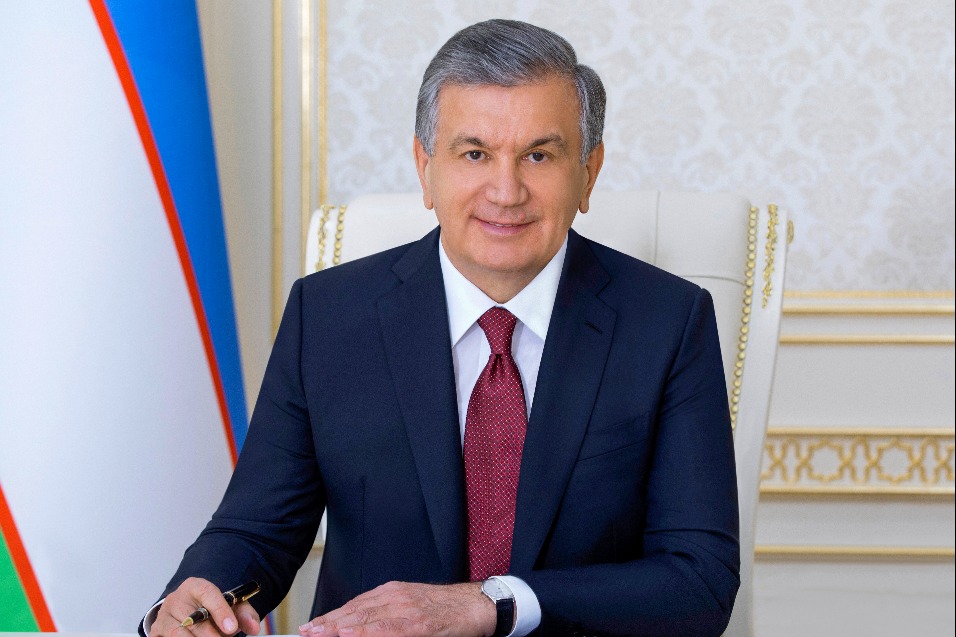
The author is president of the Republic of Uzbekistan.
The views don't necessarily represent those of China Daily.
If you have a specific expertise, or would like to share your thought about our stories, then send us your writings at opinion@chinadaily.com.cn, and comment@chinadaily.com.cn.