Full text of Xinhua's interview with Putin









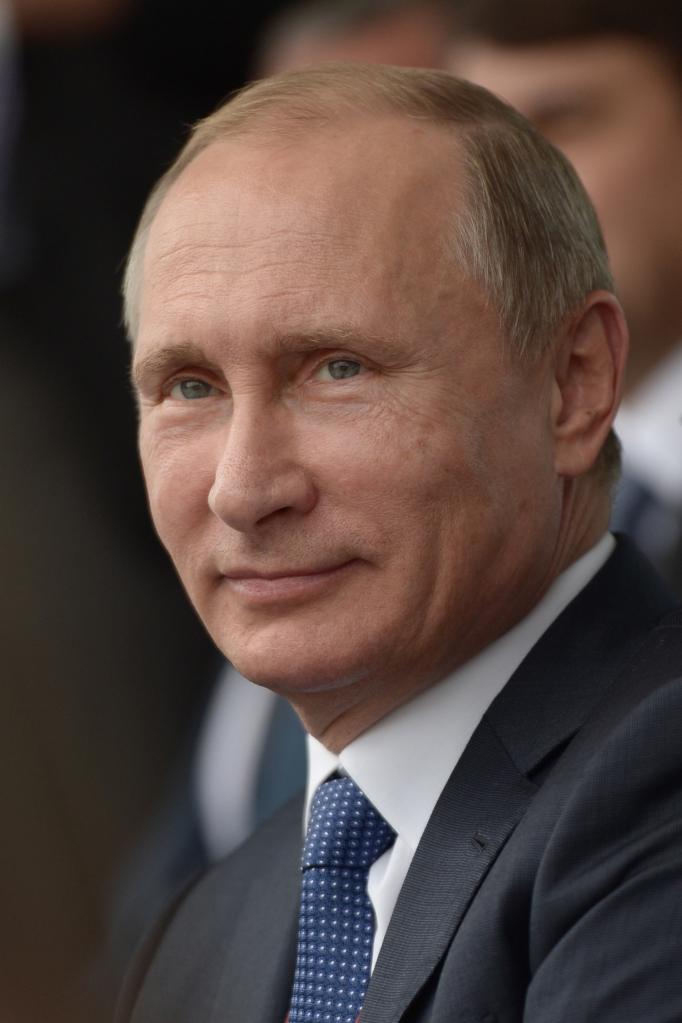
On the eve of his visit to China to attend the Shanghai Cooperation Organization (SCO) Tianjin Summit and China's V-Day commemorations in Beijing, Russian President Vladimir Putin took a written interview with Xinhua.
The following is the full text of the interview:
Question 1: In May this year, President of the People's Republic of China Xi Jinping paid a state visit to Russia and took part in the celebrations marking the 80th anniversary of Victory in the Great Patriotic War – a visit that proved highly successful. Your own visit to China is expected shortly. What are your expectations for the upcoming visit? Over the past decade, you and President Xi have maintained close contacts, shaping and guiding the steady development of bilateral relations. How would you describe President Xi Jinping as a leader?
Answer: Indeed, the visit of our friend, President of China Xi Jinping, to Russia in May was a resounding success, drew wide international attention and was highly regarded in our country. His arrival coincided with a date that is sacred to us, the 80th anniversary of Victory in the Great Patriotic War, thereby lending deep symbolic significance to the further development of Russian-Chinese relations. We reaffirmed the strategic choice of our peoples in favor of strengthening the traditions of good-neighborliness, friendship, and long-term, mutually beneficial cooperation.
The Chinese leader was the principal guest of honor at the celebrations in Moscow. During our high-level talks, we held a very productive discussion of key issues in cooperation between our nations. The outcome was a comprehensive joint statement and the signing of a substantial package of bilateral documents.
Very soon, at the invitation of President Xi, I will pay a return visit to China. I look forward with great pleasure to visiting the city of Tianjin, which will host the Shanghai Cooperation Organization summit under China's presidency. We expect that the summit will give the Organization powerful new momentum, strengthen its capacity to respond to contemporary challenges and threats, and consolidate solidarity across our shared Eurasian space. All this will help shape a fairer multipolar world order.
As for the Russian–Chinese talks, these will take place in Beijing. I look forward to in-depth discussions with President Xi Jinping on all aspects of our bilateral agenda, including political and security cooperation, as well as economic, cultural and humanitarian ties. And, as always, we will exchange views on pressing regional and international issues.
In Beijing, we will also pay tribute to the shared act of heroism of our fathers, grandfathers and great-grandfathers, who together defeated militarist Japan, thereby bringing the Second World War to its final conclusion. We will honor the memory of those who sealed with their blood the brotherhood of our peoples, defended the freedom and independence of our states, and secured their right to sovereign development.
President Xi Jinping treats his country's history with utmost respect; I know this from personal communication with him. He is a true leader of a great world power, a man of strong will, endowed with strategic vision and a global outlook, and unwavering in his commitment to national interests. It is of exceptional importance for China that such a person stands at the helm at this challenging, pivotal moment in international affairs. The President of China sets an example for the entire world of what a respectful and equitable dialogue with foreign partners can and should be today. In Russia, we deeply value the Chinese leader's genuine commitment to advancing our comprehensive partnership and strategic cooperation.
Question 2: China and the Soviet Union, as the principal battlegrounds of the Second World War in Asia and Europe, bore enormous sacrifices and made a significant contribution to victory in the global fight against fascism. In your view, what is the relevance of preserving the memory of that Victory in today's complex international environment? How should China and Russia jointly defend their shared historical memory at a time when some forces on the international stage are attempting to distort historical truth?
Answer: As I have already noted, this year, together with our Chinese friends, we commemorate the 80th anniversary of Victory in the Great Patriotic War and the capitulation of militarist Japan, which marked the end of the Second World War.
The peoples of the Soviet Union and China bore the brunt of the fighting and suffered the heaviest losses. It was our citizens who endured the greatest hardships in the struggle against the invaders and played a decisive role in defeating Nazism and militarism. Through those severe trials, the finest traditions of friendship and mutual assistance were forged and strengthened – traditions that today form a solid foundation for Russian–Chinese relations.
I would remind you that even before the full-scale outbreak of the Second World War, in the 1930s, when Japan treacherously launched a war of aggression against China, the Soviet Union extended a helping hand to the Chinese people. Thousands of our career officers served as military advisers, assisting in strengthening the Chinese army and providing guidance in combat operations. Soviet pilots also fought bravely alongside their Chinese brothers-in-arms.
Between October 1937 and June 1941, the Soviet Union supplied China with 1,235 aircraft, thousands of artillery pieces, tens of thousands of machine guns, as well as ammunition, equipment, and supplies. The principal route was an overland corridor through Central Asia to China's Xinjiang Province, where Soviet specialists built a road in record time to ensure uninterrupted deliveries.
The historical record leaves no doubt as to the scale and ferocity of those battles. We remember the great significance of the famous Hundred Regiments Offensive, when Chinese Communist forces liberated a territory with a population of five million from Japanese occupation. We also recall the unparalleled feats of Soviet troops and commanders in their clashes with Japan at Lake Khasan and the Khalkhin Gol River. In the summer of 1939, our legendary commander Georgy Zhukov won his first major victory in the Mongolian steppes, which in effect foreshadowed the later defeat of the Berlin–Tokyo–Rome Axis. In 1945, the Manchurian Strategic Offensive Operation played a decisive role in liberating northeast China, dramatically altering the situation in the Far East and making the capitulation of militarist Japan inevitable.
In Russia, we will never forget that China's heroic resistance was one of the crucial factors that prevented Japan from stabbing the Soviet Union in the back during the darkest months of 1941–1942. This enabled the Red Army to concentrate its efforts on crushing Nazism and liberating Europe. Close cooperation between our two countries was also an important element in forming the anti-Hitler coalition, strengthening China as a great power, and in the constructive discussions that shaped the post-war settlement and helped to reinvigorate the anti-colonial movement.
It is our sacred duty to honor the memory of our compatriots who displayed true patriotism and courage, endured all hardships, and defeated powerful and ruthless enemies. We pay deep respect to all veterans and those who gave their lives for the freedom of future generations and the independence of our countries. We are grateful to China for its careful preservation of memorials to Red Army soldiers who gave their lives in battles for the liberation of China.
Such a sincere and responsible attitude towards the past stands in stark contrast to the situation in some European countries, where monuments and graves of Soviet liberators are desecrated in a barbaric manner or destroyed, and inconvenient historical facts are erased.
We see that in certain Western states the results of the Second World War are de facto revised, and the verdicts of the Nuremberg and Tokyo tribunals are openly disregarded. These dangerous tendencies stem from a reluctance to acknowledge the direct culpability of the predecessors of today's Western elites in unleashing the world war, and the desire to erase the shameful pages of their own history, thereby encouraging revanchism and neo-Nazism. Historical truth is being distorted and suppressed to suit their current political agendas. Japanese militarism is being revived under the pretext of imaginary Russian or Chinese threats, while in Europe, including Germany, steps are being taken towards the re-militarization of the continent, with little regard for historical parallels.
Russia and China resolutely condemn any attempts to distort the history of the Second World War, glorify Nazis, militarists and their accomplices, members of death squads and killers, or to defame Soviet liberators. The results of that war are enshrined in the UN Charter and other international instruments. They are inviolable and not subject to revision. This is our shared, unwavering position with our Chinese friends.
The memory of the joint struggle of the Soviet and Chinese peoples against German Nazism and Japanese militarism is an enduring value for us. I would like to reiterate that the participation of President Xi Jinping in Russia's commemorations of the 80th anniversary of the Great Victory carried profound symbolic importance. To mark the 80th anniversary of the USSR's Victory in the Great Patriotic War, China's Victory in the War of Resistance against Japanese Aggression, and the founding of the United Nations, we signed a Joint Statement on Further Deepening the China–Russia Comprehensive Strategic Partnership of Coordination for a New Era. This document provides a consolidated response by our countries to attempts by certain states to dismantle humanity's historical memory and to replace the well-established principles of world order and dialogue forged after the Second World War with the so-called "rules-based order".
Question 3: In recent years, practical cooperation between China and Russia in such areas as energy, agriculture, automotive manufacturing and infrastructure has produced positive results and brought about new breakthroughs, while bilateral trade has reached record levels. How do you assess the current state of Chinese-Russian practical cooperation? What are your plans for further promoting high-quality, mutually beneficial cooperation between China and Russia?
Answer: Economic relations between Russia and China have reached an unprecedented level. Since 2021, bilateral trade has grown by about $100 billion. In terms of trade volume, China is by far Russia's leading partner, while last year Russia ranked fifth among China's foreign trade partners. I would stress that while trade figures are denominated in US dollar equivalents, transactions between Russia and China are carried out in rubles and yuan, with the dollar or euro share reduced to a statistical discrepancy.
Russia firmly retains its position as a leading exporter of oil and gas to China. Since the Power of Siberia pipeline began its operation in 2019, cumulative deliveries of natural gas have already exceeded 100 billion cubic meters. In 2027, we plan to launch another major gas route, the so-called Far Eastern Route. We are also working together effectively on LNG projects in Russia's Arctic region.
We continue our joint efforts to reduce bilateral trade barriers. In recent years, the export of pork and beef to China has been launched. Overall, agricultural and food products occupy a prominent place in Russia's exports to China.
Bilateral investment volumes are growing. Last year, Russia and China agreed to an updated Plan for Bilateral Investment Cooperation. This year, a new Agreement on the Promotion and Mutual Protection of Investments has been signed. Large-scale joint projects are being implemented in priority sectors.
Our countries are cooperating closely in industry. Russia is one of the world's principal markets for Chinese car exports. At the same time, production is being localised in Russia not only for Chinese cars but also for household appliances. Together, we are building high-tech manufacturing and infrastructure facilities. We also have large-scale plans in the construction materials industry.
To sum up, economic cooperation, trade and industrial collaboration between our countries are advancing across multiple areas. During my upcoming visit, we will certainly discuss further prospects for mutually beneficial cooperation and new steps to intensify it for the benefit of the peoples of Russia and China.
Question 4: This year marks the conclusion of the cross years of culture between China and Russia. During this period, our countries have developed extensive cooperation in education, cinema, theatre, tourism, and sports. How do you assess the results of Chinese-Russian cultural and humanitarian exchanges and cooperation? What prospects do you see for further promoting ties between the peoples of China and Russia?
Answer: Large-scale bilateral cultural and humanitarian initiatives make a significant contribution to fostering friendly relations. The Russian Year in China and the Chinese Year in Russia (2006–2007) were a great success. The subsequent themed years of Language, Tourism, Youth, Media, Regional Cooperation, Sport, Science and Innovation, launched successively from 2009 onwards, received broad public resonance.
Today, cultural exchanges between Russia and China continue to develop dynamically. The Russia – China Roadmap for Humanitarian Cooperation until 2030, which includes more than 100 major projects, is being consistently implemented.
I would particularly highlight the successful organization of the Russia and China Years of Culture, held in 2024–2025 and timed to the 75th anniversary of diplomatic relations between our countries. The rich and diverse programme met with an enthusiastic response both in Russia and China.
I would also note that the Russian side initiated the International Song Contest Intervision, scheduled for September 20 this year, and we are pleased that our Chinese partners have shown keen interest in this project.
Education and science remain especially promising areas for cooperation. Academic mobility and inter-university contacts continue to grow. Today, more than 51,000 Chinese students are studying in Russia, while 21,000 Russian students are studying in China. In May, President Xi and I agreed that 2026–2027 will be designated as the Russia–China Years of Education.
Cooperation in science, technology, and innovation is also expanding, including in fundamental research and megascience projects. For example, Moscow State University and Peking University plan to open a joint institute for fundamental research. We fully support the establishment of modern laboratories and advanced centres in priority high-tech fields to strengthen the technological sovereignty of Russia and China.
Film production is another vibrant area of cooperation. In February, the joint Russian-Chinese adventure film Red Silk premiered in Russia, and we expect it to reach Chinese audiences soon. In May, an Action Plan for Film Production was signed in Moscow. We anticipate the release of many new Russian-Chinese films in the near future: films that will promote sound moral principles and traditional spiritual and ethical values, while presenting truthful accounts of important historical events. To this end, we have also launched a new initiative, the Open Eurasian Film Award, a unique platform for cinema, free from bias or political intrigue.
Tourism is another important sphere I would like to note. The figures here are encouraging: by the end of 2024, mutual tourist flows had increased 2.5 times, reaching 2.8 million people.
Sports cooperation has also been productive. We are grateful to our Chinese partners for their active participation in international sporting events hosted by Russia, including the innovative Games of the Future, BRICS Games, and many others. The Chinese national team was among the largest delegations at these competitions. We firmly believe that sport should remain free from any politicisation.
Youth policy is another priority area. We highly value the coordinated work of leading Russian and Chinese media, and our cooperation between archives plays an important role in preserving historical truth.
It is encouraging that bilateral cultural and humanitarian cooperation continues to gain momentum. This is undoubtedly a strategic dimension of our relationship, helping to build a broad public base of friendship, good-neighborliness, and mutual understanding.
Question 5: The Shanghai Cooperation Organization (SCO), jointly established by China and Russia, serves as an important platform for comprehensive regional cooperation, crucial for ensuring peace, stability, and development across the Eurasian space. China holds the rotating SCO presidency for 2024–2025, and the 25th SCO Heads of State Council meeting will soon take place in Tianjin. How do you assess the constructive role the SCO has played over more than two decades in maintaining regional peace and stability and promoting common development and prosperity? In your view, in which areas should member states further strengthen exchanges and cooperation?
Answer: The establishment of the SCO in 2001 embodied the shared aspiration of Russia, China, and the Central Asian states – Kazakhstan, Kyrgyzstan, Tajikistan, and Uzbekistan – to build trust, friendship, and good-neighbourly relations, and to promote peace and stability in the region.
Over the years, the SCO has developed a solid legal and institutional framework, creating mechanisms that enable effective cooperation in politics, security, trade and investment, as well as cultural and humanitarian exchanges. Since then, its membership has expanded to include India, Pakistan, Iran, and Belarus, while partner and observer countries, representing the political, economic, and cultural diversity of Eurasia, are also actively engaged in joint activities.
The SCO's appeal lies in its simple but powerful principles: a firm commitment to its founding philosophy, openness to equal cooperation, non-confrontation with third parties, and respect for the national characteristics and uniqueness of each nation.
Drawing on these values, the SCO contributes to shaping a fairer, multipolar world order, grounded in international law, with the central coordinating role of the United Nations. A major element of this global vision is the creation in Eurasia of an architecture of equal and indivisible security, including through close coordination among SCO member states. We view the Greater Eurasian Partnership, linking national development strategies, regional integration initiatives, and strengthening ties among the SCO, the Eurasian Economic Union, the CIS, ASEAN, and other international organizations, as the socio-economic foundation of this architecture.
I am confident that the Tianjin summit, along with the SCO Plus meeting, will mark an important milestone in the SCO's history. We fully support the priorities declared by the Chinese presidency, which focus on consolidating the SCO, deepening cooperation in all areas, and enhancing the organization's role on the global stage. We attach particular importance to aligning this work with the practical measures taken under Russia's presidency of the SCO Heads of Government Council. I am confident that, through our joint efforts, we will give the SCO new momentum, modernising it to meet the demands of the time.
Question 6: As President Xi Jinping has repeatedly emphasised, China is ready to work hand in hand with Russia to strengthen mutual support across multilateral platforms, including the UN, the SCO, and BRICS, to safeguard the development and security interests of both nations, unite the Global South, and promote an international order that is fairer and more rational. How do you assess cooperation between China and Russia within these multilateral frameworks? In your view, in which areas can China and Russia set new benchmarks in global governance, particularly with regard to emerging fields such as climate change, artificial intelligence governance, and reform of the global security architecture?
Answer: Cooperation between Russia and China in multilateral formats is a key pillar of our bilateral relations and plays a major role in global affairs. Time and again, our exchanges on critical international issues have shown that Moscow and Beijing share broad common interests and strikingly similar views on fundamental questions. We are united in our vision of building a just, multipolar world order, with a focus on the nations of the Global Majority.
The Russia-China strategic partnership acts as a stabilising force. As the two leading powers in Eurasia, we cannot remain indifferent to the challenges and threats facing our continent and the wider world. This issue is a constant focus of our bilateral political dialogue. Russia's concept of creating a common space of equal and indivisible security in Eurasia resonates closely with President Xi Jinping's Global Security Initiative.
The interaction between Russia and China at the UN is at an unprecedentedly high level, fully reflecting the spirit of comprehensive partnership and strategic cooperation. Both countries attach special importance to the Group of Friends in Defence of the UN Charter, a vital mechanism for consolidating the Global South. Among its key achievements is the resolution "Eradication of Colonialism in All Its Forms and Manifestations," adopted by the UN General Assembly on December 4, 2024.
Russia and China support reform of the UN so that it fully restores its authority and reflects modern realities. In particular, we advocate for making the Security Council more democratic by including states from Asia, Africa, and Latin America. Any such reforms must, however, be approached with the utmost care.
Close cooperation between Moscow and Beijing has positively shaped the work of leading economic forums, including the G20 and APEC. Within the G20, together with like-minded nations, and especially BRICS members, we have redirected the agenda towards issues of real importance to the Global Majority, strengthened the format by including the African Union, and deepened the synergies between the G20 and BRICS.
This year, our South African friends hold the G20 presidency. As a result of their efforts, we look forward to consolidating the Global South's achievements and establishing them as a foundation for the democratisation of international relations. Within APEC, China's chairmanship in 2026 is expected to give fresh impetus to Russia-China engagement.
We are working closely with China within BRICS to expand its role as a key pillar of global architecture. Together, we advance initiatives aimed at expanding economic opportunities for member states, including the creation of common platforms for partnership in strategic sectors. We are paying special attention to mobilising additional resources for critical infrastructure projects. We stand united in strengthening BRICS' ability to address pressing global challenges, share similar views on regional and international security, and take a common stand against discriminatory sanctions that hinder the socioeconomic development of our members and the world at large.
Alongside our Chinese partners, we support the reform of the International Monetary Fund and the World Bank. We are united in the view that a new financial system must be based on openness and true equity, providing equal and non-discriminatory access to its tools for all countries and reflecting the real standing of member states in the global economy. It is essential to end the use of finance as an instrument of neo-colonialism, which runs counter to the interests of the Global Majority. On the contrary, we seek progress for the benefit of all humanity. I am confident that Russia and China will continue to work together towards this noble goal, aligning our efforts to ensure the prosperity of our great nations.