China's economy is a global climate changer saving the planet










Europe's progress in energy transition would not have been possible without imports of solar technologies from China
China's economy is the only one in the world that has the capacity to transition the entire planet to a green economy. China can therefore act as a global climate transition agent within the framework of a global trade agreement on green transition.
The EU is taking the global lead on climate issues but lacks a realistic foundation. The EU sees itself as the only continent that has made real progress on climate issues, but the EU accounts for only 6 percent of the world's carbon dioxide emissions. Since 1990, the EU has significantly reduced its emissions.
Europe's progress in energy transition would not have been possible without imports of solar cells from China. In June 2025, solar energy was the single largest source of electricity in the EU for the first time ever, accounting for 22.0 percent of total production, according to Eurostat. Solar power thus surpassed nuclear power (21.6 percent) as the primary energy source.
Throughout the second quarter, 54.0 percent of the EU's electricity came from renewable sources, an increase driven mainly by solar energy.
In 2018, the EU removed tariffs on solar panels, which were introduced in 2013. The EU decision had an immediate effect. Already the following year, in 2019, imports from China doubled.
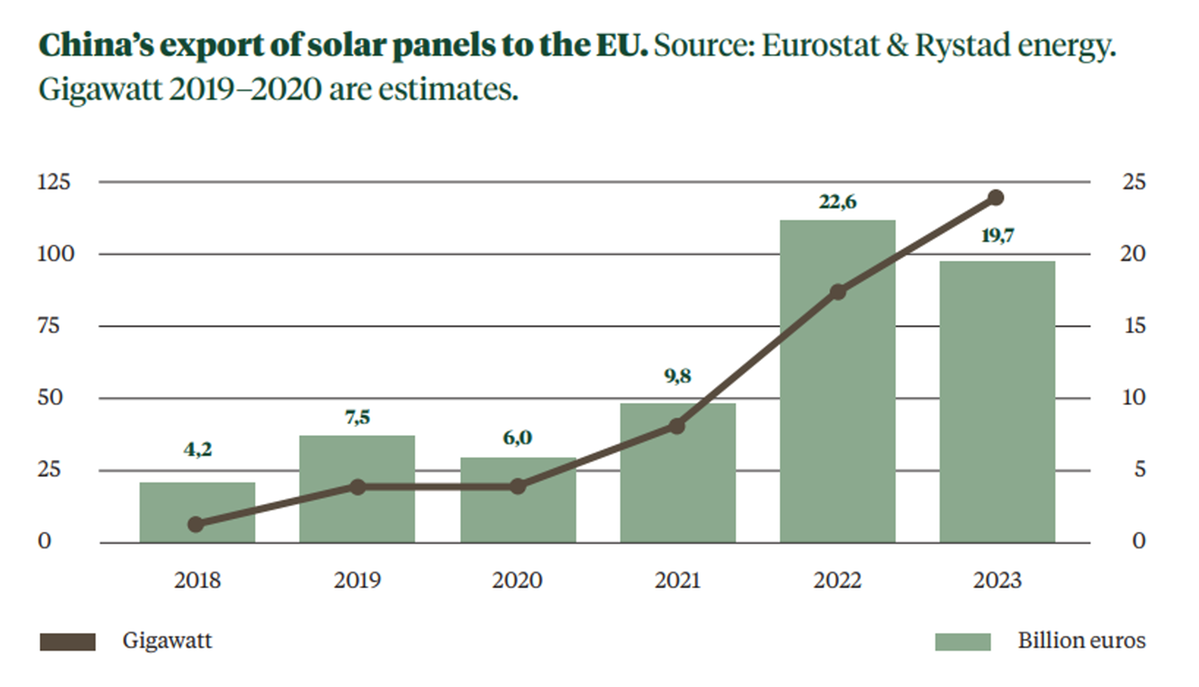
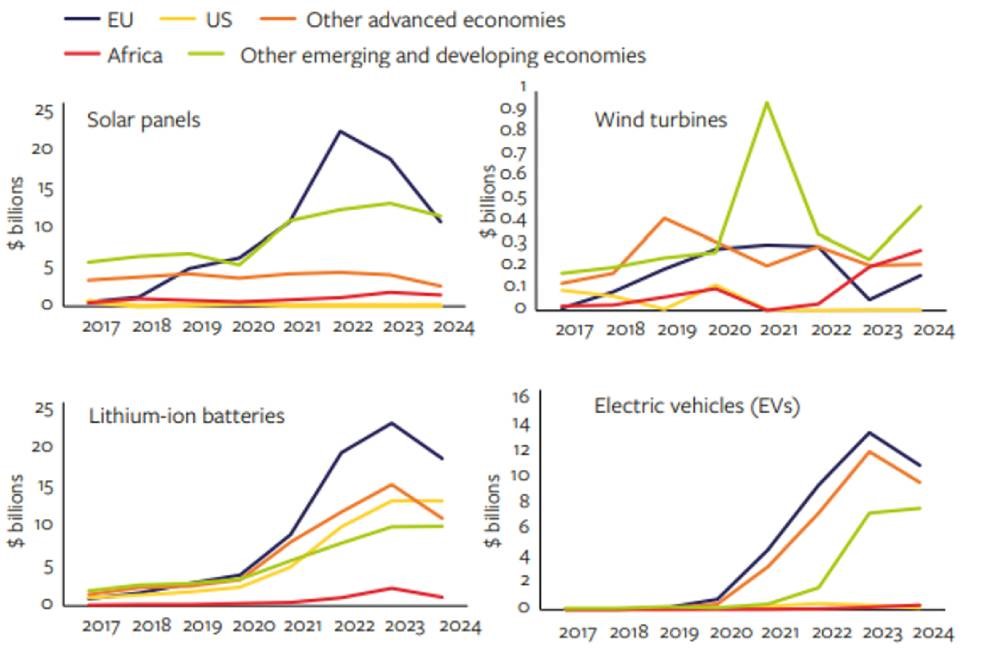
In 2022, a new record was set with imports worth €22.6 billion (SEK 248 billion). In 2023, 95 percent of all solar power installed in the EU was imported, 98 percent of which came from China.
The EU's green transition is driven in practice by Chinese industrial exports
Today, the EU is dependent on imports of many technologies, such as solar panels, from China, a country that currently accounts for 90 percent of global investment in green technology manufacturing facilities.
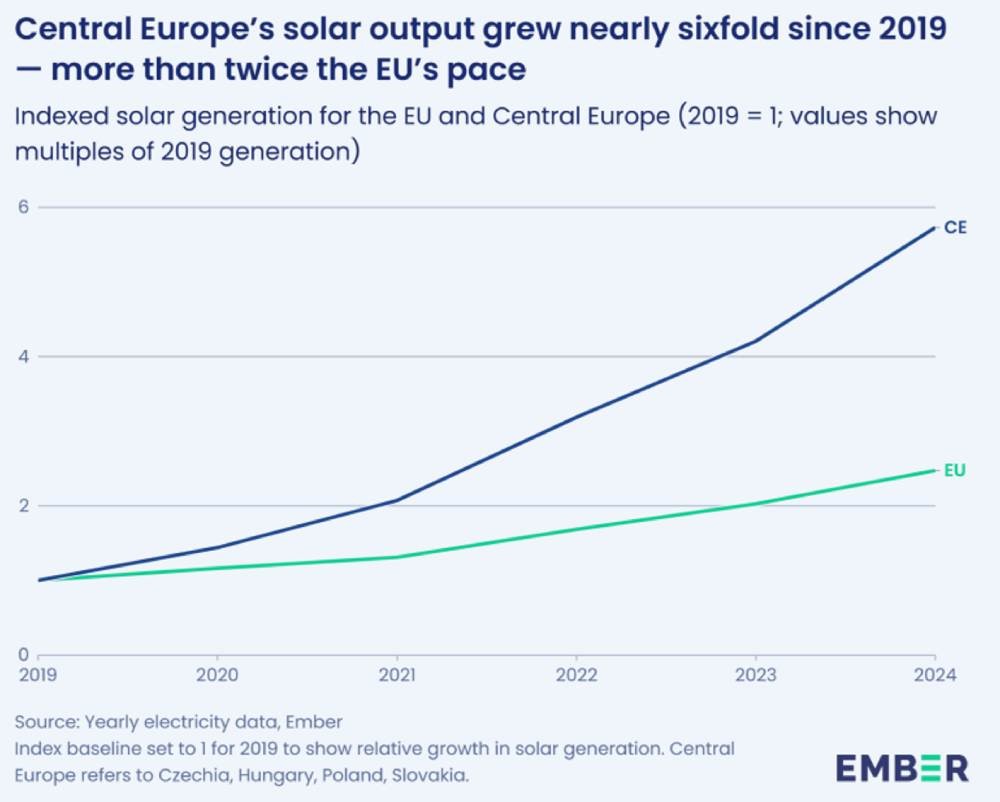
The expansion of solar energy has increased dramatically over the past five years in four Central European countries that have historically been heavily dependent on power from coal. This is according to a report from the think tank Ember.
The Central European countries of Hungary, Poland, the Czech Republic, and Slovakia have long been known for their dependence on coal power and for being something of a brake on the EU's energy transition.
Between 2019 and 2024, electricity production from solar energy in these countries has increased from 5 to 29 terawatt hours, which is a nearly sixfold increase. This can be compared with the average increase in the EU, where solar energy production increased 2.5 times (from 125 TWh to 308 TWh).
China's exports of green technology: a global driver for green energy transition
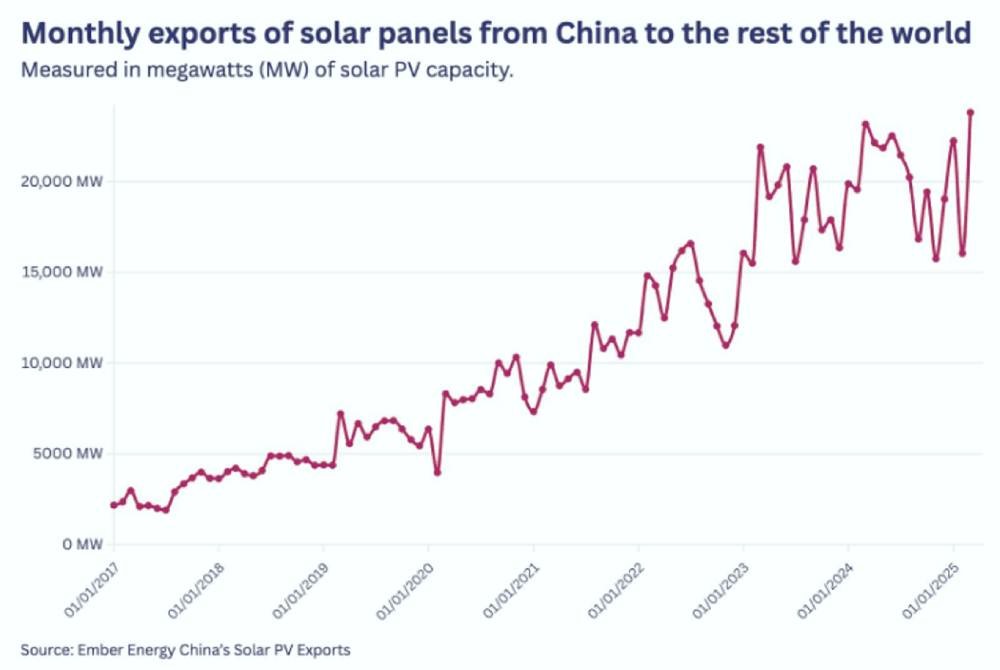
Exports of solar panels from China have quadrupled in less than ten years. Monthly export volumes have increased from less than 5 billion watts (gigawatts) at the beginning of 2017 to 20 billion watts in 2025.
China's exports of solar panels have thus increased significantly, and Chinese batteries are considerably cheaper than equivalent products from the US and the EU. The explanation lies not primarily in low wages but in automation, optimized production, and integrated supply chains.
Chinese batteries, mainly from the companies BYD and CATL, are manufactured for around $40 per kilowatt hour, almost half of what it costs in the US or the EU.
? High automation: BYD uses only 50 workers per billion watt hours (gigawatt hours), compared to over 200 in other factories.
? High yields: Almost all components produced can be used in the final product, reducing waste.
? Integrated supply chains: China not only produces the cells, but also many of the refined materials, which reduces both material costs and transportation.
When the US imposed tariffs, China turned its attention to emerging and developing countries. In 2024, almost half of China's solar and wind exports went to such countries, according to a report by the ODI think tank.
China's green tech exports are driving oil nations' energy transition
Recent advances in Chinese battery technology have made the systems better suited for deployment in harsh conditions, experts say, with batteries now housed in containers that can be cooled and protected from dust.
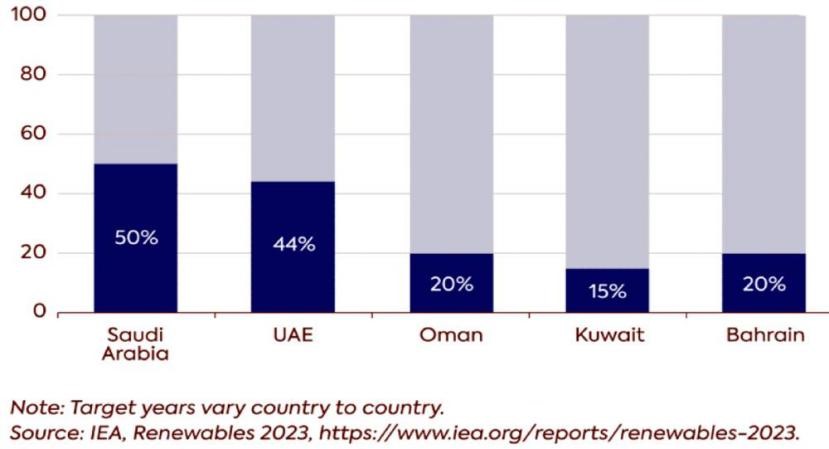
Gulf states such as Saudi Arabia and the United Arab Emirates are increasing their imports of Chinese solar panels and battery storage systems to power their ambitious renewable energy initiatives. Saudi Arabia aims to increase the share of renewable energy to 50 percent of total energy production.
China's exports reduce global emissions by 1 percent per year
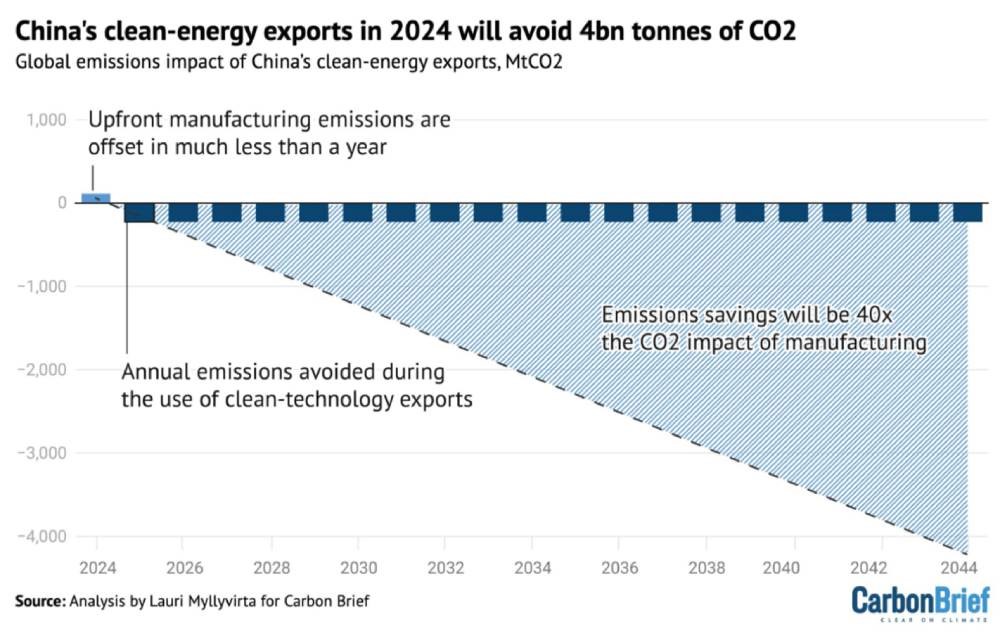
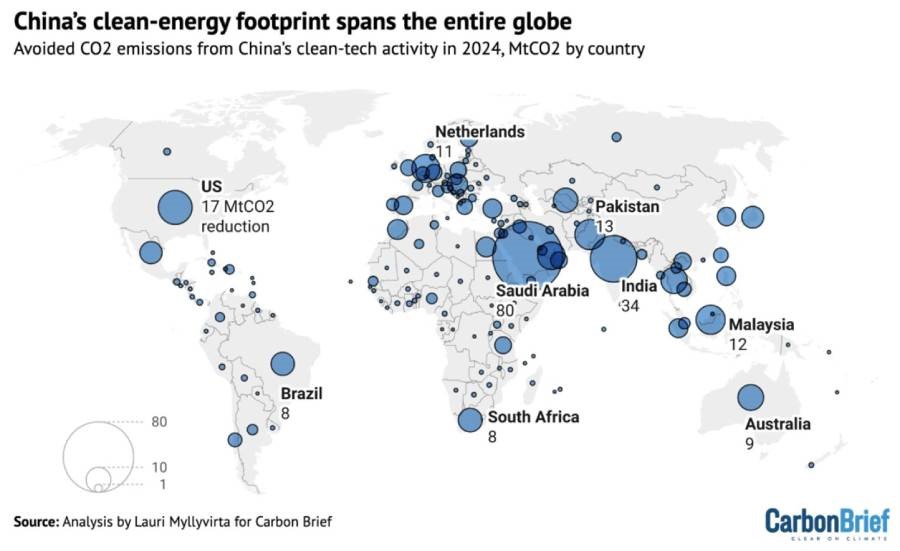
China exports solar panels, batteries, electric cars, and wind turbines to 191 countries. This reduces annual carbon dioxide emissions in the rest of the world by approximately 220 million tons, equivalent to 1 percent of global emissions outside China.
China's green investments lead to reduced emissions worldwide
China is increasingly emerging as a superpower in green energy. Solar panels, wind turbines, and electric cars are spreading to Africa and Latin America. This is accelerating global climate action.
Exports are complemented by investments in which Chinese companies build factories and finance electricity production from free energy in other countries. These contribute to a further reduction of approximately 130 million tons of emissions per year.
The greatest relative climate impact occurs in regions with high fossil fuel emissions, such as MENA and sub-Saharan Africa.
? MENA: 4.5 percent reduction per year
? Sub-Saharan Africa: approximately 3 percent reduction per year
? Key recipient countries: Pakistan, South Africa, Saudi Arabia, Morocco, Nigeria.
China plans to be climate neutral by 2060
China has officially set a plan to become carbon neutral by 2060, which is the largest climate plan ever formulated in the world.
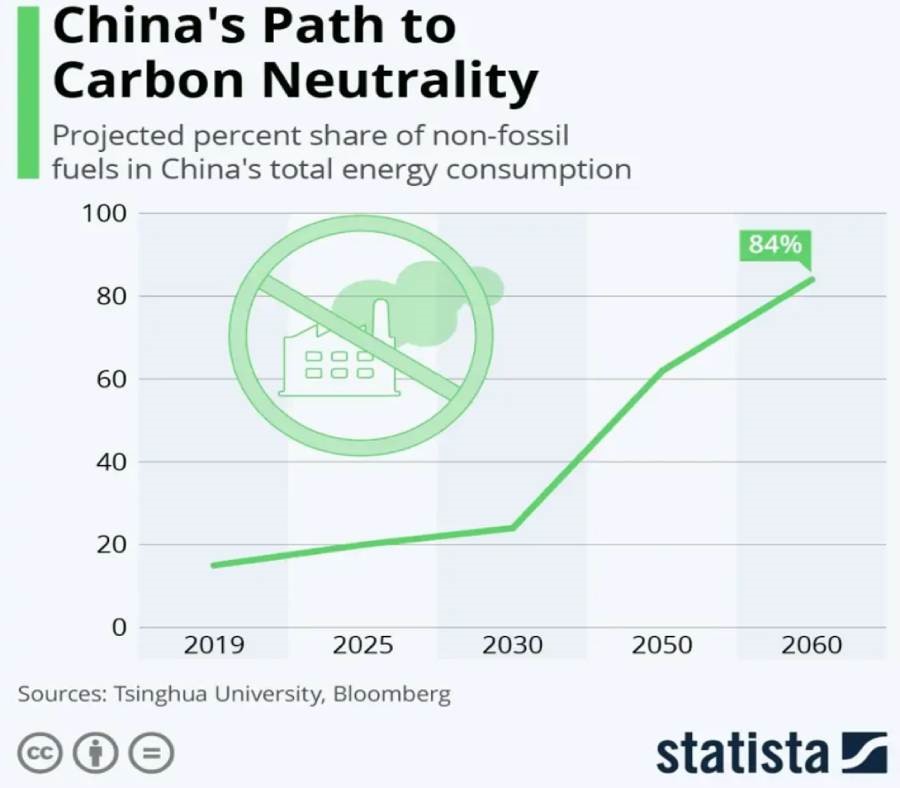
The plan calls for a reduction in the production and consumption of fossil fuels, especially coal, and a stronger focus on clean energy and electric vehicles over the next four decades. According to the plan, China has determined that 84 percent of its total energy sources should come from non-fossil fuels.
Bilateral regional trade agreements do not accelerate the green transition
Trade policy is an important tool that can contribute to the global spread of environmentally friendly technologies and goods. As it has proven difficult for the world's countries to reach agreement within the framework of the WTO, agreements between fewer parties, bilateral regional trade agreements (RTAs), have been used to remove trade barriers for environmentally friendly goods.
Several countries are therefore creating commitments for specific environmental goods in their regional trade agreements. Many free trade agreements contain commitments aimed at facilitating trade in climate- and environmentally friendly goods.
The aim of these is to facilitate or otherwise increase international trade in environmentally friendly goods, such as solar panels, wind turbines, or electric cars.
The National Board of Trade has analyzed data on trade flows together with 700 bilateral free trade agreements. According to the analysis, these free trade agreements do not lead to increased trade in environmental goods.
The development of global trade flows between 2000 and 2020, by type of goods:
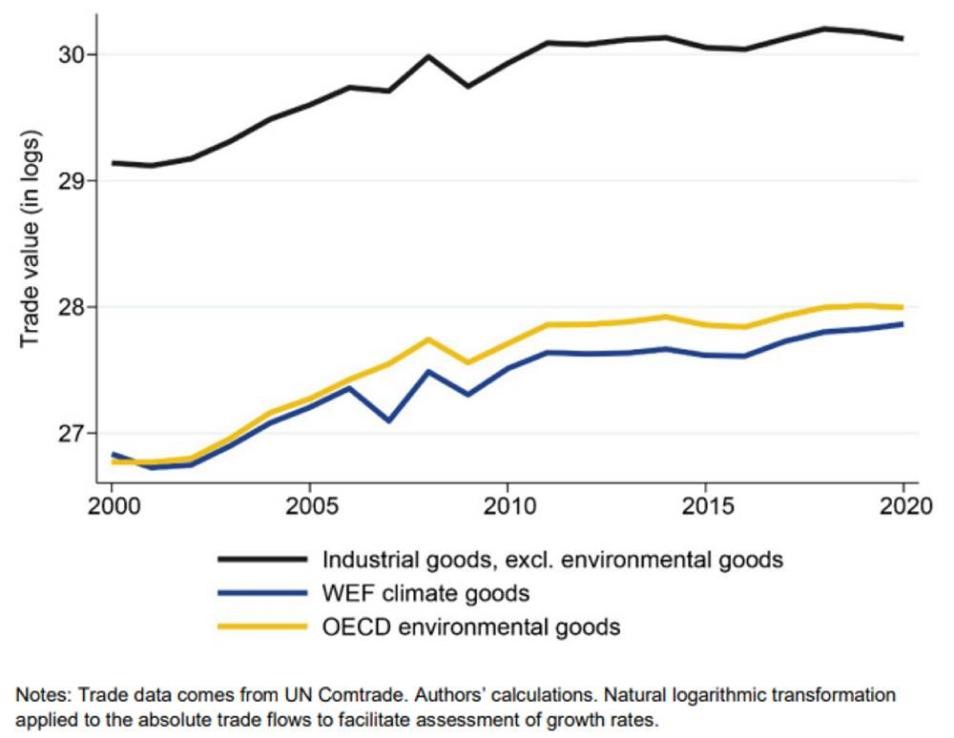
The analysis shows that regional trade agreements are not succeeding in influencing trade flows in environmental goods in order to promote the green transition. At the end of the report, the National Board of Trade provides a number of concrete policy recommendations for decision-makers within the EU and other bodies.
Commitments on environmental goods in free trade agreements may still be a way to promote the green transition, but better trade policy design is needed. As the world works to phase out fossil fuels, we should prioritize removing remaining trade barriers to environmental goods.
It is desirable that discussions on the importance of trade flows for promoting green transition within the WTO be resumed, according to the National Board of Trade's report.
Time for a global trade agreement on green transition
Current trade agreements to promote green transition are not global in nature. The National Board of Trade has shown that these agreements with fewer parties are not effective. Therefore, it is time for a global trade agreement on green transition.
At the global level, the World Trade Organization (WTO) is the most important player in international trade and trade policy. Between 2014 and 2016, a group of participants representing 46 WTO members negotiated an agreement to promote the global dissemination and use of environmental technology.
The agreement would help create an open global market for environmental technologies and increase investment in green industries and economies. The EGA (Environmental Goods Agreement) was a proposed trade agreement that aimed to eliminate tariffs on a wide range of environmental products, including those used for clean energy production, such as wind turbines and solar panels.
The purpose of the proposed agreement was to abolish tariffs on a wide range of environmental goods that can contribute to climate and environmental protection. The basic idea was to make these goods cheaper and thus more accessible, which would support global climate action.
Although the negotiations made significant progress, the participants were ultimately unable to reach a final agreement. China's success in green technology could form a new platform for renewed interest in resuming discussions, especially in light of increased global climate targets and the need to accelerate the transition to clean energy.
China and the EU are well placed to merge their respective climate ambitions into a synchronized synergy goal. The EU aims to become the first climate-neutral region in the world by 2050, by significantly reducing greenhouse gas emissions and phasing out fossil fuels.
The latest figures on China's climate efforts show that the country will achieve its goal of reducing carbon consumption by 2030, and that the vision of becoming carbon neutral by 2060 is therefore realistic.
A synergy goal could make it possible to accelerate the green transition and keep global warming below 1.5 degrees.
China is also the only country in the world whose economy has a systemic significance that could be decisive for the global climate transition. It is the only country that has a systemic capacity for green climate transition based on four strengths:
1. The world's largest reserves of rare metals
2. Global production capacity for green technology
3. Global export capacity for green technology
4. Global investment capacity in green technology in all countries of the world.
A global trade agreement on green technology would therefore provide China's economy with the basic conditions needed to act as a global climate change agent to save the planet.
Hedi Bel Habib is an independent Swedish analyzer at NewsVoice.se, Doctor of Philosophy, researcher with extensive experience in analysis work within public administration, including 15 years at the Swedish Government Offices.
The views don't necessarily represent those of China Daily.
If you have a specific expertise, or would like to share your thought about our stories, then send us your writings at opinion@chinadaily.com.cn, and comment@chinadaily.com.cn.