Full Text: Human Rights in Xinjiang - Development and Progress
IV. Social Rights
Standards of living in Xinjiang were very low when the People's Republic of China was founded in 1949. Following more than 60 years of unstinting effort, protection of the citizens' rights to social security, health, and education has reached unprecedented levels, as evidenced in the following:
Social security has been improved. Once the People's Republic was founded, the government provided generous funding to reinforce Xinjiang's social security system. Now a multi-layered basic social security system with wide coverage is in place. In 2016, Xinjiang launched serious illness insurance for urban and rural residents and urban workers, and personal accident insurance was made available to all residents free of charge. By the end of 2016, each of the following goals had been achieved:
A total of 3.42 million employees were covered by basic old-age insurance (excluding those who joined the plan following the reform of old-age insurance in government bodies and public institutions).
A total of 5.40 million people had subscribed to rural basic old-age insurance, and the coverage of old-age insurance for urban and rural residents stood above 95 percent.
The basic medical insurance system covered 6.88 million people in urban areas, and 11.26 million rural residents had joined the new rural cooperative medical care system.
The total number of people participating in unemployment insurance, work-related injury insurance, and maternity insurance reached 7.39 million.
The government had issued 12.07 million social security cards, covering 55.4 percent of Xinjiang residents.
The level of social security has been improved over the years. By 2016, the basic pension benefits for enterprise retirees had been increased for 12 years in a run. Corresponding figures for work-related injury insurance benefits and unemployment insurance benefits were 12 years and 5 years, respectively. Timely adjustments have been made to the contribution basis by linking social security with price levels. To ease the burden on urban small business owners and self-employed persons, their old-age insurance contribution bases were lowered in 2014. Policies have been enacted to ensure that workers, and especially migrant workers who come to work in cities, are able to join the urban basic old-age insurance scheme. The new rural social old-age insurance system has been brought into line with urban old-age insurance in terms of benefits received, from RMB55 to RMB115 per person per month.
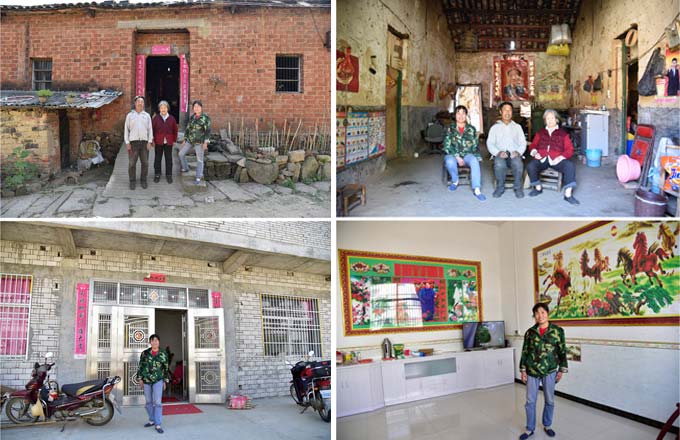
The social assistance system is playing an active role. In Xinjiang, a social assistance system for needy urban and rural residents was established at the beginning of the PRC. Between 2009 and 2016, the monthly subsistence allowance for urban residents increased from RMB172 per capita to RMB384 per capita, while that of rural residents rose from RMB69 to RMB249.5. For rural households enjoying the "five guarantees" (access to proper food, clothing, medical care, housing and funeral/educational expenses), subsidies for those living in nursing homes increased from RMB3,036 to RMB6,936 per year, and the subsidies for those living at home grew from RMB2,280 to RMB4,586 per year. Social welfare institutions of various types had 44,000 beds and 26,000 persons are under their care. By the end of 2016, 95 percent of villages, townships, and urban communities had opened "one-stop" assistance offices, spending RMB1.85 billion to help 173,000 households in need. In 2016 Xinjiang's social welfare lotteries raised funds to the value of RMB1.26 billion, which were mainly spent on supporting the elderly, orphans, persons with disabilities, and people in need. In the same year a total of RMB736 million was allocated for disaster relief and reconstruction, providing assistance to 4.78 million victims of natural disasters.
There is marked improvement in ensuring access to healthcare. Before the PRC, Xinjiang's medical services were in a poor state; there was a shortage of doctors and medicines, and epidemics of diseases, such as the plague, smallpox, and cholera, were commonplace. People had no guaranteed access to health care. In 1949, Xinjiang had only 54 medical institutions with 696 beds, placing the medical service capacity at 1.6 beds and 0.19 doctors per 10,000 people. After more than 60 years of development a basic medical care system has been established, with medical institutions covering urban and rural areas. By the end of 2016, there were 15,721 medical institutions of various kinds - including 707 hospitals with 144,500 beds - and 51,000 doctors, and 56,000 nurses. With 60.3 beds and 21.2 doctors serving every 10,000 persons, Xinjiang is now above the national average in terms of medical service capacity.
Medical service contracts have been signed between general practitioners and urban residents, and between doctors in rural areas and farmers and herdsmen, to provide them with medical services. Epidemic prevention institutions have been set up, and a relatively complete urban-rural epidemic prevention system has been formed, bringing major epidemic and endemic diseases under effective control. Public health has seen a steady improvement. From 1949 to 2016, the mortality rate dropped from 20.82 to 4.26 per thousand. The average life expectancy has increased from 30 years to 72.35 years. Beginning in 2016, urban and rural residents can have a free health check-up every year.
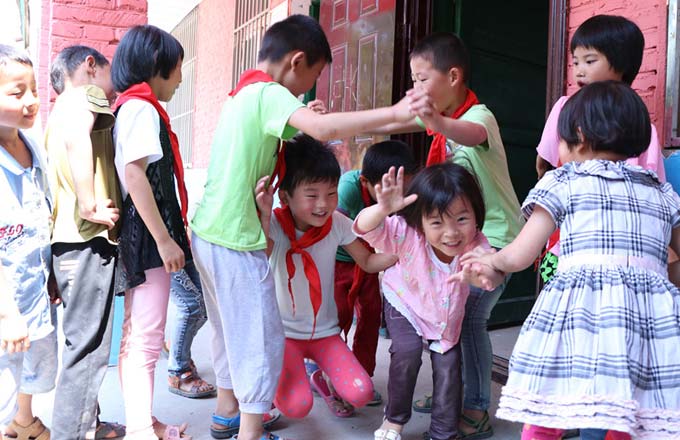
The right to education is fully protected. Before 1949, the educational level in Xinjiang was very low, and the general public had very little chance of acquiring an education. Since the founding of the PRC, Xinjiang has gone to great lengths to develop its education with support from the central government. From 1949 to 2016, the number of elementary schools has increased from 1,335 to 3,526, secondary schools from 9 to 1,416, secondary vocational schools from 11 to 167 (excluding skilled workers schools), and higher education institutions from 1 to 41. The number of university students has risen from 400 to 420,100, and secondary vocational school students have increased from 2,000 to 235,100. A total of 1,022,100 students have graduated from colleges and universities. The nine-year compulsory education is now generally available to all children. In southern Xinjiang, all children have access to three years of preschool education and a 12-year basic education. Further progress has been made in adult education, and a multi-layered and diverse vocational training system has been established. Expenditure on education accounts for over 5 percent of the total fiscal revenue, and continues to grow as government revenues increase. Compulsory education has been included in public finance, and schools offering compulsory education in both urban and rural areas now operate according to the same public expenditure baseline. Subsidies for boarding schools, smaller schools, schools in northern Xinjiang with winter heating, special education schools, and students with disabilities have risen steadily. In 2016, the government allocated RMB2.95 billion to subsidize the public expenditure and heating fees of 2.71 million students from rural families receiving compulsory education. It also provided living subsidies for 452,000 boarders from needy rural families, and distributed free textbooks to 2.63 million students receiving compulsory education in rural areas and some elementary and secondary school students in cities. In 45 counties and 26 schools running special classes for students from less developed areas in Xinjiang, a nutrition enhancement program has been introduced for compulsory-stage students from rural families. By the end of 2016, 91,000 students from Xinjiang had received high-school or secondary vocational education at special classes in more developed areas of the country.
- China offers new idea on human rights governance
- China issues report on US human rights
- Work together to promote and protect human rights
- Peace is fundamental premise, foundation for human rights protection: Chinese diplomat
- A Comparative Study on Human Rights Development Approaches in China and U.S.(Special Issue No.48 2016)