China's short-term economic perspective









As 2017 is coming to its end, people are eager to know whether China will be able to achieve its economic growth target and what the government will do to maintain the country's economic momentum next year.
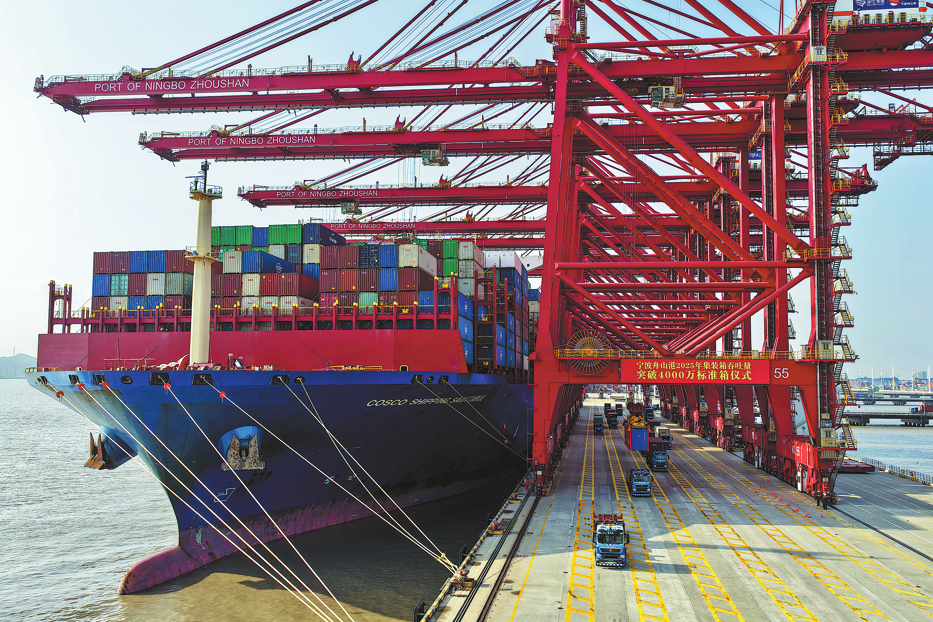
Official statistics shows that China performed well in the last three quarters of 2017 in many aspects: the growth rate of gross domestic product (GDP) was 0.2 percentage points higher than the previous year, the volume of foreign trade expanded more than 10 percent arresting the declining trend over the past two years, the number of newly created jobs and the number of people lifted out of poverty were well above the government pre-set targets, the growth of people's disposable incomes was higher than GDP growth, and the pollution intensity per unit of GDP declined by more than five percent.
After the 19th National Congress of the Chinese Communist Party (CPC), China has entered a new era of social and economic development. In the new era, China has set both the short-term and long-term development targets. In the short term, China aims to build an all-round well-off society by 2020, a key component of which is the elimination of absolute poverty in all parts of the country. In the long term, China will use two periods of 15 years each to develop a modern socialist society by 2035, and a rich, powerful, democratic, civilized, harmonious and beautiful socialist country by the middle of this century.
Eliminating poverty and building the so-called all-round well-off society, China needs to maintain a relatively high level of economic growth and make sure that all the people, particularly those with low incomes, benefit from the country's economic growth and prosperity. To do this, the central authority has decided that the following three areas will be the focus of policy efforts toward 2020: preventing systematic risk or crisis, eliminating poverty through precision targeting, environmental protection through reducing pollution and energy intensity.
To prevent systematic risk or crisis, it is important to control the amount of bank credits and the amount of social capital raised for all kinds of investment projects. It is also important to control the level of debts incurred by the central and local authorities as well as State-owned enterprises. This implies that fiscal policy will be tight in the rest of the year and beyond. The monetary policy will also be tight as China will continue to make sure that the interest, inflation and foreign exchange rates remain stable.
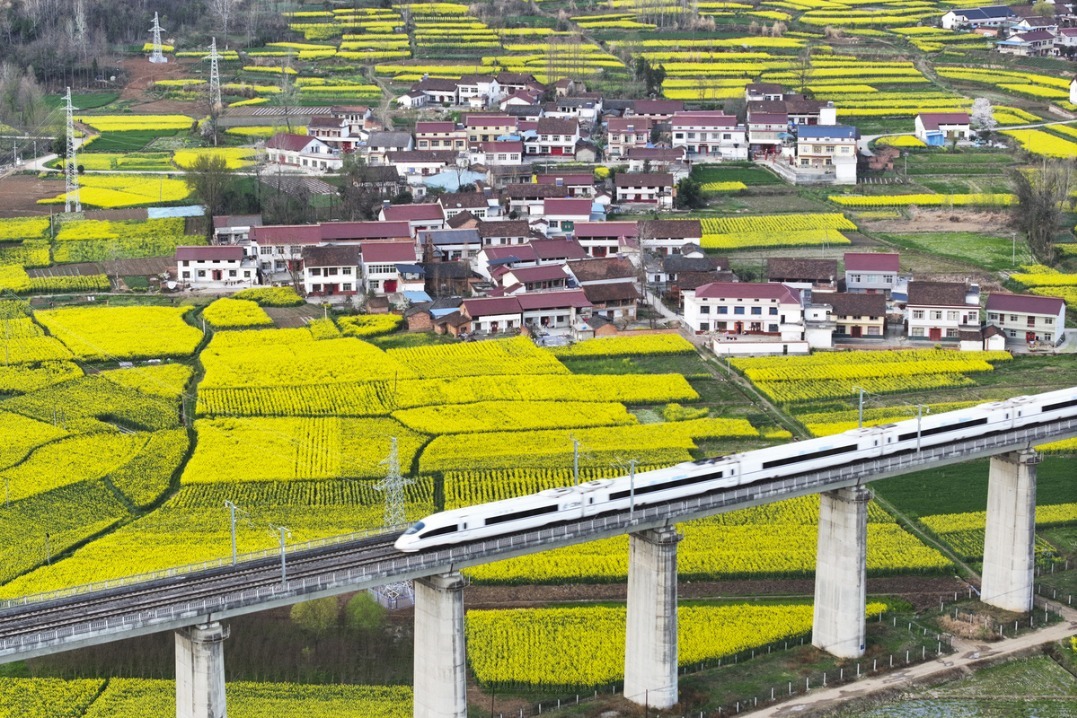
However, from various government policy documents, the phrase "dou di", or "maintaining the bottom line" is repeatedly emphasized. Maintaining the bottom line can be interpreted in different ways, but as far as economic growth is concerned, it implies that China will do necessary things to make sure that a minimum economic growth rate is maintained for the purposes of meeting full employment and raising people's incomes. In other words, if the country is unable to meet the growth targets as a result of the tightening fiscal and monetary policies, some necessary intervention methods, such as allowing more flexibility in bank lending or relaxing control over the capital market, may have to be applied. For long-term economic and social development, government intervention is mostly focused on the development of infrastructure, particularly the construction of high-speed railway and other transportation systems.
The second most important task set by the central authority is poverty elimination. President Xi Jinping has promised in his report to the 19th National Congress of the CPC that "no one will be left behind" in China's effort to fully build the all-round well-off society by 2020. In China, every village has created household profiles of all the people who are considered and tested to be poor. Poor households are classified into different categories: (1) those without any ability to make a living, (2) those with labor ability to make a living but do not have means to do so, and (3) those living in the remote and mountainous regions without any hope of escaping poverty.
Based on the analysis of the poor people, differential poverty alleviation policies are being applied. For some people, such as those belonging to the first category, the government will have to provide a minimum financial support equivalent to or more than the official poverty line. But the vast majority of people will be helped to make sure that they can escape poverty through their own effort, including agricultural production, working off-farm, or moving to work in the cities, et al. For those living in the remote and mountainous locations, they will be relocated to the more prosperous regions so that people can have opportunities for employment to escape poverty.
The third most important task is the continuing reduction of pollution to protect the natural environment. This can be done through the so-called supply-side reform, focusing on the reduction of the production capacity of highly polluting products such as steel, coal and cement. In most parts of the country, old and inefficient production capacity has been gradually replaced by the more modern and technologically more advanced facilities to reduce pollution and energy intensity per unit of output. In some parts of the country, production capacity is reduced without replacement.
To improve energy efficiency and reduce the level of pollution, China has made more efforts to develop renewable energy sources, such as solar, wind, hydro and nuclear powers to reduce the country's dependency on coal. New energy vehicles are also encouraged to replace traditional vehicles. In the first 11 months, the sales of new energy cars were over 609,000 units, growing by over 50 percent over the same period last year.
Through analyzing the current economic situation and government policy priorities, it is predicted that China's economic growth for the year 2017 will be 6.8 percent, and the growth target next year will not be higher than this level but will not be lower than 6.5 percent, as the latter is probably the so-called "bottom line" of growth for the rest of this decade to achieve the ambitious goal of poverty elimination.
However, China is unlikely to use stimulus fiscal and/or monetary policies to achieve a much higher level of economic growth as the tasks of containing systematic risk and protecting the natural environment would not allow such policies to be implemented.
Shujie Yao, Chueng Kong Professor of Economics, Chongqing University, and University of Nottingham Ningbo China.
The opinions expressed here are those of the writer and do not represent the views of China Daily and China Daily website.